Loading...
marine-life#seahorse biology#Syngnathidae#male seahorse pregnancy
Seahorses 101: The Mind-Bending Biology of the Ocean’s Most Delicate Fish
Pro Dive Vibes
April 28, 20269 min read
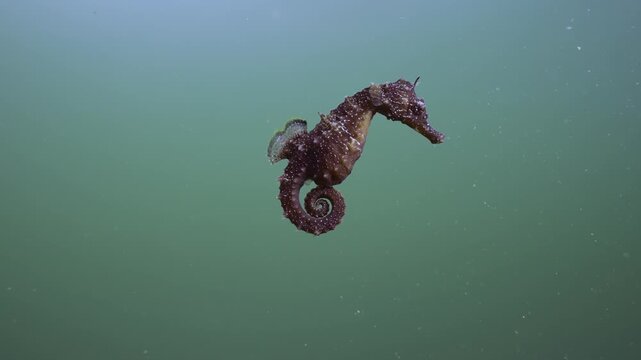
If you were to catch a glimpse of a seahorse for the first time without any prior knowledge of marine biology, you might think you’d discovered a creature from a fantasy novel. With a head resembling a pony, a tail like a monkey, and eyes that move independently like a chameleon’s, they seem to defy the standard rules of fish evolution. Yet, these enchanting animals are very much a part of our underwater world, representing some of the most specialized and delicate residents of the reef.
Seahorses belong to the family Syngnathidae, a name derived from the Greek words syn (together) and gnathos (jaw). This refers to one of their most defining features: their jaws are fused into a tube-like snout. This family also includes pipefish and seadragons, all of which share a lineage of bizarre biological traits. While most fish rely on speed and scales for survival, the seahorse has taken an entirely different evolutionary path. For divers, understanding the "why" behind their strange biology turns a lucky find into a profound encounter with one of nature’s most successful, albeit fragile, masterpieces.
A Masterpiece of Evolution: The Seahorse’s Bizarre Anatomy
To understand a seahorse, you have to realize that it is essentially a fish that has been stretched vertically and armored. Unlike most fish, which use a caudal fin (tail fin) for propulsion, seahorses have no tail fin at all. Instead, they navigate using a tiny dorsal fin on their back that flutters up to 35 times per second, while small pectoral fins near their gills provide steering.
The Prehensile Tail: The Ocean’s Anchor
Because they are exceptionally poor swimmers, seahorses have evolved a prehensile tail. This muscular, square-ringed appendage allows them to anchor themselves to seagrass, sponges, or coral. In surging currents that would wash other small creatures away, the seahorse remains steadfastly in place. This stationary lifestyle is a stark contrast to the high-energy lifestyles of other reef dwellers, such as the symbiotic goby which must constantly monitor its burrow.
Chameleon Eyes and Bony Armor
Seahorses possess independent eye movement, allowing them to scan for predators and prey simultaneously without moving their bodies and giving away their position. While one eye looks forward at a potential meal, the other can look backward for a hungry snapper.
Furthermore, you won't find scales on a seahorse. Instead, they have a thin layer of skin stretched over a series of bony plates that form an exoskeleton. This structure provides protection against predators while maintaining enough flexibility for the seahorse to curl and maneuver.
| Feature | Seahorse Anatomy | Standard Reef Fish |
|---|---|---|
| Outer Layer | Skin over bony plates | Overlapping scales |
| Locomotion | Dorsal fin flutter | Caudal fin (tail) propulsion |
| Tail Use | Prehensile (grasping) | Swimming/Stability |
| Vision | Independent binocular | Fixed lateral vision |
The Ultimate Stay-at-Home Dad: Understanding Male Pregnancy
In the animal kingdom, parental roles are often clearly defined, but seahorses (and their Syngnathid relatives) are the only species on Earth where the male carries the pregnancy. This isn't just a matter of "guarding" the eggs; it is a complex physiological process.
The Courtship Ritual
Before the "pregnancy" begins, seahorses engage in an elaborate courtship dance that can last for days. They change colors, intertwine tails, and swim side-by-side in a display of synchronization. This ritual ensures that the male and female are ready to transfer eggs at the exact same moment. This level of dedication to a mating display is reminiscent of the sunset dance of the Mandarin Fish, though the seahorse's commitment lasts much longer than a twilight encounter.
The Brood Pouch
During mating, the female deposits eggs into a specialized brood pouch on the male’s abdomen. Once the eggs are inside, the male fertilizes them and his pouch becomes a functional womb. He provides:
- Nutrients: The pouch lining is rich in capillaries that supply the developing fry.
- Oxygen: The male regulates the internal environment of the pouch.
- Osmoregulation: The pouch salinity is adjusted to match the external seawater, preparing the fry for life on the reef.
After a gestation period of 2 to 4 weeks, the male undergoes muscular contractions to expel the fully formed, miniature seahorses into the water column.

The Stealthy Predator: How Seahorses Hunt Without Teeth
Despite their slow movement and gentle appearance, seahorses are voracious predators. They are "sit-and-wait" hunters, relying on their camouflage to let prey come to them.
The 'Pipette' Snout
Seahorses eat small crustaceans, primarily copepods. Since they have no teeth, they use a method called pivot feeding. They can rotate their heads at incredible speeds, using their snout like a high-powered pipette to suck in prey from distances of up to 3 millimeters. The suction is so fast and quiet that the prey often doesn't realize it's in danger until it’s already being digested.
The Dietary Challenge: No Stomach
In a strange biological twist, seahorses lack a stomach. Their digestive system is a simple tube, meaning food passes through them extremely quickly. To survive, a seahorse must eat almost constantly—sometimes consuming up to 3,000 brine shrimp in a single day. This is a complete departure from the specialized dental structures we see in other species, as discussed in our guide to the purpose of teeth in reef fish. While a parrotfish uses its beak to crunch coral, the seahorse relies entirely on the physics of vacuum suction.
Masters of Disguise: Blending into the Seagrass and Coral
For a creature that moves slowly and lacks defensive weapons, camouflage is the only line of defense. Seahorses are the undisputed kings of crypsis.
Growing Their Own Camouflage
Seahorses can grow fleshy appendages called cirri or filaments. These skin growths mimic the texture of the algae or soft corals where they live. If a seahorse moves to a new environment, it can actually grow or reabsorb these filaments over time to better match its surroundings.
Color Shifting
While they aren't as fast as the color-changing cephalopods, seahorses can alter their pigmentation to blend into their habitat. This process is usually slow, taking hours or days, and is driven by both environmental cues and stress levels.
The Pygmy Seahorse: The Ultimate Specialist
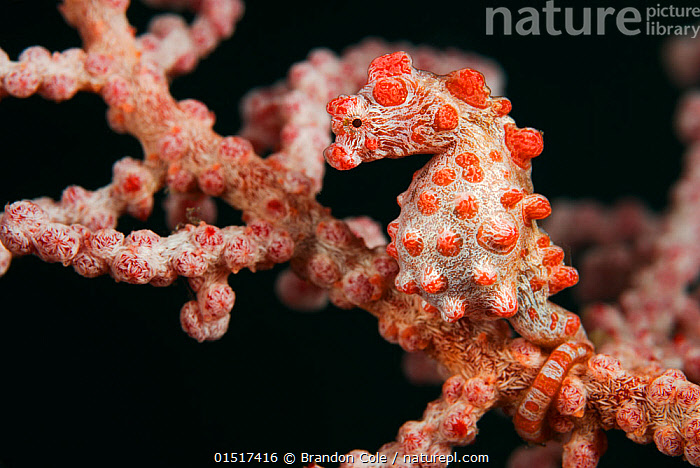
Perhaps the most famous example of camouflage is the Bargibant’s Pygmy Seahorse. These tiny creatures (usually less than 2 centimeters long) live exclusively on Muricella sea fans. Their bodies are covered in calcified bumps called tubercles that perfectly match the polyps of the coral. They are so well hidden that the species was only discovered when a scientist was studying a sea fan in a lab and noticed the "coral" was moving! For more on these experts of invisibility, check out our post on camouflage masters of the sea.
The Fragile Life of a Seahorse: Conservation and Threats
Unfortunately, the very biological traits that make seahorses fascinating also make them incredibly vulnerable. They are currently facing a "triple threat" of habitat loss, over-exploitation, and environmental sensitivity.
- Habitat Loss: Seahorses thrive in coastal areas like seagrass beds, mangroves, and coral reefs—the exact ecosystems most impacted by coastal development and pollution.
- Traditional Medicine: Millions of seahorses are harvested annually for use in traditional medicine, where they are dried and ground into powder.
- The Aquarium Trade: Because they require constant feeding and are prone to disease in captivity, many wild-caught seahorses do not survive long in home aquariums.
Expert Note: Because seahorses have low mobility and high site fidelity (they stay in one small area), if their specific patch of reef is destroyed, they cannot simply swim to a new one. This makes local extinctions a very real possibility.
Diver’s Guide: How to Spot and Respect Seahorses
Spotting a seahorse is a highlight for any diver, but it requires a "slow-motion" approach. If you rush through your dive, you will almost certainly swim right past them.
Seahorse Spotting Checklist
- Check the edges: Look where the reef meets the sand or seagrass.
- Look for the tail: Often, the tail is the only thing visible as it wraps around a sponge or gorgonian.
- Scan for movement: Look for the slight flutter of the dorsal fin or the rotation of an eye.
- Be patient: Spend five minutes on a single sea fan; your eyes need time to adjust to the camouflage.
Ethics and Interaction
Because seahorses are easily stressed, divers must follow strict ethical guidelines:
- Perfect Buoyancy: This is non-negotiable. One misplaced fin kick can destroy the delicate gorgonian a seahorse calls home. If you need a refresher, remember how we respect sleeping turtles under ledges—the same "look but don't touch" rule applies here.
- The No-Touch Rule: Never attempt to move a seahorse for a better photo. Stress can cause them to release their hold and get swept away by currents, making them easy prey.
- Photography Ethics: Seahorses have extremely sensitive eyes. Avoid using high-powered strobes or continuous bright lights. If you must take a photo, limit it to two or three shots and move on.

Conclusion: Protecting the Ocean’s Most Delicate Dwellers
The seahorse is a reminder that evolution doesn't always favor the fastest or the strongest; sometimes, it favors the most specialized. From their "stay-at-home dad" lifestyle to their pipette-like hunting style, every aspect of seahorse biology is a marvel of adaptation.
As divers, we are the ambassadors for these quiet creatures. By practicing excellent buoyancy, respecting their space, and supporting conservation initiatives like iSeahorse—a citizen science platform where you can upload your sightings to help researchers—we can ensure that these mythical-looking fish continue to haunt the seagrass beds and reefs for generations to come. Next time you’re underwater, slow down, look closely at that sea fan, and you might just find a pair of independent eyes looking right back at you.