Loading...
marine-life#Mandarin fish mating#Synchiropus splendidus#dusk diving
The Ultimate Guide to Mandarin Fish Mating: How to Witness the Sunset Dance
Pro Dive Vibes
March 4, 20269 min read
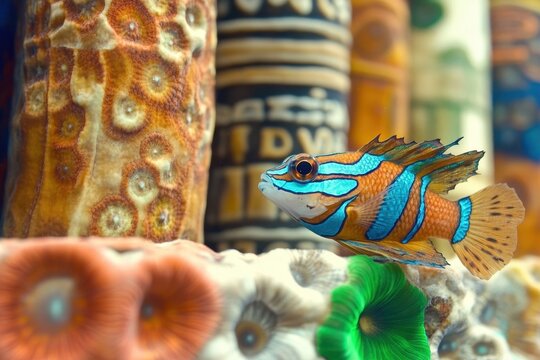
Imagine a creature so vibrant, so intricately patterned, that it looks less like a fish and more like a piece of hand-painted silk floating through the water. This is the Mandarin fish (Synchiropus splendidus), a psychedelic dragonet that remains one of the most sought-after sightings for scuba divers worldwide. While their static beauty is enough to justify a dive, the real magic happens during the "blue hour"—that fleeting window between daylight and total darkness.
For many, witnessing the "Sunset Dance" is a top-tier bucket list item. It isn't just about seeing a rare fish; it’s about observing one of the most intimate and choreographed rituals in the natural world. This nightly performance is a masterclass in timing, patience, and biological precision. If you’ve spent your diving career hunting for the big stuff, it’s time to slow down and focus on the macro world. The Mandarin fish mating ritual is, quite literally, the most colorful show on Earth.
Biology of a Beauty: What Makes Mandarin Fish Unique
The Mandarin fish belongs to the dragonet family, and while they are often called "Mandarin gobies," they are biologically distinct. One of their most fascinating traits is the complete lack of scales. You might think this makes them vulnerable, but nature has provided a formidable alternative: a thick, foul-smelling, and toxic mucus layer. This slime not only protects them from parasites and infections but also serves as a chemical deterrent against predators.
Most fish rely on speed or camouflage to survive—the Mandarin fish relies on being too disgusting to eat. This chemical defense allows them to sport their neon oranges, electric blues, and deep purples without fear of being an easy snack.
Understanding their biology is the first step to finding them. Much like the techniques we discuss in The Nudibranch Hunter’s Handbook, spotting these 3-inch creatures requires a keen eye for biological cues rather than just scanning the reef at large. You have to look for the "shyness" in their movement.
Sexual Dimorphism: Spotting the Stars
To appreciate the dance, you first need to know who the players are. Mandarin fish exhibit clear sexual dimorphism, meaning males and females look different.
| Feature | Male Mandarin Fish | Female Mandarin Fish |
|---|---|---|
| Size | Larger, up to 3-4 inches |
Smaller, usually 2 inches |
| Dorsal Fin | Long, pointed, and flamboyant | Shorter and rounded |
| Behavior | Aggressive, territorial, and "showy" | Selective and elusive |
The males are the primary focus of the "Gathering" phase. They spend their energy patrolling their territory and warding off rivals, while the females remain tucked deep within the coral branches, emerging only when they are ready to choose a partner.
The Sunset Schedule: Timing Your Dive for Success
In the underwater world, timing is everything. Just as we see in The Deep Sea's Daily Commute, the transition from day to night triggers massive behavioral shifts across the reef. The Mandarin fish mating ritual is governed by this "blue hour."
The window for success is incredibly narrow, usually lasting only 15 to 30 minutes. If you enter the water too early, you’ll see nothing but empty coral. If you’re too late, the "Snap" has already happened, and the fish have retreated into the labyrinth of the reef for the night.
Why Arriving Early Matters
While the mating happens at dusk, you should be in position at least 20 minutes before the sun disappears. This serves two purposes:
- Acclimation: It allows the fish to get used to your presence and your bubbles.
- Observation: You can identify which male is the "alpha" of the patch, as he will be the most active in patrolling the staghorn coral.
By the time the light levels drop to that specific twilight hue, the fish should feel comfortable enough to begin their courtship right in front of your mask.

Decoding the Dance: A Step-by-Step Guide to the Ritual
The "Sunset Dance" isn't a random occurrence; it is a highly structured four-stage process. Understanding these stages will help you predict their movements and prepare your camera for the final "rise."
Stage 1: The Gathering
As the light fades, the males emerge from the depths of the coral rubble. They begin to move frantically between coral heads, checking on the females in their "harem." You’ll see them flaring their fins and occasionally engaging in brief skirmishes with other males.
Stage 2: The Courtship
Once a male has found a receptive female, the courtship begins. This is a subtle game of nudges. The male will rest alongside the female, using his pectoral fins to gently "fan" her. If she accepts him, she will perch on his pelvic fin. This connection is the signal that the main event is about to begin.
Stage 3: The Pelagic Rise
This is the iconic moment every diver waits for. The pair, locked together belly-to-belly, begins a slow, spiraling ascent into the water column. They rise about 1 foot above the safety of the coral. This is the most vulnerable moment of their lives, as they are now exposed to any lingering predators.
Stage 4: The Snap
At the peak of their ascent, the pair performs a sudden, explosive "snap." In a fraction of a second, they release a cloud of eggs and sperm into the current before diving back down into the reef at lightning speed. The entire rise and snap takes less than 5 seconds.
Where to Look: Habitat and Hiding Spots
You won't find Mandarin fish on a pristine, vertical wall. They prefer "messy" environments. Look for sheltered lagoons, silty bottoms, and areas heavy with coral rubble. Their absolute favorite habitat is thickets of staghorn coral (Acropora). These dense, branch-like structures provide the perfect maze for a small fish to hide from predators.
Geographic Hotspots
If you want the best chance of witnessing this, consider these world-class locations:
- Lembeh Strait, Indonesia: The undisputed capital of macro diving.
- Palau: Famous for its "Mandarin Fish Lake" and specific dusk dive sites.
- Malapascua, Philippines: Offers incredibly consistent sightings near the local jetties.
- Great Barrier Reef, Australia: Specifically the northern sections where staghorn coral thrives.
Pro Tip: Look for "active" sites by watching the males. If you see a male Mandarin fish aggressively flaring his dorsal fin at a rival, you are in the right spot. The females are nearby, watching the show.
The Ethics of Observation: Respecting the Romance
As divers, we are guests in their bedroom. The "social contract" of the reef, which we explored in The Reef’s Spa Day, applies here too. Our presence must not disrupt the natural cycle.
The 'No White Light' Rule
This is the most critical rule of Mandarin diving. High-intensity white torches will blind these light-sensitive fish and cause them to abort the mating cycle immediately.
- Use Red Lights: Mandarin fish cannot see red light well. Use a torch with a red filter to observe them without causing stress.
- Reference Light Science: As we learned in Fluorescence vs. Bioluminescence, marine life perceives light differently than we do. Respecting their visual spectrum is key to witnessing natural behavior.
Buoyancy and Contact
Because these fish live in fragile staghorn coral, your buoyancy must be impeccable.
- Check your weights before the dive.
- Avoid using "muck sticks" near the mating pairs.
- Keep your fins up to avoid kicking up silt or breaking coral tips.
Capturing the Magic: Photography Tips for the Twilight Hour
Photographing the Mandarin dance is one of the hardest challenges in underwater photography. You are shooting a tiny, fast-moving subject in near-total darkness.
- Focus-Lock is Your Friend: Don't rely on your camera's autofocus in the dark. It will "hunt" and miss the shot. Use a red focus light and pre-focus on a piece of coral at the same distance where you expect the rise to happen.
- Predict the Rise: Watch the courtship. When the female perches on the male’s fin, they are about to ascend. Frame your shot slightly above the coral and wait for them to swim into your field of view.
- Low-Lumen Settings: Keep your strobes on a low power setting. A massive flash can spook other pairs in the area, ending the show for everyone else.

Beyond the Dance: The Importance of Protecting Mandarin Habitats
The beauty of the Mandarin fish has unfortunately made them a prime target for the illegal aquarium trade. Many are harvested using destructive methods that damage the very reefs they call home. Furthermore, because they are notoriously difficult to feed in captivity (they primarily eat live copepods and amphipods), many die shortly after being purchased.
As divers, we have a responsibility to:
- Support Sustainable Operators: Choose dive centers that enforce strict "no-touch" policies and use red lights for dusk dives.
- Report Poaching: If you see suspicious activity or traps in Mandarin habitats, report it to local maritime authorities.
- Educate Others: Share the magic of the Sunset Dance, but emphasize that these fish belong on the reef, not in a glass box.
Witnessing the Mandarin fish mating ritual is a humbling reminder of the ocean's complexity. It requires us to be more than just tourists; it requires us to be patient observers of a cycle that has continued for millennia.
Ready for your next adventure?
Before you head out for your sunset dive, make sure you're up to speed on other reef behaviors. Check out our guide on Shark Body Language to stay safe while the big predators come out to hunt at dusk, or learn how to identify other cryptic species in our Moray Eel Identification Guide.
Have you witnessed the Sunset Dance? Tag us in your photos on social media or drop a comment below with your favorite Mandarin fish hotspot!