Loading...
marine-life#sea turtle etiquette#diving with turtles#underwater turtle photography
Sea Turtle Etiquette: A Diver's Guide to Stress-Free Encounters and Photography
Pro Dive Vibes
June 28, 20269 min read
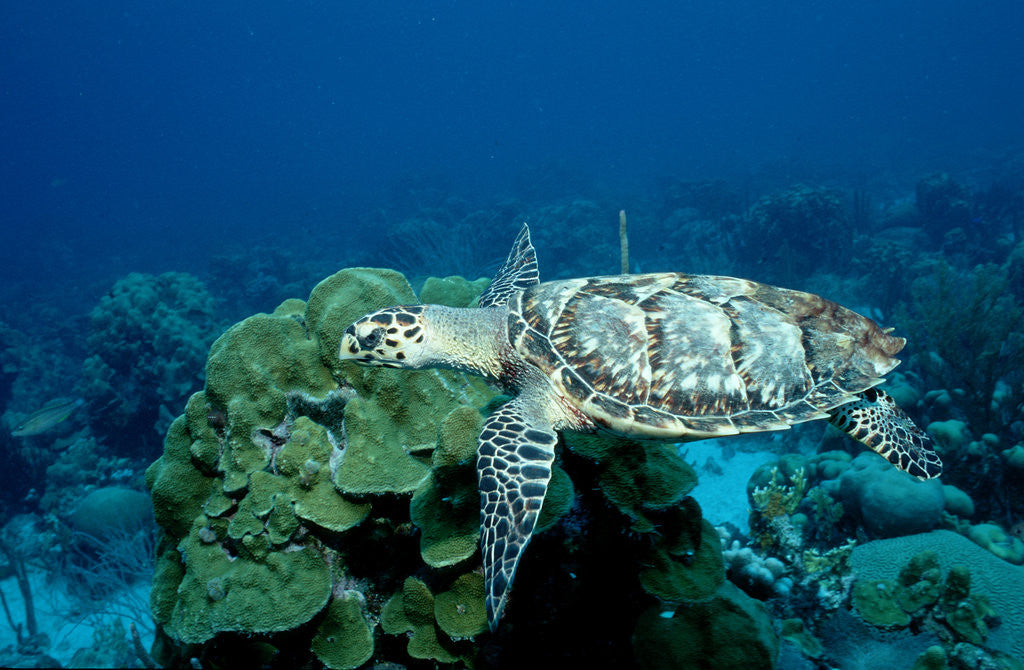
For many divers, a sea turtle encounter is the highlight of a logbook entry. There is something deeply soulful about watching a prehistoric mariner glide effortlessly through the blue. Whether it’s the gentle grazing of a Green turtle or the focused sponge-hunting of a Hawksbill, these creatures evoke a sense of peace that few other marine animals can match.
However, there is a significant gap between how we perceive sea turtles and the biological reality of their lives. We often see them as "chill" or lazy, but in truth, sea turtles are relaxed surfers with no worries—they are actually highly calculated survivors living on a metabolic knife-edge. As divers, our presence can either be a non-event for them or a major biological stressor. The goal of this guide is to transform you from a well-meaning observer into a respectful "Blue Ambassador," ensuring your encounters are magical for you and stress-free for the turtle.
The Biology of Stress: Why Your Approach Matters
To understand why etiquette is so important, we have to look at turtle physiology. Unlike the fish we observe, sea turtles are reptiles. They are air-breathing animals that have evolved to stay underwater for extended periods by slowing their heart rate and managing their oxygen stores with incredible precision.
When a diver approaches too quickly or aggressively, the turtle’s "fight or flight" response kicks in. This causes a spike in their metabolic rate, burning through their carefully conserved oxygen. If a turtle is forced to bolt, it might have to surface prematurely, potentially exposing itself to boat traffic or predators. Furthermore, frequent human interference can disrupt critical life stages. A turtle that is repeatedly scared away from a prime feeding spot or a safe resting ledge will eventually abandon that territory, leading to decreased health or reproductive success.
Different species also have different "comfort zones" that you should recognize:
| Species | Common Name | Typical Temperament | Key Identification Feature |
|---|---|---|---|
| Chelonia mydas | Green Turtle | Often shy; easily spooked | Smooth, rounded beak |
| Eretmochelys imbricata | Hawksbill | Focused; can be tolerant | Bird-like pointed beak |
| Caretta caretta | Loggerhead | Wary; maintains distance | Massive head and jaws |
Reading the Shell: Recognizing Sea Turtle Body Language
Just as we can learn to read the moods of a cephalopod by decoding color changes, we can read a turtle's intent through its posture and movement. A turtle doesn't have a facial expression, so you must "read the shell."
Signs of a Relaxed Turtle
A relaxed turtle is a joy to watch. It will continue its natural behavior—usually grazing on sea grass or nipping at sponges—without acknowledging your presence. Look for:
- Slow, rhythmic movements of the flippers.
- Neutral buoyancy (not struggling to stay down or up).
- Head down, focused on the reef or substrate.
- Long, slow blinks or a "sleepy" appearance.
Subtle Distress: The 'Yawn' and 'Flipper Swipe'
Before a turtle swims away, it will usually give you a few subtle warnings. If you see these, you are too close:
- The Yawn: While it looks like they are tired, a wide-mouthed "yawn" underwater is often a territorial display or a sign of agitation.
- The Flipper Swipe: If a turtle raises a front flipper and swipes it across its face or toward you, it’s telling you to back off. It’s the reptilian equivalent of a "talk to the hand" gesture.
- Changing Direction: If the turtle stops eating and slowly turns its body away from you, it is preparing an exit route.
High Stress: The Tucked Chin
When you’ve definitely gone too far, the turtle will tuck its chin toward its chest to protect its neck—its most vulnerable area. This is often followed by frantic, "paddling" flipper movements as it prepares to launch into the blue. If you see a tucked chin, you have failed the etiquette test; back away immediately and remain still to show you are not a predator.

The Golden Rules of the Approach
The secret to a long, meaningful encounter is making the turtle forget you are there. This requires a combination of patience and technical skill.
- The 45-Degree Rule: Never approach a turtle head-on or from directly above. In the wild, things that come from above are usually sharks or birds of prey. Instead, approach from the side at a
45-degree angle. This allows the turtle to keep you in its peripheral vision, which lowers its anxiety. - Maintain the 'Exit Route': Never "sandwich" a turtle between yourself and the reef, or between two groups of divers. Always ensure the turtle has a clear, unobstructed path to the surface and the open ocean.
- Master Your Buoyancy: Nothing ends an encounter faster than a diver crashing into the reef or kicking up a cloud of silt. If you cannot hover perfectly still in a horizontal position, you shouldn't be attempting a close-up encounter. Good buoyancy isn't just for the turtle's comfort; it protects the delicate coral they call home.
- Don't Be a 'Chaser': If a turtle decides to leave, let it go. Chasing a turtle for a photo is the quickest way to ensure it never returns to that site.
Expert Tip: If you find a turtle swimming toward you, don't move! Freeze your position and let the turtle dictate the distance. Sometimes, their curiosity will lead them to swim within inches of a stationary, respectful diver.
Contextual Etiquette: Rest and Hygiene
Sea turtles spend a significant portion of their day resting or being cleaned. These are vulnerable moments where etiquette is paramount.
Respecting the Siesta
Turtles often wedge themselves under ledges or into coral crevices to sleep. This behavior helps them stay submerged by using the reef as an anchor and provides protection from predators. As we discussed in our guide on sleeping sea turtles, poking, prodding, or shining a high-powered torch directly into a resting turtle's eyes is a major violation of dive ethics. If you find a turtle "parked" under a ledge, stay low, keep your distance, and keep your lights dimmed.
Cleaning Station Manners
Turtles regularly visit "cleaning stations" where small fish like wrasse and tangs pick off parasites and algae. This is the reef’s version of a spa day. Interrupting this process is more than just rude; it affects the turtle’s health.
- Stay low to the seabed to avoid being an intimidating silhouette.
- Do not cross the "flight path" of the cleaning fish.
- Observe from at least
3 to 5 metersaway.

Ethical Underwater Photography: Capturing the Shot Without the Stress
We all want that "National Geographic" shot, but a great photo is never worth a stressed animal. Ethical photography requires a "less is more" approach.
- The Strobe Debate: Powerful strobes can temporarily blind or startle a turtle. If you are in shallow, clear water, try using ambient light and a red filter. If you must use strobes, turn the power down and avoid firing multiple rapid-fire shots.
- Composition over Proximity: Instead of trying to get your lens centimeters away from the turtle's face, use a mid-range focal length. A shot that shows the turtle in its environment (the "environmental portrait") is often more compelling and tells a better story than a blurry extreme close-up.
- Focus on the Eye: To create a connection with the viewer, ensure the eye is in sharp focus. However, avoid "staring down" the turtle through the viewfinder for too long; occasionally look up to check the animal's body language.
- The 'One and Done' Rule: Take 3-4 quality shots, then put the camera down. Spend the rest of the encounter simply observing. This ensures the turtle isn't overwhelmed by flashes and allows other divers to enjoy the view from a distance.
Citizen Science: Turning Your Photos into Data
Your dive photos can actually contribute to global conservation efforts. Did you know that the scales (scutes) on a turtle's face are as unique as a human fingerprint? No two turtles have the same pattern.
By taking a clear, side-on photo of a turtle's head, you can help researchers track individual animals across oceans. This is very similar to how we use manta ray fingerprints to monitor populations.
- Step 1: Take a high-resolution photo of the left and right side of the turtle's head.
- Step 2: Note the date, time, and specific dive site location.
- Step 3: Upload your images to databases like Internet of Turtles (IoT) or iNaturalist.
Your "vacation photos" could help a biologist in another country identify a migration pattern that was previously unknown!
Conclusion: Becoming an Ambassador for the Blue
The "Leave No Trace" philosophy applies just as much to the ocean as it does to the forest. As divers, we are guests in a world that isn't ours. By mastering your buoyancy, learning to read reptilian body language, and practicing ethical photography, you ensure that sea turtles remain a fixture of our reefs for another hundred million years.
The next time you see a turtle, remember: the best encounter is the one where the turtle never felt the need to move. Be a silent observer, a respectful guest, and a contributor to science. The reward is a deeper connection to the ocean and the knowledge that your presence did no harm.
Ready to put these tips into practice? Check out our pre-dive checklist to ensure your gear is streamlined and your buoyancy is dialed in for your next turtle encounter!