Loading...
marine-life#cephalopod color change#octopus body language#chromatophores
Decoding Cephalopod Color Changes: A Diver’s Guide to Octopus Body Language
Pro Dive Vibes
March 2, 202610 min read
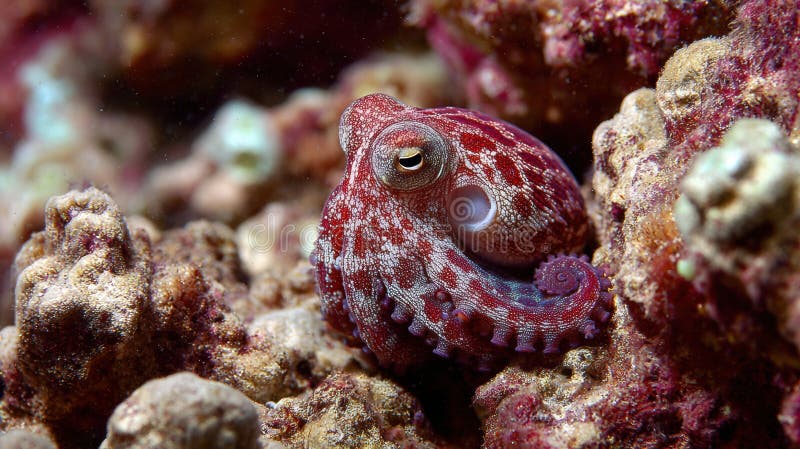
You’re hovering over a patch of rubble on a tropical reef, your pressure gauge reads 2000 psi, and the sun is filtering through the water in long, golden shafts. Suddenly, a section of the "rock" beneath you shudders. A ripple of deep mahogany surges across its surface, followed by a rhythmic pulsing of electric white. In the blink of an eye, the rock transforms into a Common Octopus, its skin morphing from jagged, mossy textures to a smooth, sleek copper as it glides away.
Witnessing a cephalopod change color is one of the most breathtaking experiences a diver can have. For years, we’ve categorized this as simple camouflage—a way to hide from predators or sneak up on prey. But as we dive deeper into the science of these "aliens of the deep," we’re realizing that their skin is far more than a cloaking device. It is a living canvas, a high-definition screen used to broadcast complex emotions, warnings, and social signals. By learning to "read" this skin, you become more than just an observer; you become a student of a silent, visual language. Understanding these signals not only makes you a more observant diver but also an ethical one, ensuring your presence doesn't disrupt the delicate social lives of these intelligent creatures.
The Biological Pixels: How Cephalopods Change Color
To understand what an octopus is "saying," we first need to understand how their "screen" works. Unlike humans, who rely on slow-moving hormones to change skin tone (like tanning or blushing), cephalopods use their nervous systems to control millions of specialized cells.
Chromatophores: The Pigment Powerhouses
The primary "pixels" of the cephalopod skin are the chromatophores. These are tiny, elastic sacs of pigment (usually red, yellow, or brown) surrounded by a ring of muscles. When the octopus’s brain sends a signal, these muscles contract, stretching the sac wide and flooding the surface with color. When the muscles relax, the sac shrinks back to a microscopic dot, making the color disappear. This happens in less than a second—faster than the blink of a human eye.
Iridophores and Leucophores: The Light Reflectors
While chromatophores provide the "paint," other cells provide the "glow."
- Iridophores: These sit beneath the chromatophores and produce iridescent, metallic colors like blues, greens, and silvers by reflecting light at specific angles.
- Leucophores: These cells are responsible for bright whites. They reflect the ambient light of the environment, helping the animal blend into the white sand or bright reef light.
Speed of Thought
Because these cells are directly wired to the brain, a cephalopod's skin is essentially an extension of its nervous system. When you see an octopus flash a color, you are literally watching its thoughts manifest on its skin. This is fundamentally different from the light-producing organs we discussed in our guide to fluorescence vs. bioluminescence, which often rely on chemical reactions rather than direct neural control for social signaling.
The 'Back Off' Signal: Recognizing Defensive Displays
If you’re a diver and an octopus starts putting on a light show, it’s rarely for your entertainment. Most rapid color shifts in the presence of humans are defensive.
The Deimatic Display
When an octopus feels threatened but isn't quite ready to ink and run, it may use a deimatic display. This involves creating high-contrast patterns designed to startle a predator. You might see a sudden appearance of large, dark "eye spots" on their mantle or a bold darkening of the rings around their eyes. The goal is to look larger and more intimidating than they actually are.
Going 'Pale'
Conversely, a sudden shift to stark white often indicates extreme fear or submission. If you approach an octopus and it turns ghostly pale while tucking its arms tight against its body, it is telling you it is terrified.
The Blue-Ringed Warning
In the world of cephalopods, bright and vibrant usually means "danger." The Blue-Ringed Octopus is the most famous example. Usually a dull brown, it flashes brilliant, electric-blue rings when agitated. This is a classic example of aposematism—the same warning system used by toxic sea slugs, which we explored in The Chemical Arms Race.
| Signal | Appearance | Meaning |
|---|---|---|
| Deimatic | High contrast, dark eye spots | "I am bigger/scarier than you think." |
| Paling | Stark white, smooth skin | "I am terrified/submissive." |
| Flashing | Rapidly alternating dark and light | "I am confused/trying to confuse you." |
| Aposematic | Bright blue rings or neon pulses | "I am highly toxic; stay away." |
The Art of the Hunt: Colors Used for Predation
Cephalopods are the ultimate tactical hunters, and their color-changing abilities are their most potent weapons.
The 'Passing Cloud' Effect
Cuttlefish are the masters of this technique. When stalking prey, they can create rhythmic waves of dark color that pulse down their bodies toward the prey. This is known as the "passing cloud" effect. It’s believed that this rhythmic motion hypnotizes or distracts the prey, masking the cuttlefish’s forward movement until it’s close enough to strike with its feeding tentacles.
Active Camouflage
Building on the techniques we covered in our camouflage masters post, octopuses use "active camouflage" to match both the color and the texture of their surroundings. They use papillae—small bundles of muscle in the skin—to create bumps, ridges, and spikes that mimic coral or kelp.
The 'Strobe' Technique
Some squid species use rapid pulses of light and color to disorient schools of small fish. By "strobing," they break up their silhouette and make it impossible for the prey to track their movement, allowing the squid to pick off individuals from the edge of the school.

Love and War: Color Changes in Social Contexts
Cephalopods aren't always solitary; they have complex social lives that require sophisticated communication. These "visual shouts" are the cephalopod equivalent of the acoustic signals we see in dolphin communication.
Mating Displays and the 'Zebra' Pattern
Male cuttlefish are famous for their high-contrast "zebra" patterns during the mating season. They use these bold black-and-white stripes to signal their fitness to females and to warn off rival males.
The 'Split-Screen' Trick
Perhaps the most incredible feat of cephalopod intelligence is the "split-screen" display. A male cuttlefish swimming between a female and a rival male can display two different patterns simultaneously. On the side facing the female, he shows vibrant mating colors. On the side facing the rival male, he displays the muted colors of a female, effectively "sneaking" a mating opportunity without triggering a fight.
Agonistic Signaling
When two octopuses compete for a den, they rarely resort to physical violence. Instead, they engage in agonistic signaling. They will turn very dark, stand as tall as possible on their tiptoes (mantle up), and flare their webs. Usually, the individual that can look the darkest and the "tallest" wins the encounter, and the loser turns pale and retreats.
Beyond the Octopus: Cuttlefish and Squid Variations
While octopuses are the most famous, their cousins have their own unique flair.
- Cuttlefish: Often called the "kings of high-definition," cuttlefish have a higher density of chromatophores than most octopuses, allowing for more intricate patterns and smoother transitions.
- Squid: In the open ocean, camouflage is harder. Many squid use iridescence and transparency to disappear in the blue water. Some deep-sea species combine color changes with bioluminescent "photophores" to counter-illuminate their bellies, matching the light from the surface.
- The Nautilus: It is important to remember that not all cephalopods are masters of disguise. As we noted in our look at the weird world of cephalopods, the Nautilus is a "living fossil" that lacks chromatophores entirely, relying instead on its hard, striped shell for protection.
The Diver’s Field Guide: What to Look For Underwater
To truly understand what you’re seeing, you have to look at the "whole package"—color, posture, and environment.
1. Reading the Eyes
Keep an eye on the pupils. Octopuses have rectangular pupils, while cuttlefish have distinct W-shaped pupils. If the eyes are wide and scanning rapidly while the skin is pulsing, the animal is likely in a high state of alertness or "hunting mode."
2. Posture Matters
- Arm Curling: Often a sign of curiosity or mild agitation.
- Flaring: Spreading the web between the arms is a clear "stay back" signal.
- Tucking: Hiding the head under the arms is a sign of extreme vulnerability.
3. Environmental Cues
Context is everything. Is the octopus near a cleaning station? If so, it might be displaying a specific "solicitation" color to tell the cleaner wrasse it’s not a threat. Is it near a potential mate? The signals will be entirely different than if it were being shadowed by a predator, a behavior we see in shark body language.
Ethical Observation: Don’t Be the Reason for the Change
As divers, we want to see these incredible displays, but we must remember that a color change is often a response to stress. If an octopus changes color because you got too close, you have officially interfered with its natural behavior.
Pro Tip: The best way to see natural cephalopod behavior is to settle on the sand a few meters away and stay perfectly still. Once the animal perceives you as a non-threatening part of the landscape, it will return to its "resting" state or resume its hunt.
The Diver's Ethical Checklist:
- Maintain Neutral Buoyancy: Avoid crashing into the reef or kicking up silt, which stresses the animal.
- Check the 'Stress Test': Is the animal turning white or flashing dark spots? If so, back away slowly.
- Photography Etiquette: Avoid using high-powered strobes repeatedly. Rapid flashes can interrupt the animal's own signaling and may even temporarily "blind" its light-sensitive skin.
- The Golden Rule: If the octopus is changing color rapidly and moving away, you are too close. Give them the space to be themselves.
Conclusion: Becoming a Student of the Sea
The ocean is full of "silent languages," from the subtle patterns of moray eels to the complex visual displays of the octopus. By learning to decode cephalopod body language, you transform every dive into a masterclass in marine biology.
The next time you spot an octopus, don't just check it off your list and move on. Slow down. Watch the way the colors flow across its mantle. Observe the way it reacts to a passing fish or a shift in the current. The more we decode these signals, the more we realize that we aren't just looking at a "cool animal"—we are looking at one of the most sophisticated intelligences on the planet, speaking to us in a language of light and color.
Ready to test your observation skills? Keep these signals in mind on your next night dive, and you might just catch a glimpse of the ocean’s living canvas in full, vibrant conversation. Happy diving!