Loading...
marine-life#mimic flatworms#nudibranch vs flatworm#marine flatworm identification
Beyond Nudibranchs: How to Identify Mimic Flatworms on Your Next Dive
Pro Dive Vibes
February 28, 20269 min read
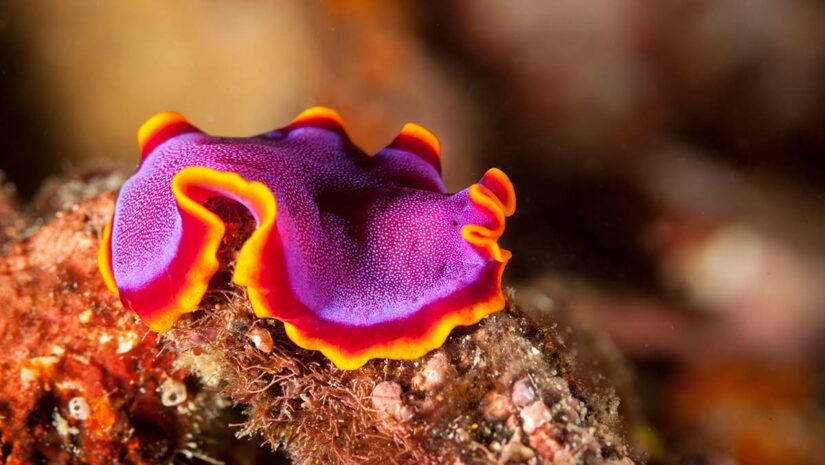
You’ve just settled into your buoyancy, your breathing is rhythmic and calm, and you’re scanning a patch of coral rubble. Suddenly, a flash of electric orange and deep velvet black catches your eye. "Aha!" you think, "Another nudibranch for the logbook!" You hover closer, camera ready, but something feels... different. It’s moving with a strange, liquid grace, and it seems impossibly thin, like a piece of confetti caught in a gentle breeze.
Welcome to the world of marine flatworms. While nudibranchs often steal the spotlight in the macro diving community, these "ultimate imposters" are just as vibrant, twice as elusive, and masters of one of nature’s most effective survival games: mimicry.
In this guide, we’re going beyond the basics of The Nudibranch Hunter’s Handbook to help you identify the flatworms (Phylum Platyhelminthes) that are likely hiding in plain sight on your favorite reefs. They are the unsung heroes of the macro world, and once you learn to tell them apart from their slug-like cousins, you’ll unlock a whole new layer of reef biodiversity.
The Biology of a Masterpiece: What Makes a Flatworm?
To understand why flatworms are so impressive, we have to look at their remarkably simple—yet effective—anatomy. Unlike the nudibranchs we know and love, which are mollusks (related to snails and clams), flatworms belong to the phylum Platyhelminthes. They are among the simplest of the "bilateral" animals, meaning they have a distinct left and right side, a front, and a back.
The 'Flat' in Flatworm
The most defining characteristic of these creatures is their extreme dorsoventral flattening. They are literally as thin as a sheet of paper. This isn't just an aesthetic choice; it's a biological necessity. Flatworms lack a respiratory and circulatory system. They don't have lungs or gills to pump oxygen through their bodies. Instead, they rely on simple diffusion.
Expert Insight: Because flatworms are so thin, oxygen can pass directly through their skin to reach every cell in their body. This "breathing through skin" limits how thick they can grow, resulting in their iconic pancake-like profile.
The Evolution of the 'Head'
Flatworms represent a massive leap in evolutionary history because they were among the first creatures to develop "cephalization"—essentially, the grouping of sense organs and nerve cells at the front of the body to form a head. This allows them to "sense" the environment they are moving into, making them much more active hunters than many other simple invertebrates.
Why Mimicry? The Game of Survival
If you’ve read our guide on Camouflage Masters, you know that hiding is a top priority in the ocean. But flatworms take a different approach. Instead of blending into the background, many flatworms use Batesian Mimicry.
The Nudibranch Connection
Nudibranchs are famous for being chemically defended. They eat toxic sponges and hydroids, sequestering those toxins in their own bodies to become a lethal snack for any passing fish. Their bright colors serve as a "Keep Away" sign (aposematism).
Flatworms, however, are often perfectly edible and lack these potent chemical defenses. To survive, they have evolved to look exactly like toxic nudibranchs. By mimicking the colors, patterns, and even the "horns" of a sea slug, the flatworm tricks predators into thinking it’s a poisonous meal. It’s a high-stakes game of bluffing where the flatworm wins by simply looking dangerous.
The 'Tell': How to Spot a Flatworm vs. a Nudibranch
Identifying these creatures at 15 meters (50 feet) depth can be tricky, especially when the surge is pulling you back and forth. However, there are four key "tells" that will help you distinguish a flatworm from a nudibranch every time.
| Feature | Nudibranch (Sea Slug) | Mimic Flatworm |
|---|---|---|
| Gills | External "naked" gill tufts on the back | None (smooth back) |
| Sensory Organs | Rhinophores (distinct stalks/horns) | Pseudotentacles (folds of the skin) |
| Body Profile | Fleshy, rounded, or thick | Paper-thin, "pancake" flat |
| Movement | Slow, muscular, rhythmic crawl | Fast, fluid, rippling glide |
1. The Gills (The Most Important Clue)
The word "nudibranch" literally means "naked gill." Most nudibranchs have a visible tuft of gills on their posterior (back) end that looks like a tiny feather duster. Flatworms never have these. If the creature has a smooth back with no feathery protrusions, you’re likely looking at a flatworm.
2. Rhinophores vs. Pseudotentacles
Nudibranchs have specialized sensory organs called rhinophores—distinct stalks that often look like tiny ears or textured horns. Flatworms have "pseudotentacles," which are actually just simple folds of their leading body edge. They look more like "ears" made of folded fabric than the solid, structural rhinophores of a slug.
3. The 'Pancake' Test
Look at the creature from the side. A nudibranch has a certain amount of "heft" or muscle to its body. A flatworm is almost two-dimensional. If it looks like it was cut out of a piece of silk and dropped onto the reef, it’s a flatworm.
4. Movement and Locomotion
Watch how the animal moves. Nudibranchs move via a muscular foot in a slow, deliberate crawl. Flatworms move using thousands of microscopic hairs called cilia and rhythmic muscular waves. They appear to glide effortlessly over the substrate, often moving much faster than a nudibranch of the same size.

The Magic of 'Spanish Dancing': Flatworm Locomotion
While they are impressive on the sea floor, the real show begins when a flatworm takes flight. When threatened or when they need to cover distance quickly, flatworms will launch themselves into the water column and "swim."
This swimming style is a spectacular display of undulation. The edges of their thin bodies ripple in a mesmerizing wave, reminiscent of a Flamenco dancer’s skirt. This is very similar to the famous "Spanish Dancer" nudibranch, but flatworms are often more agile.
Tips for Capturing the Motion
If you are lucky enough to see a flatworm swimming, follow these tips for the best photo:
- Increase Shutter Speed: Their ripples are fast; you’ll need at least
1/200sto freeze the motion. - Back Up: Give the creature space. If you get too close, your wake will tumble them, ruining the natural "dance."
- Focus on the Leading Edge: Try to lock focus on the "head" or pseudotentacles to give the viewer a point of reference.
Common Mimics You’ll Encounter Underwater
The most common flatworms divers encounter belong to the Pseudoceros and Pseudobiceros families. These are the "rockstars" of the flatworm world, boasting colors that range from neon pink to deep sapphire.
The Phyllidiidae Mimics
One of the most common nudibranchs in the Indo-Pacific is the Phyllidiella pustulosa, known for its hard, bumpy, pink and black body. Because these are so common and so toxic, many flatworms have evolved to mimic them perfectly. They develop white or pink spots that look like the "warts" of the nudibranch, even though the flatworm’s body remains completely smooth and soft.
The 'Lionfish Look-Alike' Concept
Much like we discussed in Lionfish Look-Alikes, where native species mimic the dangerous lionfish, the macro world is full of these doppelgängers. Some flatworms even mimic the patterns of toxic flatworms from other regions, a phenomenon known as Müllerian mimicry, where two dangerous species evolve to look like each other to reinforce the "don't eat me" message to predators.
Hunting Grounds: Where to Find Mimic Flatworms
Finding flatworms requires a change in your diving pace. You won't find them while drifting at 3 knots along a wall. Instead, you need to look in the "messy" parts of the reef.
- Coral Rubble: This is the primary hunting ground for flatworms. They love the nooks and crannies of broken coral.
- Under Ledges: Flatworms are often negatively phototactic, meaning they prefer the shade. Check the ceilings of small overhangs.
- Near Sponges: While they don't eat sponges as often as nudibranchs do, they are frequently found nearby, searching for the small colonial ascidians (sea squirts) that make up their diet.
Pro Tip: Use the same "slow-scanning" technique we recommend in the Nudibranch Hunter’s Handbook. Move your eyes in a 1-meter grid, looking for colors that don't match the surrounding algae.
Ethical Macro Diving: Observe, Don't Touch
Flatworms are among the most fragile creatures in the ocean. Because they are so thin and lack a protective shell or thick skin, even a slight touch from a human finger can be fatal. Their skin can literally tear under the pressure of a "gentle" move.
Macro Photography Checklist
- Check Buoyancy First: Ensure you are neutrally buoyant and horizontal before approaching the subject.
- No Touching: Never move a flatworm to a "better" spot for a photo.
- Mind Your Fins: Ensure your fins aren't kicking up sediment or striking nearby coral.
- Limit Flash: Intense strobes can stress these light-sensitive creatures. Take a few shots and move on.
By practicing ethical diving, you ensure these "imposters" continue to thrive. You can also contribute to citizen science by uploading your photos to databases like iNaturalist or SeaSlugForum (which often includes flatworm sightings) to help researchers track species distribution.
Conclusion: Sharpening Your Diver's Eye
The next time you see a splash of color on the reef, don't just mark it down as another nudibranch. Look closer. Check for the "naked gills," examine the thickness of the body, and watch how it glides across the coral.
Learning to identify mimic flatworms is more than just a fun "spot the difference" game; it’s a way to appreciate the incredible complexity of evolutionary biology. Every time we identify a new species, the reef becomes a little more detailed, a little more mysterious, and a lot more beautiful.
So, on your next dive, keep your eyes peeled for the "pancakes" of the sea. Whether they are mimicking a toxic slug or dancing through the water column, flatworms prove that you don't need to be big to be one of the most fascinating sights in the ocean.
Ready to find more hidden gems? Check out our guide to Beyond Octopus & Squid: Exploring the Weird & Wonderful World of Cephalopods for more incredible macro subjects!