Loading...
marine-life#cephalopods#cuttlefish#nautilus
Beyond Octopus & Squid: Exploring the Weird & Wonderful World of Cephalopods
Pro Dive Vibes
February 21, 202611 min read

Cephalopods - More Than Meets the Eye!
The ocean is full of wonders, but few creatures capture our imagination quite like cephalopods. These intelligent, adaptable beings, including the well-known octopus and squid, possess a level of sophistication rarely seen in invertebrates. While the octopus and squid often steal the spotlight, there's a whole universe of lesser-known cephalopod species just waiting to be discovered.
This article will dive deeper (pun intended!) into the weird and wonderful world of cephalopods, exploring the unique adaptations and fascinating behaviors of these incredible animals. We'll venture beyond the "rockstars" to uncover the secrets of cuttlefish, nautiluses, ram's horn squid, and more.
Cephalopods are a class of marine mollusks characterized by their soft bodies, prominent tentacles, and advanced nervous systems. Their evolutionary history stretches back hundreds of millions of years, and their remarkable adaptations have allowed them to thrive in a variety of marine environments. From the shallow reefs to the deepest ocean trenches, cephalopods have conquered the seas.
Cuttlefish: The Masters of Camouflage
Imagine an animal that can instantly change its color and texture to perfectly match its surroundings. That's the cuttlefish, the chameleons of the sea! These remarkable cephalopods possess an unparalleled ability to camouflage themselves, making them masters of deception.
Cuttlefish achieve their incredible camouflage through specialized pigment-containing cells called chromatophores. These cells, along with iridophores (which reflect light) and leucophores (which scatter light), allow cuttlefish to rapidly alter their appearance to blend seamlessly with their environment.
The purpose of this camouflage is multifaceted. It serves as a crucial defense mechanism against predators, allowing cuttlefish to disappear into the background when threatened. It also plays a vital role in hunting, enabling them to ambush unsuspecting prey. Furthermore, cuttlefish use their camouflage to communicate with each other, displaying intricate patterns to signal their intentions.
Beyond their camouflage, cuttlefish also possess exceptional eyesight, thanks to their unique W-shaped pupil. This pupil shape allows them to perceive depth and contrast with remarkable clarity. And like other cephalopods, cuttlefish are highly intelligent, capable of problem-solving and learning.
Pro Tip: When diving in areas known to have cuttlefish, move slowly and observe carefully. You might be surprised at how well these masters of camouflage can blend in!
Species Example 1: Common Cuttlefish (Sepia officinalis)

The Common Cuttlefish (Sepia officinalis) is one of the most well-known and widely distributed cuttlefish species. They can grow up to 50 cm in mantle length and are found throughout the Mediterranean Sea, the North Sea, and parts of the Atlantic Ocean. Common Cuttlefish are known for their intricate camouflage patterns and their ability to squirt ink when threatened.
Species Example 2: Flamboyant Cuttlefish (Metasepia pfefferi)
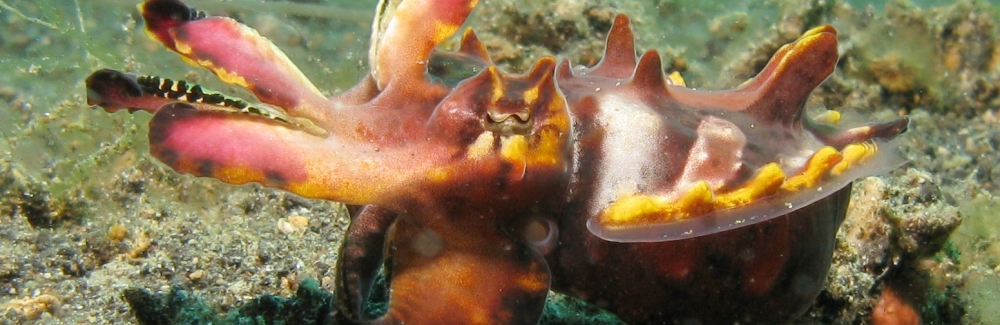
The Flamboyant Cuttlefish (Metasepia pfefferi) is a small but spectacular species found in the Indo-Pacific region. Reaching a maximum size of only 8 cm, these cuttlefish are famous for their vibrant colors and toxic flesh. They use their bright colors as a warning signal to potential predators.
Warning: The Flamboyant Cuttlefish is the only known poisonous cephalopod. Do not attempt to handle them.
| Feature | Common Cuttlefish (Sepia officinalis) | Flamboyant Cuttlefish (Metasepia pfefferi) |
|---|---|---|
| Size | Up to 50 cm | Up to 8 cm |
| Location | Mediterranean, North Sea, Atlantic | Indo-Pacific |
| Unique Features | Intricate camouflage | Vibrant colors, toxic flesh |
Where to find them while diving: Cuttlefish are commonly found in shallow, vegetated habitats such as seagrass beds and coral reefs. They typically inhabit depths ranging from 1 to 20 meters. Look for them near rocks, coral, and other structures where they can easily blend in.
Nautilus: Living Fossils of the Deep
Imagine encountering a creature that has remained virtually unchanged for millions of years. That's the nautilus, often referred to as a "living fossil." These ancient cephalopods offer a glimpse into the distant past, connecting us to a time when dinosaurs roamed the Earth.
Nautiluses are easily recognizable by their distinctive coiled shell. This shell is divided into multiple chambers, which the nautilus uses for buoyancy control. By adjusting the amount of gas and liquid in these chambers, the nautilus can precisely regulate its position in the water column.
Unlike other cephalopods, nautiluses have relatively simple eyes. Their eyes lack lenses and function more like pinhole cameras, providing them with a limited field of vision. They are primarily scavengers and predators of small crustaceans, using their tentacles to capture prey.
Nautiluses are slow-growing and have long lifespans, reaching maturity at around 15 years of age and living for over 20 years.
Species Example 1: Chambered Nautilus (Nautilus pompilius)
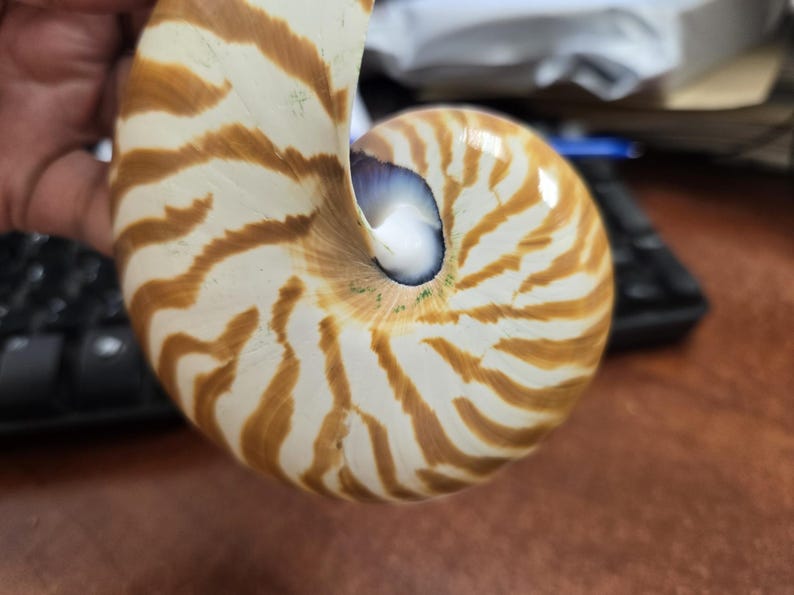
The Chambered Nautilus (Nautilus pompilius) is the most common and widely distributed nautilus species. They can grow up to 26 cm in shell diameter and are found throughout the Indo-Pacific region. Their shells are characterized by their distinctive brown and white stripes.
Species Example 2: Belau Nautilus (Nautilus belauensis)
The Belau Nautilus (Nautilus belauensis) is a species endemic to the waters around Palau. They are slightly smaller than the Chambered Nautilus, reaching a shell diameter of around 22 cm. Their shells tend to be smoother and less patterned than those of the Chambered Nautilus.
| Feature | Chambered Nautilus (Nautilus pompilius) | Belau Nautilus (Nautilus belauensis) |
|---|---|---|
| Size | Up to 26 cm | Up to 22 cm |
| Location | Indo-Pacific | Palau |
| Shell Pattern | Brown and white stripes | Smoother, less patterned |
Conservation Concerns: Sadly, nautilus populations are facing increasing threats due to overfishing and the shell trade. Their slow growth rate and long lifespan make them particularly vulnerable to exploitation.
Where to find them while diving: Nautiluses inhabit deep-water environments, typically at depths ranging from 100 to 500 meters. Observing them in their natural habitat often requires specialized equipment or submersibles. Some dive operators offer specialized dives to observe nautiluses, but these are rare.
Ram's Horn Squid: The Spiraled Enigma
The Ram's Horn Squid (Spirula spirula) is a small and enigmatic cephalopod known for its unique internal shell. Unlike other squid species, the Ram's Horn Squid possesses a coiled, chambered shell that resembles a miniature ram's horn.
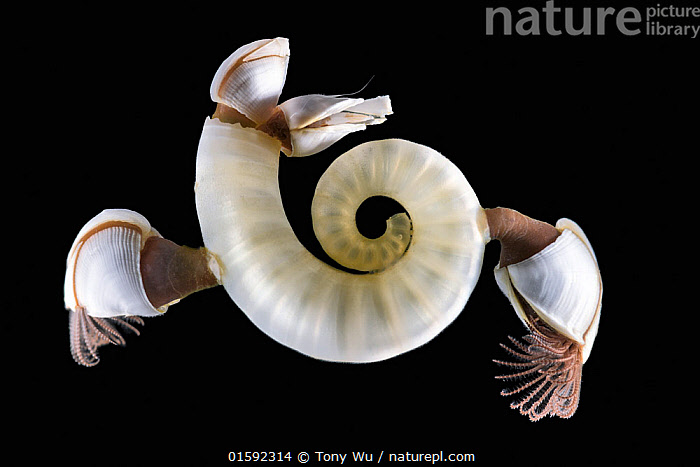
This internal shell is used for buoyancy control, similar to the shell of a nautilus. The Ram's Horn Squid is a small species, typically reaching a length of only a few centimeters. They inhabit the deep sea, making them rarely observed alive in their natural habitat.
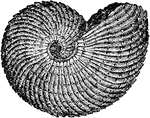
Ram's Horn Squid are also believed to be bioluminescent, although the exact function of their bioluminescence is still unknown.
Paper Nautilus (Argonaut): Not Quite a Nautilus
The Paper Nautilus (Argonauta argo) is a fascinating cephalopod that is often mistaken for a true nautilus. However, the Paper Nautilus is actually a type of octopus.

The female Paper Nautilus secretes a thin, paper-like shell that she uses to protect her eggs. This "shell" is not a true shell like that of a nautilus, but rather a specialized egg case. The male Paper Nautilus is significantly smaller than the female and does not produce a shell.

Paper nautiluses have a pelagic lifestyle, meaning they live in the open ocean. They feed on small crustaceans and other planktonic organisms.
Other Notable Cephalopods (Brief Mentions)
The world of cephalopods is incredibly diverse, with many other fascinating species beyond those we've already discussed. Here are a few more notable examples:
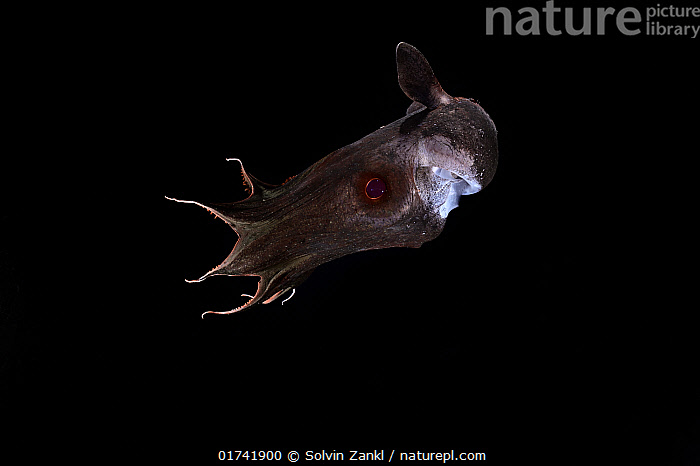
- Vampire Squid (Vampyroteuthis infernalis): A deep-sea dweller with unique features, including bioluminescent organs and a cloak-like web connecting its arms.
- Bobtail Squid (Rossia pacifica): A small, burrowing squid that has a symbiotic relationship with bioluminescent bacteria, which it uses for camouflage.

- Cockatoo Squid (Cranchiidae family): A family of squid characterized by their translucent bodies and unique features, such as their ability to inflate themselves with water.

- Giant Squid (Architeuthis dux): One of the largest invertebrates on Earth, reaching lengths of up to
13 meters. They are elusive creatures that inhabit the deep ocean.

- Colossal Squid (Mesonychoteuthis hamiltoni): Even larger than the Giant Squid, the Colossal Squid is the largest invertebrate in terms of mass. They inhabit the cold waters of the Antarctic Ocean.
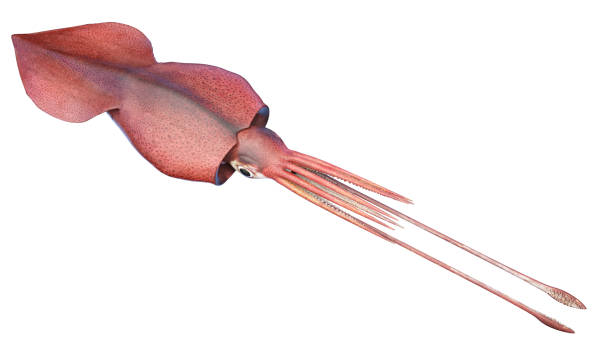
These are just a few examples of the many other cephalopod species that exist. The vastness and diversity of this group are truly remarkable.
Cephalopods and Conservation: Why We Need to Protect Them
Cephalopod populations are facing increasing threats from a variety of factors, including:
- Overfishing: Many cephalopod species are targeted for commercial fishing, leading to population declines.
- Habitat Destruction: The destruction of coastal habitats, such as seagrass beds and coral reefs, can negatively impact cephalopod populations.
- Climate Change: Ocean acidification and rising sea temperatures can also pose threats to cephalopods.
Cephalopods play a vital role in the marine ecosystem, serving as both prey and predators. Protecting these fascinating creatures is essential for maintaining the health and balance of the ocean.
Expert Advice: Support sustainable seafood choices by choosing cephalopod species that are harvested responsibly. Look for certifications from organizations like the Marine Stewardship Council (MSC).
What can you do?
- Practice responsible diving: Avoid touching or disturbing cephalopods and their habitats.
- Support sustainable seafood choices: Choose cephalopod species that are harvested responsibly.
- Raise awareness: Share your knowledge and passion for cephalopods with others.
- Support conservation organizations: Donate to or volunteer with organizations that are working to protect cephalopods and their habitats.
Conclusion: Dive Deeper into the World of Cephalopods!
Cephalopods are among the most intelligent and adaptable creatures on Earth. Their unique adaptations, from camouflage to buoyancy control, have allowed them to thrive in a variety of marine environments.
By appreciating and protecting these fascinating creatures, we can help ensure their survival for generations to come. So, the next time you're diving, keep an eye out for these incredible animals. You never know what wonders you might discover!
Share this article with your fellow dive buddies, leave a comment below with your favorite cephalopod encounter, and be sure to explore other exciting content on Pro Dive Vibes!