The Architecture of Depth: Cytoskeletal Dynamics and Cellular Signaling Under Pressure

For decades, the diving community has conceptualized the human body at depth through the lens of gas laws and fluid dynamics. We talk about "on-gassing" and "off-gassing" as if we were simple pressurized containers. However, as we push the boundaries of technical diving into the mesophotic zone and beyond, this "bag of water" analogy fails to capture the intricate biological reality of what happens when the human body is subjected to extreme hydrostatic pressure (HP). 1
To truly understand decompression stress, nitrogen narcosis, and high-pressure nervous syndrome (HPNS), we must look smaller—down to the very scaffolding of life: the cytoskeleton. The cell is not a passive vessel; it is a complex, tensegrity-based structure where structural integrity is inextricably linked to biochemical signaling. When we descend, the water column doesn't just compress the air in our lungs; it exerts a profound influence on the molecular architecture of every cell in our bodies.
The Invisible Architect: Redefining the Cell for the Advanced Diver
The cytoskeleton is a dynamic network of protein filaments that provides shape, facilitates movement, and organizes the interior of the cell. It consists of three primary components, each with a specific role in maintaining cellular "tensegrity"—a term coined to describe structures that stabilize themselves through a balance of compression and tension.
| Cytoskeletal Component | Protein Subunit | Primary Function | Pressure Sensitivity |
|---|---|---|---|
| Microtubules | Tubulin | Intracellular transport | High (Depolymerization) |
| Microfilaments | Actin | Cell shape & motility | Moderate (Reorganization) |
| Intermediate Filaments | Various | Mechanical strength | Low (High Stability) |
Hydrostatic pressure (HP) is a unique stressor because it acts instantly and uniformly across the entire cellular volume. Unlike the crushing force of a physical weight, HP influences the molecular volume of biochemical reactions. If a process—such as the assembly of a protein chain—results in an increase in volume, high pressure will thermodynamically favor the reverse reaction. 2 This means that at the depths frequented by technical divers, the very "bricks and mortar" of our cells begin to destabilize.
Microtubules and Actin: The Scaffolding Under Strain
The assembly of cytoskeletal polymers is a delicate thermodynamic balance. Microtubules, which act as the "train tracks" for transporting nutrients and neurotransmitters within the cell, are particularly sensitive to depth.
Microtubule Instability and Transport
High hydrostatic pressure favors the depolymerization of microtubules. As we descend, the tubulin subunits that make up these tracks begin to dissociate. This isn't just a structural issue; it's a logistical one. When these tracks break down, the intracellular transport of essential proteins and signaling molecules slows down. In the context of the nervous system, this can interfere with the delivery of neurotransmitters to the synapse, potentially contributing to the cognitive shifts we associate with deep diving. 1
Actin Reorganization
Actin microfilaments are responsible for the cell’s "muscular" functions—maintaining shape, allowing cells to migrate, and facilitating the division of cells. Under pressure, actin filaments undergo significant reorganization. This shift can lead to:
- Loss of cell-to-cell adhesion: Cells become less "sticky," potentially affecting the integrity of the blood-brain barrier.
- Altered motility: Immune cells may move less efficiently toward sites of injury or gas-bubble-induced trauma.
- Structural collapse: In extreme cases, the cell may lose its characteristic shape, leading to a cascade of internal stress signals.

Mechanotransduction: How Your Cells 'Feel' the Water Column
One of the most fascinating aspects of cellular biology is mechanotransduction: the process by which a cell converts a physical force into a biochemical signal. While we often focus on the macro-level mechanics of The Physics of the Middle Ear, the micro-level mechanics are equally vital.
The primary sensors for this process are integrins and focal adhesions. These are specialized protein complexes that anchor the cell to the extracellular matrix. When the surrounding pressure changes, these anchors "tug" on the cytoskeleton. This physical pull is transmitted directly to the nucleus, where it can actually turn genes on or off.
Divemaster’s Note: Think of your cells like a high-tech building designed to sway in an earthquake. The building "feels" the tremor through its foundation and adjusts its internal systems to prevent a collapse. Your cells do the same with the water column, but if the "sway" is too great, the internal systems start to malfunction.
This mechanical stress at the micro level is the precursor to the systemic responses we see in The Martyrdom of the Immune System. The cell "senses" the pressure as a threat, triggering an inflammatory response before a single bubble has even formed.
Disrupting the Cellular Telephone: Signal Transduction Under Pressure
If the cytoskeleton is the scaffolding, signal transduction is the "cellular telephone" system. Hydrostatic pressure creates "static" on the line by interfering with several key pathways.
- G-Protein Coupled Receptors (GPCRs): These receptors sit on the cell membrane and wait for external signals (like hormones). Pressure can alter the fluidity of the cell membrane, making it harder for these receptors to change shape and transmit their message. This directly impacts The Chemistry of Calm, as hormones like adrenaline may find their "docking stations" less responsive.
- Secondary Messengers (cAMP): Once a signal is received, the cell uses molecules like cyclic AMP to spread the word. HP has been shown to inhibit the production of these messengers, effectively "muting" the cell's internal communication.
- Calcium Signaling: Calcium is the master switch for many cellular functions, including muscle contraction and nerve firing. Because the gates that let calcium in and out (ion channels) are often tethered to the cytoskeleton, structural shifts can cause these gates to leak or jam. This is a primary suspect in the tremors and excitability seen in High-Pressure Nervous Syndrome (HPNS). 1
The Cytoskeletal Link to Platelets and Inflammation
The most tangible evidence of cytoskeletal disruption for the diver is found in the blood. We have previously explored how Blood Platelet Aggregation serves as a frontier for decompression stress. We now know that this aggregation is driven by cytoskeletal shape changes.
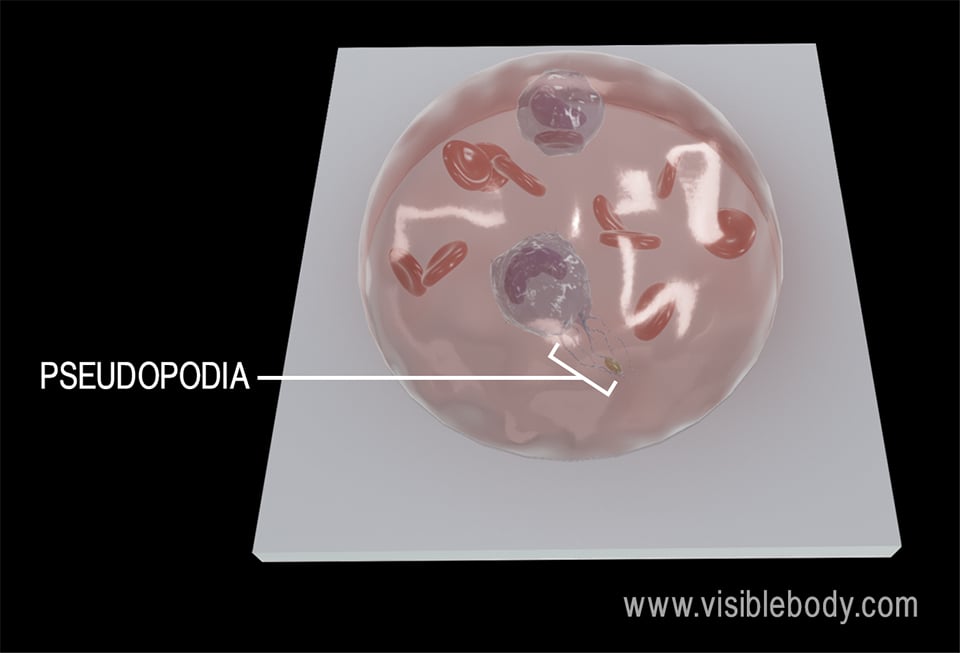
When a platelet is "activated" by the stress of pressure or the presence of microbubbles, its cytoskeleton undergoes a radical transformation. It changes from a smooth, discoid shape into a "spiky" sphere with long protrusions called pseudopodia. This change is entirely driven by actin polymerization. These spikes allow platelets to snag on one another and on the vessel walls, leading to the micro-clots that characterize decompression stress. 3
This synergy between structural protein damage and the biochemical cascades of the immune system suggests that DCS is not just a "bubble problem," but a "structural integrity problem."
Metabolic Consequences: From Hormones to Oxidative Stress
The impact of pressure reaches deep into the cell's power plants—the mitochondria. Under normal conditions, the cytoskeleton positions mitochondria exactly where energy is needed most. However, pressure-induced cytoskeletal shifts can cause mitochondria to relocate or cluster, leading to inefficient energy production and the leakage of reactive oxygen species (ROS).
This structural damage creates a massive need for Antioxidant Theory in Diving. When the cytoskeleton is compromised, the cell's ability to manage oxidative strain is diminished, making the diver more vulnerable to the effects of high partial pressures of oxygen. 4
Furthermore, the endocrine system's response to depth is amplified by this cellular stress. As the cytoskeleton struggles to maintain its form, the cell releases "heat shock proteins" and other stress markers that signal the adrenal glands to ramp up production of cortisol and adrenaline.
The Technical Diver’s Perspective: Is Adaptation Possible?
Can we train our cells to handle the pressure? Research into "cytoskeletal hardening" suggests that repeated, controlled exposure to hyperbaric environments may lead to cellular acclimatization.
- Acclimatization: Regular divers may develop more robust cytoskeletal networks or more efficient mechanotransduction pathways.
- CNS Vulnerability: The central nervous system remains the most vulnerable zone because glial cells (the support cells for neurons) are highly sensitive to deformation. This is why Spinal Cord Pathophysiology remains a critical concern for deep exploration. 3
- Future Algorithms: Modern decompression theory is moving toward incorporating "biological markers" of stress. In the future, your dive computer might not just track nitrogen; it might use sensors to monitor the cellular stress signals resulting from cytoskeletal strain.
Checklist for Mitigating Cellular Stress
- Hydration: Essential for maintaining the fluid environment the cytoskeleton requires.
- Slow Descents: Gives cells more time to adjust to the mechanical shift of mechanotransduction.
- Antioxidant Loading: Using vitamins C and E to help the cell cope with ROS leakage from displaced mitochondria.
- Rest: Allowing time for "re-polymerization" of microtubules post-dive.
- Thermal Management: Cold water further destabilizes microtubules; staying warm is a cellular necessity.
Conclusion: Respecting the Biological Limits of the Deep
The deep ocean is an environment that challenges the very foundation of life. By moving beyond the simplified models of the past and embracing the complex architecture of the cell, we gain a deeper respect for the limits of our own biology. Understanding that our "scaffolding" is under strain every time we pass the 40-meter mark is not meant to discourage exploration, but to refine it.
The future of elite diving theory lies in mechanobiology. As we continue to bridge the gap between the physics of the water column and the mechanics of the cell, we move closer to a safer, more resilient way of exploring the abyss. Respect the depth, but more importantly, respect the invisible architect working tirelessly within your cells to hold it all together.
Ready to dive deeper into the science of the human body at pressure? Explore our full series on Diving Theory to master the frontier of hyperbaric physiology.