The Martyrdom of the Immune System: The Biochemical Cascades of Decompression Sickness

For decades, the diving community has viewed Decompression Sickness (DCS) through a purely mechanical lens. We were taught that bubbles are like "corks in a pipe," physically blocking blood flow and causing tissue hypoxia through simple obstruction 1. While this mechanical model explains the immediate, gross symptoms of an arterial gas embolism or a massive "bend," it fails to account for the lingering malaise, the delayed onset of neurological symptoms, or why some divers suffer "undeserved" hits despite perfect computer profiles.
Modern diving medicine has shifted its focus from bubble volume to the biochemical reaction those bubbles trigger 4. We are beginning to understand DCS not just as a gas-loading problem, but as a systemic inflammatory disease. This is the "Martyrdom" of the immune system: a state where the body’s own defense mechanisms, in an attempt to neutralize what they perceive as foreign invaders (bubbles), end up causing more damage to the host tissues than the gas itself 1.
Beyond the Mechanical: Redefining DCS as an Inflammatory Disease
The old analogy of a bubble acting as a physical plug is only half the story. While large bubbles can indeed block vessels or stretch nerve endings 2, the most insidious damage occurs at the microscopic level. When inert gas separates from solution—often seeded by pre-existing Micronuclei—it creates a gas-liquid interface that the body treats as a massive surface injury 4.
This shift in perspective means we must look at DCS as a biochemical cascade. The bubble is merely the match; the immune system provides the fuel. This explains why symptoms can evolve over hours or even days, long after the physical gas has theoretically been eliminated or re-absorbed into solution 3.
| Feature | Mechanical Model (The "Cork") | Biochemical Model (The "Cascade") |
|---|---|---|
| Primary Cause | Physical vessel obstruction | Inflammatory immune response |
| Target | Blood flow/Tissue pressure | Endothelium/Plasma proteins |
| Resolution | Immediate with recompression | Delayed; requires anti-inflammatories |
| Scope | Localized to bubble site | Systemic and widespread |
The Bubble-Blood Interface: Contact Activation
A bubble in the bloodstream is not a "clean" void. It is a highly reactive surface. Because gas is hydrophobic, the interface between the bubble and the surrounding plasma causes a phenomenon known as protein denaturation.
When plasma proteins come into contact with the gas-liquid interface of a bubble, they unfold and change shape. This structural change exposes "hidden" parts of the protein that the immune system identifies as "non-self." This is the initial trigger for the inflammatory cascade. Even small "silent" bubbles—those that don't cause immediate pain—can initiate this systemic response, contributing to what we call Subclinical DCS.
Furthermore, the Micronuclei Theory suggests that these seeds of gas are present in all divers. The biochemical reaction begins the moment these nuclei begin to grow during ascent, effectively "priming" the immune system before the diver even reaches the safety stop 2.
The Complement System: The Immune System’s Tripwire
The Complement System is a part of the innate immune system designed to destroy invading bacteria. It acts as a biochemical tripwire. When bubbles denature plasma proteins, they activate this system, specifically releasing potent signaling molecules called C3a and C5a anaphylatoxins.
These molecules are the "alarm bells" of the body. Their primary roles include:
- Increasing Vascular Permeability: Making blood vessels "leaky" so that immune cells can exit the bloodstream and reach the "injured" site 1.
- Chemotaxis: Acting as a chemical breadcrumb trail that recruits white blood cells (leukocytes) to the area of the bubble.
This is where the martyrdom begins. The complement system doesn't realize it's attacking a gas bubble that could be resolved with pressure; it treats the bubble like a pathogen, leading to a massive, unnecessary inflammatory surge.
Endothelial Dysfunction and the 'Rolling' Leukocyte
The endothelium—the single layer of cells lining your blood vessels—is not just a passive container. It is a dynamic, metabolic organ. In the presence of bubbles and complement activation, the endothelium becomes "sticky."
The Leukocyte Traffic Jam
Activated white blood cells, specifically neutrophils, begin to express adhesion molecules. Instead of flowing smoothly through the capillaries, they begin to "roll" along the vessel walls and eventually stick to them. This process, known as leukocyte adhesion, creates microscopic traffic jams. These jams can block blood flow even if the original bubble has already shrunk or dissolved 1.
Capillary Leak Syndrome
As the endothelium becomes compromised, plasma begins to leak out of the intravascular space and into the surrounding tissues 1. This leads to two dangerous conditions:
- Hemoconcentration: The blood becomes thicker and more viscous (sludgy), making it harder for the heart to pump and further reducing oxygen delivery to vital organs 1.
- Tissue Edema: Swelling in the tissues that can compress nerves and further impair gas exchange.
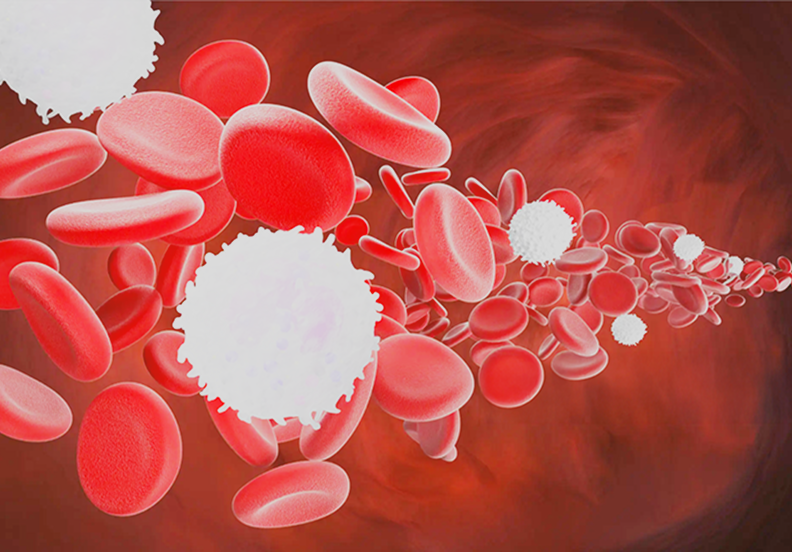
Microparticles and Platelets: The Messengers of Stress
Recent research has highlighted the role of Endothelial Microparticles (EMPs). These are tiny vesicles shed by the vessel lining when it is under decompression stress. EMPs act as long-range messengers, carrying inflammatory signals to parts of the body that may not even have bubbles present.
Simultaneously, the bubble surface triggers platelet aggregation 1. Platelets, which are responsible for clotting, see the bubble-blood interface as a "wound." They begin to clump together around the bubble, forming a stable shell.
Expert Note: This platelet shell is a primary reason why
recompression is a magic bulletis a myth. Once a bubble is coated in a "non-compressible" clot of platelets and fibrin, simply increasing the ambient pressure cannot "squish" the bubble as effectively as it could a naked gas pocket 1.
This hidden inflammatory cost is a hallmark of repetitive diving. Every time we dive, we generate some level of EMPs and platelet activity, contributing to a cumulative physiological load that can be tracked via Heart Rate Variability.
The CNS Connection: Inflammation in the Spinal Cord
The Central Nervous System (CNS) is uniquely vulnerable to this inflammatory "friendly fire." Unlike muscle tissue, the spinal cord has a high lipid content and a complex venous drainage system known as the Batson plexus.
When bubbles form or lodge here, the resulting inflammation is devastating. The myelin sheaths—the fatty insulation around your nerves—are particularly susceptible to lipid peroxidation caused by the inflammatory markers released during DCS. This is explored deeply in our guide on Spinal Cord Pathophysiology, where we detail how the combination of mechanical pressure and biochemical toxicity leads to the classic symptoms of numbness and paralysis 3.
The Genetic Component: Why Some Divers 'Overreact'
We have all met the "brass diver" who seems to get away with aggressive profiles, while another diver suffers an "undeserved" hit on a conservative one. The answer often lies in our DNA.
Some individuals are "High Responders." Their immune systems are genetically predisposed to produce a more aggressive complement and cytokine response to the presence of inert gas bubbles. If your DNA dictates a massive inflammatory surge at the first sign of a bubble, you are at a significantly higher risk of DCS than a "Low Responder" on the same dive profile. For a deeper dive into this, see our article on Genetic Susceptibility to DCS.
Why Recompression Isn’t a Magic Bullet
If DCS were purely mechanical, putting a diver in a chamber would solve the problem instantly by shrinking the bubbles 1. However, because of the biochemical cascade, we often see a "lag time" between bubble resolution and symptom resolution 3.
- The Inflammatory "Hangover": Even after the gas is gone, the "sticky" leukocytes and denatured proteins remain.
- Ischemia-Reperfusion Injury: When blood flow is finally restored to a blocked area, the sudden influx of oxygen can actually trigger a second wave of inflammation and free radical damage.
- Non-Compressible Clots: As mentioned, platelet-wrapped bubbles do not follow Boyle's Law perfectly 1.
This is why modern hyperbaric protocols emphasize adjunctive therapies. IV fluids are critical to combat hemoconcentration and "thin" the sludgy blood 1. High-flow oxygen helps not just with off-gassing, but also with reducing the inflammatory response of the endothelium.

Practical Implications for the Advanced Diver
Understanding that DCS is an inflammatory event allows us to take proactive steps to "harden" our bodies against the stress of decompression.
Mitigating the Inflammatory Burden
- Hydration is Non-Negotiable: Being well-hydrated increases plasma volume, which helps prevent the "sludging" of blood and reduces the concentration of inflammatory markers 1.
- Physical Fitness: Regular aerobic exercise has been shown to improve endothelial function, making the vessel walls less "sticky" and more resilient to bubble-induced stress.
- Pre-Conditioning: Some evidence suggests that "heat shock" (like a sauna) or mild exercise 24 hours before a dive can trigger protective proteins that mitigate the inflammatory response.
The Diver’s "Hardening" Checklist
- Hydrate: Consume 500ml of water/electrolytes 1 hour before the dive.
- Avoid Alcohol: Alcohol promotes dehydration and can exacerbate endothelial dysfunction.
- Optimize HRV: Use Heart Rate Variability to monitor if your body is recovered enough for a high-stress dive.
- Conservative Buffers: Add "padding" to your stops to allow the biochemical system time to stabilize, not just the gas levels.
- Minimize "Jostling": Avoid heavy exertion or sudden joint movements immediately post-dive to prevent Tribonucleation from seeding new bubbles 2.
Conclusion
Decompression sickness is far more than a simple physics problem involving pressure and volume. It is a complex, biological "martyrdom" where our own survival mechanisms turn against us. By moving beyond the "cork in a pipe" mentality, we can better appreciate the importance of hydration, fitness, and conservative dive profiles.
As advanced divers, our goal isn't just to avoid the "bend"—it's to minimize the systemic inflammatory cost of every dive. Treat your endothelium with respect; it’s the only one you’ve got.
Are you interested in how your specific physiology impacts your dive safety? Check out our deep dive into PFO and Scuba Diving to see how heart anatomy interacts with these circulating bubbles.
Further Reading
- Acute Effects on the Human Peripheral Blood Transcriptome of Decompression Sickness Secondary to Scuba Diving - PMC
- Study: Decompression Sickness May be Caused by Faulty Immune Response
- DCS and the Immune System - Andy Davis Sidemount Technical Wreck Diving Blog
- New Research: Decompression Sickness Might Be the “Immune System Going Crazy” | Scuba Diving