The Physics of the Middle Ear: Biomechanics and Equalization Dynamics
Introduction: The Middle Ear as a Pressure Vessel
For the advanced diver, the middle ear is far more than a sensory organ; it is a complex, gas-filled pressure vessel encased within the rigid temporal bone of the skull 1. This anatomical architecture presents a unique physiological challenge: the middle ear is an air space with one flexible wall—the tympanic membrane (eardrum)—and a single, often temperamental venting system known as the Eustachian tube (ET) 2.
In the terrestrial environment, the ET opens sporadically during swallowing or yawning to equilibrate pressure. However, in the hydrostatic environment of a dive, where ambient pressure increases rapidly with depth, the middle ear becomes the site of a high-stakes struggle for equilibrium. While novice training often focuses on the "pinch and blow" method, mastery of depth requires a deeper understanding of the biomechanics and fluid dynamics at play. We are moving beyond simple relief and toward a proactive management of the auditory system’s structural integrity.
Boyle’s Law and the Middle Ear Cavity
The physics of equalization begins with Boyle’s Law, which dictates that the volume of a gas is inversely proportional to the ambient pressure. Because the middle ear is a rigid-walled cavity (save for the eardrum), the reduction in gas volume creates a relative vacuum 3.
The 'Critical Volume' Threshold
As a diver descends, the increasing external hydrostatic pressure pushes the tympanic membrane inward. This is not merely a "feeling" of pressure; it is a measurable mechanical deflection. Initially, the eardrum can stretch to accommodate the volume loss, but it quickly reaches a Critical Volume threshold. Beyond this point, the negative pressure (relative to the outside) begins to exert mechanical stress on the mucosal lining and the delicate ossicles (the malleus, incus, and stapes) 13.
| Depth (msw) | Ambient Pressure (ATA) | Middle Ear Gas Volume (if not equalized) |
|---|---|---|
| 0m | 1.0 | 100% |
| 5m | 1.5 | 67% |
| 10m | 2.0 | 50% |
| 30m | 4.0 | 25% |
This mechanical distortion affects the entire chain of the middle ear. The inward movement of the eardrum is transmitted through the ossicles to the oval window, which in turn pushes against the incompressible fluid of the inner ear 1. To compensate, the round window bulges outward into the middle ear space 1. If this gradient is not corrected, the mechanical limit of these membranes is reached, leading to potential rupture.
Anatomy of the Eustachian Tube: More Than a Simple Conduit
The Eustachian tube is frequently misunderstood as a static "pipe." In reality, it is a dynamic valve that remains naturally collapsed 4. This default closed state is a biological defense mechanism, protecting the middle ear from nasopharyngeal pathogens and sudden pressure spikes during coughing or sneezing.
The Muscular Engine of Dilation
Opening the ET requires the coordinated contraction of specific muscles in the soft palate:
- Tensor veli palatini: Often cited as the primary "dilator" of the tube.
- Levator veli palatini: Works in tandem to elevate the soft palate and assist in tube patency.
For the diver, the ET is a "one-way valve" by design. It allows gas to escape from the middle ear to the throat relatively easily during ascent (passive venting), but it requires active muscular intervention or a pressure gradient to open during descent 4.
The Biomechanics of Equalization Techniques
Advanced divers transition from forceful maneuvers to refined biomechanical techniques that minimize stress on the cardiovascular and auditory systems.
Valsalva Maneuver
The most common technique involves closing the nostrils and exhaling against a closed airway. While effective, the physics of the Valsalva maneuver are problematic. It increases intrathoracic pressure, which can impede venous return to the heart and cause a spike in cerebrospinal fluid (CSF) pressure 1. This increase in CSF pressure is transmitted to the inner ear, adding further stress to the already distended round window 1.
Frenzel Technique
The Frenzel maneuver is the gold standard for technical and free divers. Instead of using the lungs, the diver uses the tongue as a piston. By closing the glottis and pushing the back of the tongue upward, the diver creates a localized pressure gradient in the oropharynx, forcing air into the ET. This method is independent of lung volume and avoids the dangerous spikes in thoracic pressure associated with Valsalva.
Voluntary Tubal Opening (VTO)
VTO represents the pinnacle of "ear awareness." By consciously controlling the tensor veli palatini muscles, some divers can hold their ETs open throughout the descent. This allows for a continuous, passive equalization that maintains the middle ear at ambient pressure without any "pop" or "squeeze."
Surfactants and the Eustachian Tube
The effort required to open the ET is governed by the "opening pressure," which is heavily influenced by the surface tension of the mucosal lining. This is where we see a direct overlap with pulmonary mechanics. In our exploration of Surfactants and the Scuba Diver, we discussed how surface-active agents reduce the work of breathing. Similarly, surfactants within the ET reduce the "stickiness" of the tube’s walls.
When a diver is dehydrated, the concentration of these surfactants changes, increasing the surface tension. This makes the "vacuum seal" of the ET much harder to break. Furthermore, inflammation from allergies or previous barotrauma alters the mucosal rheology, effectively "locking" the tube shut despite the diver's best efforts.

The 'Soft Tissue Trap' and the Physics of Failure
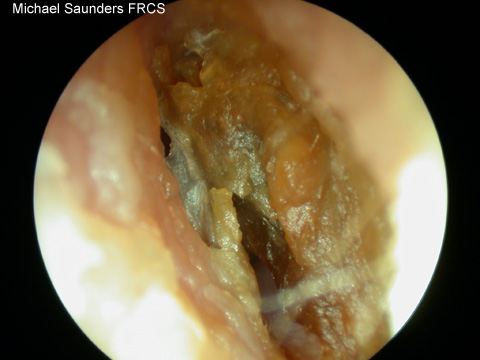
If a diver fails to equalize early and often, they fall into the "Soft Tissue Trap." When the pressure differential between the middle ear and the environment exceeds approximately 90 mmHg, the relative vacuum becomes strong enough to suck the soft tissues of the ET together, effectively locking it 4.
The Physics of the Squeeze
At this stage, attempting a forceful Valsalva is catastrophic. The increased pressure in the pharynx cannot overcome the vacuum-sealed ET, but the spike in CSF pressure can cause the round window to rupture into the middle ear space—a condition known as inner ear barotrauma 1.
Warning: Never attempt to force an equalization if you feel a "lock." Ascend a few feet to reduce the ambient pressure, allowing the ET to "unlock" before attempting a gentle maneuver 4.
If descent continues without equalization, the body attempts to fill the vacuum through other means:
- Edema: Fluid is pulled from the surrounding tissues into the middle ear.
- Hemorrhage: Blood vessels in the mucosal lining burst to fill the space 3.
- Rupture: The tympanic membrane fails mechanically 3.
Acoustic Implications of Middle Ear Pressure
The state of your middle ear directly dictates your underwater sensory experience. As the eardrum becomes stiff due to pressure gradients, its ability to vibrate in response to sound waves is compromised. This is a form of "conductive hearing loss" that compounds the challenges of Acoustic Shadowing.
Furthermore, the density of the gas in the middle ear changes with depth. Higher gas density alters the resonance of the cavity, typically dampening high-frequency sounds more than low-frequency ones. This shift in acoustic impedance is one reason why the underwater soundscape feels "muffled" even before the onset of nitrogen narcosis.
Advanced Pathophysiology: Reverse Blocks and Alternobaric Vertigo
While descent is the primary concern, the physics of ascent present their own risks. As ambient pressure decreases, the gas in the middle ear expands. Usually, this gas escapes passively through the ET.
The Reverse Block
If the ET is blocked by inflammation or excess mucus (often due to the "rebound effect" of using decongestants), the expanding gas becomes trapped. This is a reverse squeeze 2. Unlike a descent squeeze, you cannot "equalize" a reverse block with a Valsalva; doing so only adds more pressure to the trapped gas.
Alternobaric Vertigo
If one ET vents more efficiently than the other, a pressure differential is created between the two ears. This differential acts directly on the vestibular system (the balance mechanism of the inner ear). The result is alternobaric vertigo—a sudden, violent sensation of spinning that can lead to nausea, disorientation, and panic 34.
| Condition | Cause | Primary Symptom |
|---|---|---|
| Middle Ear Squeeze | Failure to equalize on descent | Sharp pain, TM bulge 3 |
| Reverse Block | Trapped gas on ascent | Pressure, pain on ascent |
| Alternobaric Vertigo | Unequal pressure between ears | Spinning sensation, disorientation 4 |
| Caloric Vertigo | Cold water entering one ear | Brief, violent vertigo 3 |
Conclusion: Developing 'Ear Awareness'
The transition from an intermediate to an advanced diver involves moving from reactive to proactive equalization. Understanding the biomechanics of the Eustachian tube and the physics of the "Soft Tissue Trap" allows you to preserve the long-term integrity of your auditory system.
"Clearing your ears" is a chore — actually, equalization is a continuous process of maintaining equilibrium. By mastering techniques like the Frenzel or VTO and staying mindful of hydration and mucosal health, you ensure that the middle ear remains a stable pressure vessel rather than a point of failure.
Pre-Dive Ear Health Checklist
- Hydration: Ensure surfactant efficiency by maintaining fluid levels.
- Pre-clearing: Gently test ET patency on the surface before the descent.
- Technique Check: Are you using your diaphragm (Valsalva) or your tongue (Frenzel)?
- Descent Rate: Are you equalizing every half-meter for the first 10 meters?
- Ascent Awareness: Be prepared to slow your ascent if you feel any "fullness" or pressure.
Mastering the physics of the middle ear is not just about avoiding pain; it is about ensuring that every depth transition is as effortless as the last.