The Chemistry of Calm: Cortisol, Adrenaline, and the Endocrine Response to Depth
The Invisible Regulator: Why the Endocrine System Matters to Divers
While most divers focus on the immediate, electrical responses of the nervous system—the snap decision to check a gauge or the reflexive equalization of an ear—there is a slower, more profound system at work beneath the surface. The endocrine system acts as the body’s long-term communication network, utilizing chemical messengers called hormones to regulate everything from metabolic rate to fluid balance 1.
In the hyperbaric environment, this system is pushed to its limits. Unlike the rapid-fire nervous system, the endocrine response is a "slow-burn" mechanism that dictates how we adapt to the unique stressors of the abyss: hydrostatic pressure, crushing cold, and the biochemical challenge of hyperoxia 1. To master the art of diving, one must move beyond the "fight or flight" cliché. While that initial surge of energy is part of the story, the systemic hormonal shifts that occur during and after a dive determine our decompression safety, our cognitive clarity, and our long-term physical recovery.
The Catecholamine Surge: Adrenaline and Noradrenaline at Depth
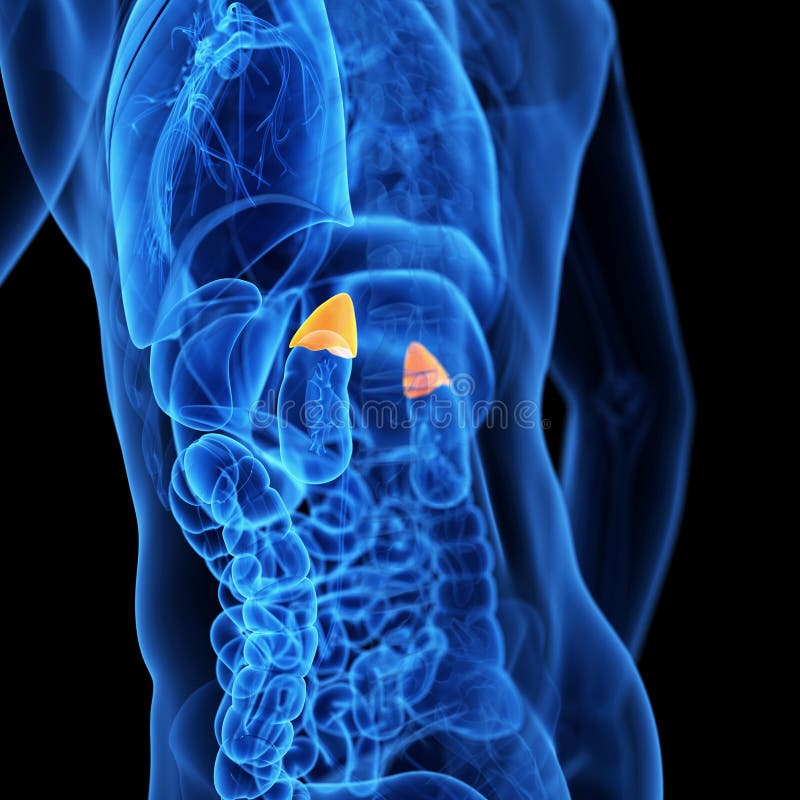
The moment we roll off the boat, the adrenal medulla—the inner portion of the adrenal glands—is recruited into action. It releases catecholamines, specifically adrenaline (epinephrine) and noradrenaline (norepinephrine), into the bloodstream 1. This is the body’s immediate response to submersion and the perceived "threat" of the underwater environment.
Impact on Gas Management and Work of Breathing
Adrenaline is a potent stimulant that increases heart rate and respiratory drive 1. For the diver, this is a double-edged sword. While it primes the muscles for exertion, it significantly complicates gas management. An elevated heart rate increases the rate of gas transport to the tissues, potentially accelerating nitrogen loading 2. Furthermore, an increased respiratory drive increases the Work of Breathing (WOB), which, when combined with the increased density of gas at depth, can lead to a dangerous buildup of carbon dioxide (CO2).
The Amygdala and the Abyss
This chemical surge is the primary fuel for the The Amygdala and the Abyss: The Neurobiology of the CO2-Induced Panic Response. When adrenaline spikes, the brain's "suffocation alarm" becomes hyper-sensitized. Even a minor increase in CO2 can then trigger a full-scale panic response, as the endocrine system and the nervous system enter a feedback loop of escalating stress.
Vasoconstriction and Heat Retention
Adrenaline also triggers peripheral vasoconstriction—the narrowing of blood vessels in the extremities 4. This is a survival mechanism designed to shunt blood toward the core to maintain temperature. However, in the context of diving, this shift alters the "perfusion-diffusion" balance. While it may help with initial heat retention, it creates a complex landscape for gas loading and off-gassing, as blood flow to the skin and muscles is restricted while the core remains highly perfused 3.
Cortisol: The 'Stress Hormone' and Sustained Hyperbaric Exposure
If adrenaline is the sprinter of the endocrine system, cortisol is the marathon runner. Regulated by the HPA (Hypothalamic-Pituitary-Adrenal) axis, cortisol is essential for maintaining homeostasis under the sustained pressure of a long-duration dive 1.
Cortisol’s primary role is the regulation of glucose metabolism. It ensures that the brain and heart have a steady supply of energy by breaking down fats and proteins. During a long technical dive, cortisol levels rise steadily to meet the metabolic demands of the cold and the increased work of moving through a dense medium.
| Hormone | Primary Source | Function at Depth |
|---|---|---|
| Adrenaline | Adrenal Medulla | Immediate HR increase, gas transport |
| Cortisol | Adrenal Cortex | Glucose regulation, long-term stress |
| ADH | Pituitary Gland | Water retention (suppressed at depth) |
| ANP | Heart Atria | Fluid excretion (increased at depth) |
The Delayed Peak and Repetitive Diving
One of the most critical aspects of cortisol for the advanced diver is its delayed peak. Research shows that cortisol levels often remain elevated for hours, or even days, after surfacing. This is part of the body's recovery phase, but it presents a risk for those engaged in repetitive, multi-day diving. Constant HPA axis activation can lead to immune suppression and a state of "diver burnout," where the body can no longer effectively manage the inflammatory stress of decompression 2.
Hormonal Synergy: Interaction with Nitrogen and CO2
The endocrine system does not operate in a vacuum; its messengers interact directly with the gases we breathe. Elevated levels of adrenaline and cortisol can significantly exacerbate the effects of nitrogen narcosis.
In our exploration of Beyond the ‘Martini Effect’: The Cognitive Neuroscience of Nitrogen Narcosis, we discussed how nitrogen disrupts neurotransmitters. When the "chemical cocktail" of a stress response is added to this mix, the result is Cognitive Narrowing. This is a neuropsychological state where the diver’s field of attention shrinks, leading to a loss of situational awareness and an inability to process multiple tasks 1.
Dive Master Tip: If you feel the onset of narcosis, your first priority should be to lower your heart rate. By consciously slowing your breathing, you reduce the catecholamine surge, which in turn lowers metabolic CO2 production and helps clear the cognitive fog.
This relationship creates a dangerous feedback loop:
- Stress triggers adrenaline.
- Adrenaline increases heart rate and CO2 production.
- CO2 increases the potency of nitrogen narcosis.
- Narcosis increases anxiety, further triggering the endocrine system.
This is the "survival spiral" discussed in Cognitive Narrowing and Task Loading: The Neuropsychology of Stress-Induced Errors.

The Endocrine System’s Role in Decompression and Fluid Dynamics
One of the most fascinating endocrine shifts happens not in the brain, but in the heart and kidneys. This is the transition from water retention to water excretion, driven by the suppression of Antidiuretic Hormone (ADH) and the release of Atrial Natriuretic Peptide (ANP).
Immersion Diuresis and Blood Viscosity
As we discussed in Beyond the 'Pee Phenomenon': The Physiology of Immersion Diuresis and Dive Safety, the hydrostatic pressure of the water causes a "thoracic blood shift," where blood is pushed from the extremities into the chest cavity. The heart senses this increased volume and, thinking the body is over-hydrated, releases ANP while the pituitary gland stops producing ADH 1.
The result is immersion diuresis—the need to urinate shortly after entering the water. From a biochemical perspective, this causes the blood to become more "hemoconcentrated" or viscous. Thicker blood moves more slowly through the capillaries, which can impede the efficient transport of nitrogen from the tissues to the lungs during decompression 23.
HRV as a Bio-Marker
Heart Rate Variability (HRV) has emerged as a vital tool for monitoring this endocrine-autonomic balance. A high HRV indicates a flexible, well-recovered system, while a low HRV suggests the body is still struggling with the inflammatory and hormonal aftermath of a previous dive. For more on this, see Heart Rate Variability and Decompression Stress: A New Frontier in Diver Safety.
Immune Modulation and the Hyperbaric Environment
Diving is, at its core, an inflammatory event. The combination of high-pressure oxygen and elevated cortisol levels has a profound impact on our immune system.
Decompression Stress as Inflammation
Modern diving medicine increasingly views "decompression stress" not just as the presence of bubbles, but as a systemic inflammatory response. Cortisol helps regulate this response by redistributing white blood cells 1. However, if the stress is too great—due to cold, exertion, or aggressive profiles—the endocrine system can become overwhelmed, leading to increased oxidative stress.
The Role of Surfactants
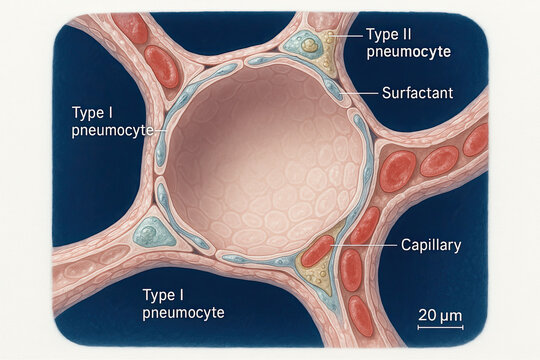
The endocrine system also influences the production of pulmonary surfactants—the complex lipids that keep our lung alveoli from collapsing 1. These surfactants are essential for mitigating the oxidative damage caused by breathing high partial pressures of oxygen. Our deep dive into Surfactants and the Scuba Diver: From Lung Mechanics to Bubble Dynamics explains how these substances stabilize the micro-bubbles that are the precursors to decompression sickness 2.
Managing the Chemical Cocktail: Strategies for the Advanced Diver
Understanding the chemistry of calm allows us to implement strategies that protect our endocrine system and, by extension, our safety.
Psychological Conditioning
The initial adrenaline spike is often a response to the "unknown." Through visualization and rigorous skills practice, we can move tasks from the conscious mind to "muscle memory," reducing the cognitive load and the associated hormonal surge.
Thermal Integrity
Cold is one of the most potent triggers for cortisol and adrenaline release 4. Preventing the "cold-induced surge" is about more than just comfort; it is about keeping the endocrine system in a state of homeostasis to ensure efficient gas exchange.
- Check drysuit seals for integrity
- Ensure base layers are appropriate for the expected thermoclines 4
- Use a high-quality hood to prevent caloric vertigo and the diving reflex 4
- Monitor pre-dive hydration to counteract immersion diuresis
Nutrition and Recovery
To support the HPA axis during multi-day expeditions, nutrition is key. Focus on low-glycemic carbohydrates to provide steady glucose for cortisol to manage, and prioritize antioxidants to combat the oxidative stress of hyperoxia.
| Recovery Phase | Goal | Strategy |
|---|---|---|
| Immediate Post-Dive | Rehydration | Electrolyte-rich fluids, no caffeine |
| 2-4 Hours Post-Dive | Cortisol Reset | Light stretching, quiet environment |
| Evening | Immune Support | High-protein meal, 8+ hours of sleep |
| Next Morning | Readiness Check | Monitor HRV and resting heart rate |
Conclusion: Mastery Through Physiological Awareness
The "Chemistry of Calm" is not a state that happens by accident; it is the result of a diver who understands the interplay between pressure, hormones, and safety. By recognizing that our endocrine system is constantly reacting to the underwater environment, we can take proactive steps to manage our "chemical cocktail."
Mastery of diving theory requires us to look beyond the physics of Boyle’s Law and the mechanics of regulators. We must look inward, at the hormones that dictate our heart rate, our fluid levels, and our ability to think clearly at depth. When you respect your biochemistry as much as your bottom timer, you don't just become a safer diver—you become a part of the environment itself.
Are you ready to monitor your own physiological limits? Stay tuned to Pro Dive Vibes for the latest in hyperbaric research and diver safety.