Stimulants and Decompression: How Peripheral Vasoconstriction Alters Your Off-Gassing Map
For many divers, the pre-dive ritual is as sacred as the gear check itself. It often begins with a double espresso at the marina or a quick nicotine fix before donning the exposure suit. These substances are so ingrained in our daily "surface" lives that we rarely pause to consider how they alter our internal landscape once we slip beneath the waves. However, for the technical or advanced diver, the physiological impact of stimulants is not merely a matter of alertness; it is a fundamental alteration of the "off-gassing map" that your dive computer relies upon to keep you safe.
The primary mechanism at play is peripheral vasoconstriction—the systemic narrowing of blood vessels in the extremities and skin. In the world of decompression theory, blood is the primary vehicle for inert gas transport 1. When you introduce stimulants, you effectively narrow the "highways" of gas exchange. Your dive computer, running complex algorithms like Buhlmann ZHL-16C or the Reduced Gradient Bubble Model (RGBM), assumes a physiological "standard" state where blood flow is optimized for the current environmental conditions. When stimulants disrupt this standard, the gap between the computer's mathematical model and your actual physiological reality begins to widen.
The Sympathetic Surge: How Stimulants Command the Vasculature
To understand why a cup of coffee matters at 100 feet, we must look at the autonomic nervous system (ANS) 3. Stimulants trigger a "sympathetic surge," shifting the body into a state of heightened readiness that mimics the natural fight-or-flight response. This is a state we have previously explored in The Chemistry of Calm: Cortisol, Adrenaline, and the Endocrine Response to Depth, where we discussed how adrenaline impacts performance.
Caffeine’s Adenosine Antagonism
Caffeine operates primarily by blocking adenosine receptors. In a normal state, adenosine promotes vasodilation (widening of the vessels) to ensure tissues receive adequate oxygen and nutrients. By antagonizing these receptors, caffeine allows vasoconstriction to dominate, particularly in the peripheral microvasculature. This reduces the volume of blood reaching the skin and small muscle groups, which are critical areas for gas exchange during a dive.
Nicotine and Epinephrine
Nicotine takes a more direct route by stimulating the release of epinephrine (adrenaline). This hormone forces the body into a state of "artificial" stress, causing an immediate increase in heart rate and systemic vascular resistance. While you might feel more focused, your body is effectively shunting blood away from the periphery to protect the core organs. In the context of diving, this "shunting" creates a mismatch between how much nitrogen your tissues are absorbing and how efficiently they can later be cleared.
Redrawing the Map: Perfusion Mismatches in Decompression Theory
Decompression models treat the human body as a series of theoretical "tissue compartments," ranging from "fast" (lungs, brain) to "slow" (fat, bone, joints) 4. The speed at which these compartments saturate or desaturate is almost entirely dependent on perfusion—the rate of blood flow to that specific tissue 1.
| Tissue Type | Perfusion Level | Gas Exchange Speed | Impact of Stimulants |
|---|---|---|---|
| Fast | High | Rapid | Minimal change |
| Medium | Moderate | Moderate | Increased lag |
| Slow | Low | Slow | Severe bottleneck |
The Shunting Effect
When stimulants induce vasoconstriction, they effectively "redraw" the map of these compartments. Blood is redirected from the skin and extremities toward the core. This means that tissues that are already "slow" due to poor blood supply—such as tendons, ligaments, and adipose tissue—become even slower 2.
Your dive computer has no way of knowing that your peripheral capillary beds are constricted. It continues to calculate the "washout" of nitrogen based on a theoretical blood flow that is no longer occurring at the assumed rate. This creates a perfusion-limited environment where nitrogen remains trapped in the periphery long after the computer suggests it should have been eliminated.
The Off-Gassing Bottleneck: Why Ascent is the Danger Zone
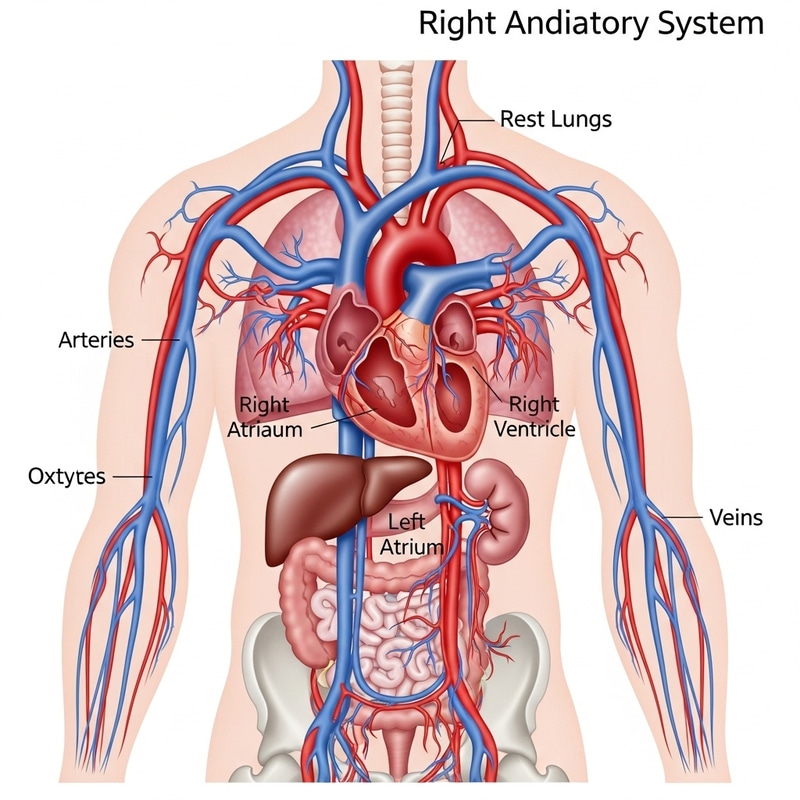
The most critical phase of any dive is the ascent, where the pressure decreases and the inert gas dissolved in your tissues must return to the lungs for elimination 4. This process relies on a delicate balance of pressure gradients and efficient transport.
Inert Gas "Trapping"
If your peripheral vessels are constricted during ascent, the nitrogen dissolved in those tissues is effectively "trapped." It cannot reach the venous system in a dissolved state quickly enough to keep up with the reduction in ambient pressure 2. If the ascent continues according to the computer's "standard" schedule, the nitrogen in these poorly perfused areas may reach a state of supersaturation that exceeds the allowable "M-value," leading to the formation of autochthonous bubbles (bubbles that form directly in the tissue) 2.
The Relationship to the Oxygen Window
Efficient decompression is aided by the Oxygen Window, a physiological phenomenon where the metabolic consumption of oxygen creates "room" in the blood for inert gas to dissolve. As we detailed in The Oxygen Window: Mastering Inherent Unsaturation for Efficient Decompression, this "metabolic vacancy" is only effective if the transport system is functioning at peak efficiency. Vasoconstriction limits the volume of blood passing through the tissues, meaning the "vacancy" created by the oxygen window cannot be fully utilized to carry away nitrogen.
Expert Tip: If you have consumed high levels of stimulants, your "Oxygen Window" is effectively narrowed because the delivery of oxygen and the removal of nitrogen are both throttled by reduced vessel diameter.
The Compound Effect: Stimulants, Cold, and Immersion
In the real world, stimulants don't act in a vacuum. They interact with the harsh environment of the underwater world, creating a "Triple Threat" of vasoconstriction.
- Immersion Diuresis: As discussed in Beyond the 'Pee Phenomenon': The Physiology of Immersion Diuresis and Dive Safety, the pressure of water on the body causes a thoracic blood shift, leading the kidneys to shed fluid. This reduces overall plasma volume.
- Cold-Water Thermoregulation: The body naturally constricts peripheral vessels to conserve heat in cold water 3.
- Stimulants: Caffeine or nicotine adds a third layer of constriction.
This synergy significantly increases the risk of decompression stress. Furthermore, while the body uses vasoconstriction to stay warm, stimulants can actually interfere with this process. In Thermodynamics of the Deep: Helium’s Thermal Challenge and Your Decompression Budget, we noted that thermoregulation is a high-energy process. Stimulants can cause a "false" sense of warmth while simultaneously increasing the rate of heat loss through increased metabolic activity, eventually leading to shivering, which further complicates gas exchange.
Blood Rheology: The Thickened Path of Least Resistance
Stimulants don't just change the size of the pipes; they change the nature of the fluid inside them. Vasoconstriction increases peripheral resistance, which in turn raises blood pressure. When combined with the dehydration caused by immersion diuresis, the result is increased blood viscosity.
As explored in Blood Viscosity and Nitrogen Flow: How Hemoconcentration Dictates Gas Exchange Efficiency, "sludgy" blood moves poorly through narrowed vessels. This increased resistance makes it even harder for inert gas to be transported from the tissues to the lungs. This environment is a prime recipe for Subclinical DCS, where microscopic bubbles (VGE) cause inflammatory responses even if the diver doesn't experience "hit" symptoms 2. You can read more about this hidden cost in our guide to Subclinical DCS: The Hidden Physiological Cost of Repetitive Diving.
Pseudoephedrine and ADHD Medications: The Hidden Variables
While caffeine and nicotine are the most common stimulants, many divers use pharmaceutical-grade vasoconstrictors without realizing the risks.
- Pseudoephedrine (Sudafed): Often used to manage ear equalization issues, this is a potent vasoconstrictor. A significant danger is the "rebound effect," where the drug wears off mid-dive, leading to sudden vasodilation and potential congestion (reverse block), or conversely, maintaining constriction during the critical decompression window.
- ADHD Medications (Amphetamine-based): Medications like Adderall or Ritalin cause sustained, systemic vasoconstriction. Divers on these medications must be aware that their "off-gassing map" is permanently shifted toward a more conservative requirement than their computer might suggest.
Myth: Taking a decongestant makes diving safer by preventing ear barotrauma. Reality: While it may help you "clear," the systemic vasoconstriction can significantly alter your decompression safety margin and carries the risk of a reverse block if it wears off at depth.
Tactical Mitigation for the Advanced Diver
Understanding the risks of stimulants doesn't necessarily mean you must abandon your morning coffee, but it does require a tactical approach to dive planning.
Pre-Dive Checklist for the Stimulated Diver
- Timing: Check the half-life of your stimulant. Caffeine peaks at 45-60 minutes but stays in the system for hours. Try to time your last intake at least 2 hours before the "splash."
- Hydration: For every cup of coffee, drink at least 500ml of water to offset the diuretic effect and maintain plasma volume.
- Gradient Factors: Set your dive computer to a more conservative setting (e.g., GF Low of 30, GF High of 70) to account for the physiological lag in off-gassing.
- Active Warming: Use a heated vest or a hot water suit during the decompression phase. External heat promotes peripheral vasodilation, helping to "open the pipes" and flush out trapped nitrogen.
- The "Off-Effect" Awareness: Be mindful during the initial ascent. As noted in The Oxygen 'Off-Effect': Why CNS Toxicity Risks Persist During Initial Ascent, the transition from depth to deco is a period of high physiological flux.
Conclusion: Mastering the Internal Environment
In the high-stakes world of technical and repetitive diving, we spend thousands of dollars on the best regulators, computers, and gas mixes. Yet, the most complex piece of equipment is the human body itself 3. Stimulants act as a "ghost in the machine," subtly altering the way your body processes inert gas in ways that standard decompression algorithms cannot track.
By understanding that vasoconstriction narrows your off-gassing map, you can make smarter choices about your pre-dive habits and your ascent profiles. Your dive computer tracks the depth and the time, but only you can manage the diver. Stay hydrated, stay warm, and when in doubt, pad your stops. Your "slow" tissues will thank you.