Blood Viscosity and Nitrogen Flow: How Hemoconcentration Dictates Gas Exchange Efficiency
The Invisible Variable: Why Blood Density Matters to Divers
In the world of technical and advanced diving, we often treat decompression theory as a rigid mathematical problem. We obsess over depth, time, and gas mixtures, trusting our dive computers to solve for the tension of inert gases within our tissues. However, these algorithms are based on a fundamental assumption: that the "pipes" through which our blood flows remain constant in their efficiency.
The reality is far more dynamic. Decompression is a balance between the physics of pressure and the physiology of the human body 1. While we focus on the gas gradients, we often ignore the medium responsible for transporting that gas: the blood. Hemoconcentration—the increase in the concentration of red blood cells relative to the plasma (the liquid component of blood)—is the invisible variable that can compromise even the most conservative dive profile.
Hemoconcentration essentially makes your blood "thicker." When the ratio of solids to liquids in your circulatory system shifts, the rheology—or flow characteristics—of your blood changes. This creates a significant disconnect between the static decompression models used by your computer and the actual, dynamic state of your internal gas transport system. If the blood cannot flow efficiently, the nitrogen cannot leave your tissues at the predicted rate 3.
The Rheology of Diving: Understanding Poiseuille’s Law
To understand why blood density matters, we must look at the physics of fluid dynamics, specifically Poiseuille’s Law. This principle states that the flow rate of a liquid through a vessel is determined by several factors, but it is most critically sensitive to the vessel's radius and the fluid's viscosity.
In diving terms, viscosity is the "internal friction" of your blood. The thicker the blood, the more energy is required to move it through the circulatory system. According to Poiseuille’s Law, the flow rate is inversely proportional to viscosity. If your blood viscosity doubles due to dehydration or hemoconcentration, your blood flow rate can be cut in half, assuming all other factors remain equal.
This creates a state of perfusion-limited gas exchange. Your tissues may be screaming to release nitrogen because the pressure gradient is high 4, but if the "conveyor belt" (the blood) is moving at a snail's pace, that nitrogen stays trapped in the tissue. This "sludge blood" effect significantly hinders the efficiency of desaturation during your ascent.
| Factor | Impact on Flow Rate | Effect on Decompression |
|---|---|---|
| Vessel Radius | Exponential Increase | Faster gas transport |
| Pressure Gradient | Linear Increase | Drives gas in/out of solution |
| Viscosity | Inversely Proportional | Slows nitrogen elimination |
| Vessel Length | Inversely Proportional | Minor impact in humans |
From Diuresis to Density: The Physiological Chain Reaction
Hemoconcentration doesn't happen in a vacuum; it is the result of a specific physiological chain reaction triggered by the underwater environment. As we explored in our article Beyond the 'Pee Phenomenon': The Physiology of Immersion Diuresis and Dive Safety, the moment you submerge, your body undergoes a thoracic blood shift.
This shift tricks the heart into thinking there is a fluid overload, leading to immersion diuresis. Your kidneys begin aggressively filtering out water to reduce this perceived volume. The result? You lose a significant portion of your plasma volume while the number of red blood cells remains the same. Your blood becomes more concentrated, and its density spikes.
On long-exposure or technical dives, this is compounded by systemic dehydration from breathing dry tank gas and the metabolic cost of thermoregulation. Furthermore, cold-induced vasoconstriction narrows the peripheral vessels, further increasing the resistance to flow. When you combine narrow vessels with thick, viscous blood, you create a perfect storm for inefficient gas exchange.
Nitrogen Transport: The Bottleneck in the Microvasculature
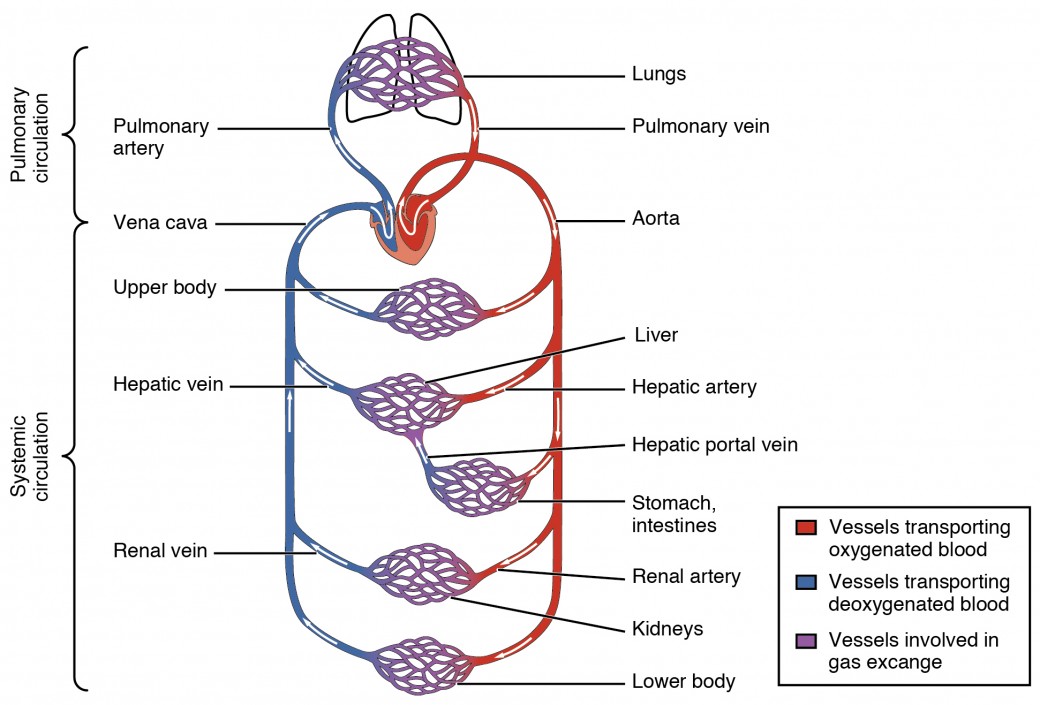
The real danger of hemoconcentration lies in the microvasculature—the vast network of capillaries where the actual exchange of nitrogen occurs between the blood and the tissues 3. Capillaries are so narrow that red blood cells often have to pass through them in single file.
When blood viscosity increases:
- Velocity Drops: The speed of blood through the capillary beds slows down, reducing the volume of blood available to pick up nitrogen molecules 1.
- The Traffic Jam Effect: Thick blood can cause "sludging" in the smallest vessels, where clusters of cells momentarily block flow.
- Increased Diffusion Distance: If certain capillaries become stagnant, nitrogen must diffuse across a greater distance to reach a functional vessel, slowing the process of elimination.
This creates a bottleneck. Even if you are performing a perfect deco stop with a high oxygen gradient, the thick blood acts as a barrier, preventing the "washout" of inert gas from the slower-saturating tissues like fat and bone 3.
Hemoconcentration and Kinetic Asymmetry
We have previously discussed the concept of Kinetic Asymmetry: Why Nitrogen Leaves Your Body Slower Than It Enters. Essentially, the body is more efficient at taking up nitrogen than it is at getting rid of it. Hemoconcentration significantly exacerbates this natural asymmetry.
During descent, your blood is generally well-hydrated and flowing efficiently. You are on-gassing at peak performance. However, by the time you reach the ascent and decompression phase, you have likely been submerged for 60-90 minutes, immersion diuresis has taken its toll, and your blood has thickened.
This means you are trying to off-gas with a compromised circulatory system 2. The reduced cardiac output and increased viscosity mean that the pulmonary return—the blood returning to the lungs to dump nitrogen—is less efficient than the blood that delivered the nitrogen to your tissues at the start of the dive.
The Bubble Catalyst: Viscosity and Subclinical DCS
Thick blood doesn't just slow down gas exchange; it also changes how bubbles behave in your system. As we noted in our guide to Subclinical DCS: The Hidden Physiological Cost of Repetitive Diving, many divers surface with Venous Gas Emboli (VGE) even when following their computers perfectly.
High blood viscosity acts as a catalyst for bubble-related issues:
- Micronuclei Growth: Slower blood flow allows gas micronuclei more time to grow into symptomatic bubbles before they can be filtered by the lungs 2.
- Platelet Aggregation: Thick, slow-moving blood is more prone to clotting and platelet activation around the surface of a bubble. This increases the "inflammatory cost" of the dive.
- Endothelial Damage: Viscous blood creates higher shear stress on the vessel walls (the endothelium), making them more susceptible to damage when bubbles are present.
"I don't feel dehydrated, so I'm fine" — This is a dangerous myth. Immersion diuresis happens regardless of your thirst reflex, and your blood density can spike long before you feel "thirsty."
Why Your Dive Computer is Blind to Your Blood Chemistry
It is vital to remember that your dive computer is a calculator, not a medical monitor. It uses M-values and Gradient Factors (GF) to predict gas tension based on time and depth, but it has no idea what your hematocrit (the ratio of red blood cells to total blood volume) is.
If you are severely hemoconcentrated, your actual tissue tension may be much higher than the "green" bar on your computer suggests. The computer assumes a standard rate of perfusion 3. If your blood is too thick to maintain that rate, you are effectively diving a more aggressive profile than your computer indicates.
This is why mastering your Gradient Factors is so critical. By setting a lower GF High, you create a safety buffer that accounts for these physiological stressors like high blood viscosity and the resulting slow-down in nitrogen clearance.

Practical Mitigation: Managing Viscosity for Safer Ascents
Since we cannot stop the physics of immersion diuresis, we must manage the resulting hemoconcentration through proactive strategies.
1. Pre-Hydration vs. Re-Hydration
Don't wait until the boat ride back to drink water. Pre-hydration is the goal. You want your plasma volume to be at its peak before the thoracic blood shift begins.
- Drink 500ml of water 1 hour before the dive.
- Avoid diuretics like excessive caffeine or alcohol 12 hours prior.
- Use an electrolyte supplement to help your body retain the fluid.
2. The Electrolyte Balance
Plain water can sometimes trigger more diuresis if your sodium levels are low. Including electrolytes (sodium, potassium, magnesium) ensures that the fluid actually stays in your vascular space rather than being immediately processed by the kidneys. This maintains blood pressure and keeps viscosity low.
3. Thermal Management
Cold blood is thick blood. By staying warm, you prevent peripheral vasoconstriction and maintain the "openness" of the capillary beds. This ensures that the blood can reach the tissues to pick up nitrogen and transport it back to the lungs for elimination 1.
4. Active Recovery
After surfacing, gentle movement (not heavy exertion) can help maintain circulation and prevent blood stasis, aiding in the continued elimination of nitrogen that may have been delayed by hemoconcentration during the ascent.
Conclusion: The Diver as a Living System
Decompression safety is often taught as a matter of following the dots on a screen. But as we have seen, the efficiency of gas exchange is dictated by the rheology of our blood. Hemoconcentration is an inevitable consequence of the diving environment, but its impact on nitrogen flow can be the difference between a clean dive and a subclinical hit.
By understanding that blood viscosity is a dynamic variable, we can move toward a more holistic view of dive safety. We are not just mathematical models; we are living systems. Managing your hydration, your warmth, and your ascent markers isn't just about comfort—it's about ensuring that your internal transport system is capable of doing the job your dive computer assumes it is doing.
Next time you prep for a deep or repetitive dive, remember: Thin blood is fast blood. Keep the flow efficient, and you'll keep the nitrogen moving exactly where it needs to go—out of your body.
