Loading...
marine-life#mandarinfish mating#Synchiropus splendidus#reef fish behavior
The Twilight Tryst: A Biologist’s Guide to Mandarinfish Mating Rituals
Pro Dive Vibes
February 28, 20269 min read
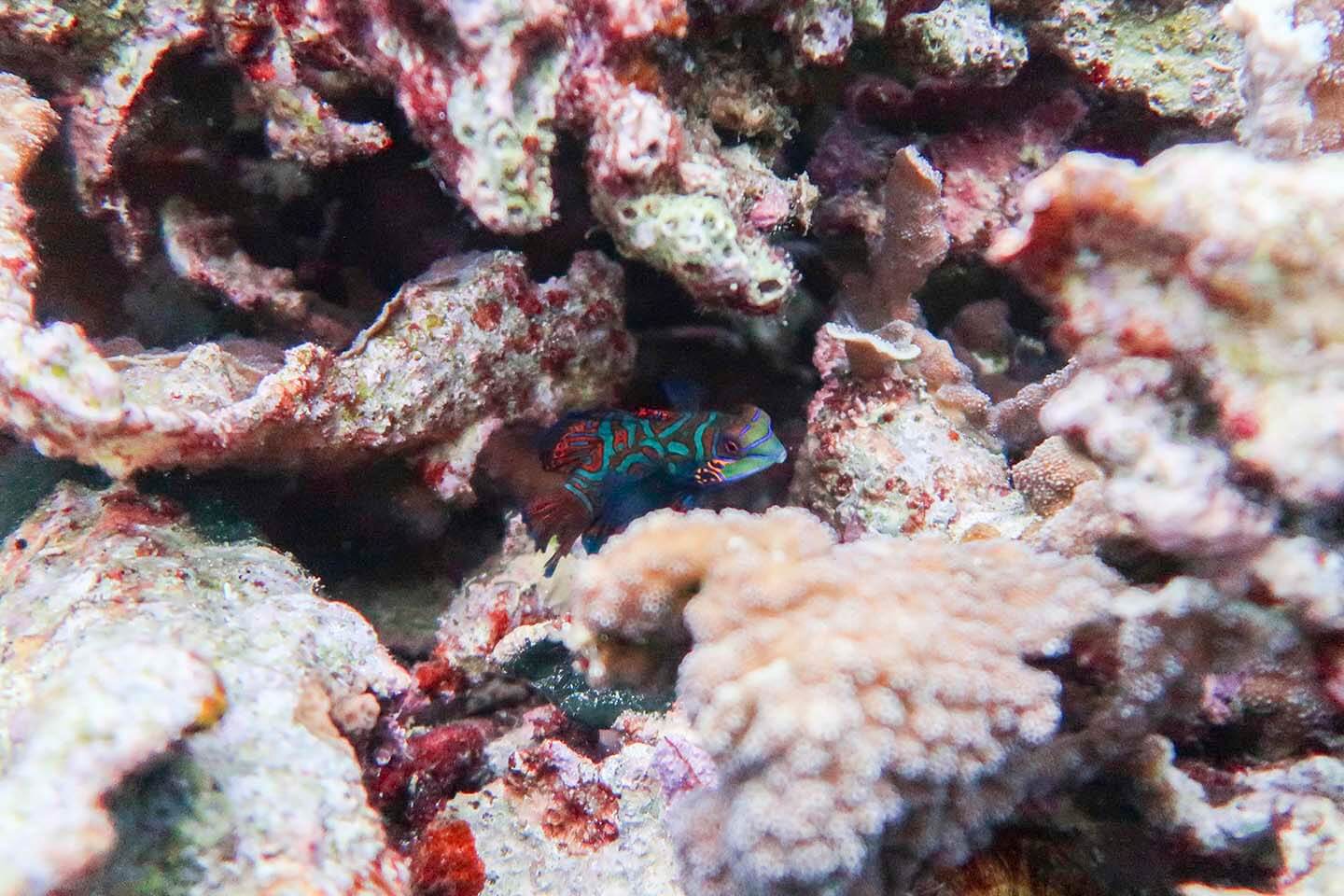
As the sun begins its descent below the horizon, a subtle but electric energy shifts across the coral reef. While most divers are heading back to the boat for a post-dive deco beer, a few "in-the-know" enthusiasts are just beginning their descent into the shallow lagoons and sheltered rubble zones. They are searching for the "holy grail" of reef fish: the Mandarinfish (Synchiropus splendidus).
For the uninitiated, the Mandarinfish looks like something straight out of a 1960s psychedelic poster. With swirling patterns of orange, green, and an impossible shade of blue, they are arguably the most beautiful fish in the ocean. But for a biologist, their beauty is secondary to their behavior. Every evening, during the fleeting window of twilight, these shy creatures emerge from the labyrinthine finger corals to perform a mating ritual so synchronized and spectacular it feels like a choreographed ballet.
This isn't just a pretty show; it is a masterpiece of evolutionary biology, a calculated risk taken in the shadows to ensure the survival of the next generation.
Biology 101: More Than Just a Pretty Face
To understand the Mandarinfish, we first have to clear up a common misconception: they are just colorful gobies — actually, Mandarinfish belong to the dragonet family (Callionymidae). Unlike most reef fish, dragonets have several unique physiological adaptations that make them stand out in the evolutionary tree.
The Toxic Defense
One of the first things you’ll notice about a Mandarinfish is that they don’t look "shiny" like a snapper or a grouper. That’s because they lack scales entirely. In the rough-and-tumble world of coral rubble, scales can be a liability, easily scraped off. Instead, Mandarinfish are covered in a thick, foul-smelling, toxic mucus. This chemical cloak serves two purposes: it protects their delicate skin from sharp coral and acts as a potent deterrent to predators. If you were a grouper, eating a Mandarinfish would be like biting into a bar of bitter, poisonous soap.
The Science of Cyanophores
The most striking feature of Synchiropus splendidus is its blue coloration. In the animal kingdom, blue is incredibly rare. Most animals that appear blue—like blue jays or Morpho butterflies—use structural coloration (microscopic structures that reflect blue light). Mandarinfish are different. They possess cyanophores, which are specialized pigment-containing cells that produce a true blue color.
It is important to distinguish this from the "glow" we see in other species. While we’ve explored the differences between light-producing organisms in our guide to fluorescence and bioluminescence, the Mandarinfish’s color is purely pigment-based. It doesn’t require a UV light to "pop"; it is naturally vibrant, even in the dimming light of dusk.
| Feature | Mandarinfish (Dragonet) | Typical Goby |
|---|---|---|
| Scales | Absent | Present |
| Mucus | Thick, toxic, odorous | Thin, non-toxic |
| Color | Pigment-based (Cyanophores) | Mostly structural/camouflaged |
| Movement | Hovering/Gliding | Darting/Resting on fins |
The Twilight Window: Why Timing is Everything
Timing is everything on the reef. The Mandarinfish is a crepuscular species, meaning it is most active during the transition periods of dawn and dusk. Their mating ritual occurs almost exclusively at sunset, and the biological reasoning for this is fascinating.
Avoiding the "Night Shift"
The reef is a dangerous place during the "change of the guard." As the diurnal (daytime) fish seek shelter, there is a brief period before the nocturnal hunters—the cephalopods and crustaceans we discussed in The Night Shift—fully take over the water column. By timing their mating rise to this specific window, Mandarinfish minimize the risk of being snapped up by a passing predator.
The Biological Clock
The ritual is triggered by decreasing light levels. As the "luxe" levels drop, the fish receive a hormonal signal that it’s time to find a partner. This environmental cue ensures that the entire local population is ready at the same time, maximizing the chances of successful fertilization.

The Courtship Dance: A Step-by-Step Breakdown
Watching a Mandarinfish mating ritual requires patience, but once it begins, it is a four-act play of biological drama.
1. The Gathering
The ritual begins in the "lek." In biology, a lek is an assembly area where males carry out display behavior to attract females. Large males will patrol a specific territory of staghorn coral or rubble, flaring their fins and "pulsing" their colors to show off their health and vigor.
2. The Selection Process
Females are much smaller than males and far more selective. A female will cruise through the male territories, inspecting the candidates. She is looking for the largest, most vibrant male—a visual indicator of a strong immune system and good genes.
3. The Pelagic Rise
Once a pair is formed, the magic happens. The female will rest on the male's pelvic fin, and together, they begin a slow, synchronized ascent. They rise about 12 to 20 inches above the safety of the reef. This is the Pelagic Rise. They are incredibly vulnerable during this time, hovering in the open water where any predator could see them.
4. The 'Snap'
At the apex of their rise, the pair performs a sudden, lightning-fast "snap." In a fraction of a second, they simultaneously release a cloud of eggs and sperm into the water column. Before the "cloud" has even begun to disperse, the fish dart back down into the safety of the coral.
Biologist's Tip: The "snap" is so fast that if you blink, you’ll miss it. Most divers only realize it happened when they see the faint white puff of gametes lingering in the water.
The Evolutionary 'Why': Survival of the Flashiest
Why would a fish evolve such a dangerous, conspicuous ritual? The answer lies in Sexual Selection.
In Mandarinfish, sexual dimorphism is highly pronounced. Males are significantly larger and possess an elongated first dorsal fin spine, which they use like a flag during courtship. While this fin makes them more visible to predators, it is a "handicap" that proves their fitness; if a male can survive to adulthood despite having a giant orange flag on his back, he must have excellent survival skills.
This visual and chemical attraction is the engine of reef evolution. Much like the complex chemical bonds we see in the relationship between clownfish and anemones, the Mandarinfish's ritual is a highly specialized strategy designed to ensure that eggs are released into the current, where they can drift away from the reef's hungry mouths and settle in new habitats.

Diver Etiquette: How to Watch Without Interrupting
The Mandarinfish mating ritual is a delicate affair. They are notoriously shy, and a single clumsy diver can "kill the mood" for the entire reef.
The Golden Rule: Use Red Light
Fish cannot see red light as well as they see white or blue light. If you blast a Mandarinfish with a high-lumen white torch, they will immediately retreat into the coral and likely won't emerge again that evening.
- Use a dedicated red focus light.
- Never point your main beam directly at the coral rubble.
- Keep your lights dimmed until the fish have actually begun their rise.
Buoyancy and the "Rubble Zone"
Mandarinfish live in delicate environments. Often, this is a mix of silt and "fingertip" corals.
- Ensure your fins are well away from the bottom to avoid "silting out" the area.
- Practice "statue buoyancy"—find a spot, get neutral, and do not move.
- Avoid using "muck sticks" or reef hooks in these areas, as you can easily crush the very crevices where the fish hide.
Capturing the Tryst: Photography Tips for the Pelagic Rise
Photographing Mandarinfish is one of the ultimate challenges in underwater macro photography. You are working in near-total darkness, targeting a subject that is moving vertically.
Technical Specifications
To freeze the action of the "snap," you need speed and precision:
- Shutter Speed: Set to at least
1/200or1/250to freeze the motion. - Aperture:
f/8tof/11for a decent depth of field, as the fish move toward you during the rise. - Focus: Use "Back Button Focus" or pre-focus on the top of the coral head where the fish are likely to emerge.
Ethical Photography
- Limit your shots: Don't fire twenty strobes at a single pair. Two or three shots are plenty.
- No "Herding": Never try to poke or move the fish to get them to mate. It doesn't work and causes extreme stress.
- Wait for the rise: Don't take photos while they are in the coral; wait until they are in the water column to minimize backscatter and maximize the "wow" factor.
Citizen Science: Your Photos Matter
Your quest to see the Mandarinfish can actually contribute to global marine conservation. Because these fish are so dependent on specific reef habitats, their presence and mating success are excellent indicators of reef health.
As we discussed in our guide to Citizen Science for Divers, your photos are more than just souvenirs. By uploading sightings to databases like iNaturalist or FishBase, you help researchers track:
- Population Density: Are the numbers of Mandarinfish declining in certain areas?
- Mating Windows: Is climate change or rising water temperature shifting the timing of the "Twilight Tryst"?
- Habitat Health: Are the rubble zones being degraded by coastal runoff or anchor damage?
Watching the Mandarinfish mating ritual is a reminder of why we dive. It’s not just about the big stuff—the sharks and the rays—but about the intricate, microscopic dramas that have been playing out for millions of years. The next time you find yourself on a sunset boat ride, skip the early dinner. Grab a tank, switch on your red light, and witness the most psychedelic show on the reef.
Ready to see it for yourself? Check out our latest dive travel guides to find the best Mandarinfish hotspots in the Coral Triangle!