Loading...
marine-life#night diving#nocturnal marine life#cephalopods at night
The Night Shift: Why Crustaceans and Cephalopods Rule the Reef After Dark
Pro Dive Vibes
February 28, 20269 min read

As the sun dips below the horizon and the golden hour fades into an inky twilight, a silent transformation takes place beneath the waves. For most humans, the transition to night means winding down, but for the coral reef, it is the beginning of a high-stakes "second act." This is the Sunset Handover, a dramatic ecological shift where the brightly colored diurnal fish we know and love retreat, handing over the keys of the kingdom to a group of specialized, shadow-dwelling masters.
During the day, the reef is a frantic metropolis of parrotfish, wrasses, and damselfish. But as light levels drop, these fish become vulnerable. To survive the night, they employ fascinating defense mechanisms. You might spot a sleeping parrotfish tucked into a crevice, encased in a transparent mucus cocoon—a biological "sleeping bag" designed to mask its scent from nocturnal predators. While the daytime residents hide, the "Night Shift" emerges. Crustaceans and cephalopods, which spent the day squeezed into the deepest cracks of the reef, now pour out into the open, claiming the reef as their own.
The Biological Advantage: Sensory Tools for the Dark
To rule the night, you need more than just courage; you need a specialized biological toolkit. While humans rely almost entirely on artificial dive lights to navigate, the nocturnal residents of the reef have spent millions of years evolving sensory organs that turn pitch-black water into a map of opportunity.
Cephalopod Vision: Mastering the Low-Light
Cephalopods, including octopuses, squids, and cuttlefish, possess some of the most sophisticated eyes in the animal kingdom. Unlike our circular pupils, many cephalopods have W-shaped or horizontal slit pupils. These specialized shapes allow them to control the amount of light entering the eye with extreme precision, preventing "dazzle" while maximizing contrast. Their eyes are packed with photoreceptors that allow them to see in near-total darkness, detecting the silhouettes of prey against the faint glow of the surface.
Crustacean Tactile Mastery
While cephalopods use sight, crustaceans like lobsters and crabs rely on a sense of "smell-touch." Their antennae are not just feelers; they are sophisticated chemoreceptors. By waving their antennae through the water, they can "smell" the chemical signatures of decaying organic matter or the presence of a nearby predator.
| Sensory Tool | Species Group | Primary Function |
|---|---|---|
| W-shaped Pupil | Cephalopods | High-contrast vision |
| Chemoreceptors | Crustaceans | Chemical "smelling" |
| Lateral Line | Fish/Cephalopods | Detecting vibrations |
| Eye Shine | Shrimp/Crustaceans | Light amplification |
The Role of Vibration Sensing
In the dark, water movement is a dead giveaway. Most reef inhabitants utilize a lateral line system or similar mechanoreceptors to detect minute pressure changes and vibrations. A nocturnal hunter can feel the "beat" of a fish’s tail from several feet away, allowing it to strike with surgical precision without ever actually seeing its target.
Cephalopod Assassins: Octopuses and Squids in Motion
If you’ve only ever seen an octopus during the day, you’ve only seen half the story. During daylight hours, they are masters of camouflage, usually tucked away in "dens" marked by piles of discarded shells. At night, the "assassin" comes out to play.
Watching an octopus hunt at night is a highlight of any night dive. Instead of hiding, they prowl across the reef, using their arms to "umbrella" over entire coral heads, trapping anything inside. Despite the darkness, they continue to use their incredible color-changing abilities. As we explored in Thinking with Their Skin: The Visual Language of Octopuses and Cuttlefish, these animals use chromatophores to communicate and camouflage. At night, they may turn a ghostly white or a deep mottled brown to blend with the shadows and the sand.
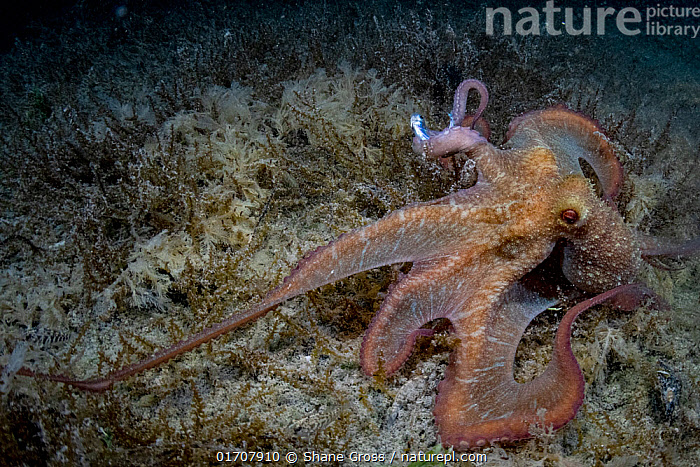
Squids, too, dominate the water column at night. Caribbean Reef Squids often hover just at the edge of your dive light's beam, their bodies shimmering with iridescent pulses. Meanwhile, the tiny Bobtail Squid—often no larger than a thumb—emerges from the sand. These miniature predators have a symbiotic relationship with bioluminescent bacteria, which they use to "counter-illuminate," effectively erasing their silhouette from predators looking up from below.
The Crustacean Cavalry: Scavengers and Warriors
While cephalopods are the stealthy assassins of the night, crustaceans are the heavy infantry. Under the cover of darkness, the reef floor becomes a bustling highway of clicking claws and scuttling legs.
The Lobster March
During the day, you might see the long, white antennae of a Spiny Lobster poking out from a ledge. At night, these lobsters leave their homes entirely. It isn’t uncommon to see dozens of them "marching" across the sand or the reef flats in search of snails, clams, and small crabs. Their cousin, the Slipper Lobster, which looks like a flattened, prehistoric tank, also emerges to forage, relying on its heavy armor for protection.
Diversity of the Crabs
The variety of crabs active at night is staggering. You might encounter:
- Arrow Crabs: Spindly, spider-like creatures with pointed heads and neon-blue highlights on their claws.
- Channel Clinging Crabs: Massive, bulky crabs that can grow to the size of a dinner plate, often found tucked into large sponges or crevices.
- Decorator Crabs: Masters of DIY camouflage that attach bits of sponge and algae to their shells.
For a deeper dive into these species, check out our guide to Caribbean Crabs: A Diver's Guide to Decorator, Arrow, and More!.
Spotting the "Glow"
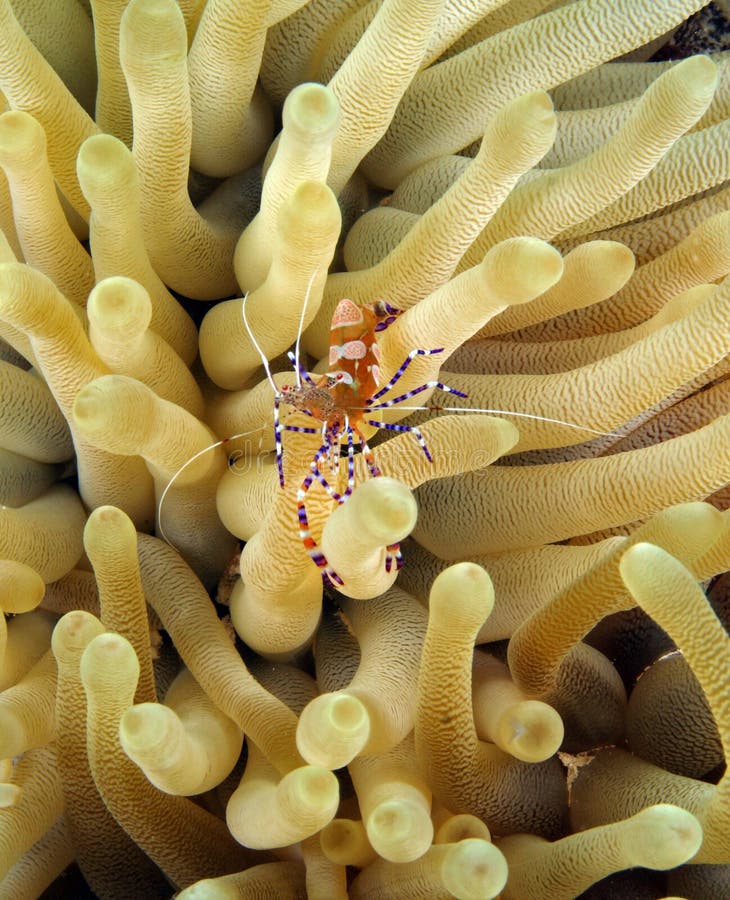
One of the easiest ways to find life at night is to look for eye shine. When your dive light hits the eyes of a Cleaner Shrimp or a Boxer Shrimp, they reflect a brilliant, glowing red or gold. These shrimp are far more active at night, often seen perched on sponges or cleaning the mouths of sleeping groupers—a nighttime variation of the Reef’s Spa Day.
A Symphony of Light: Bioluminescence and Fluorescence
The night reef isn't just dark; it’s electric. There is a fundamental difference between the light we bring (our torches) and the light the reef produces.
- Bioluminescence: This is light produced by a chemical reaction within a living organism. Think of the "sparkle" in the water when you wave your hand with your light off. Many crustaceans use bioluminescent secretions as a defense mechanism, literally "throwing" light at a predator to blind or confuse it while they make their escape.
- Fluorescence: This occurs when certain proteins (like those in coral or some shrimp) absorb your UV or blue light and re-emit it as a different, neon color.
As we detailed in Fluorescence vs. Bioluminescence: A Diver’s Guide to Underwater Light Shows, bringing a UV light on a night dive reveals a hidden world of neon greens, reds, and oranges that are invisible to the naked eye. This "visual language" may help nocturnal creatures recognize their own species or signal warnings to others in the dark.
The Vertical Migration: Guests from the Deep
The night reef feels more crowded than the day reef because it is more crowded. Every night, the largest migration on Earth occurs: the Diel Vertical Migration (DVM).
Millions of organisms, from tiny larval crustaceans to pelagic squids, rise from the depths to feed in the nutrient-rich surface waters under the safety of darkness. This "Daily Commute," which we’ve covered in The Deep Sea’s Daily Commute: Witnessing Vertical Migration as a Diver, brings bizarre, alien-looking creatures within reach of recreational divers.
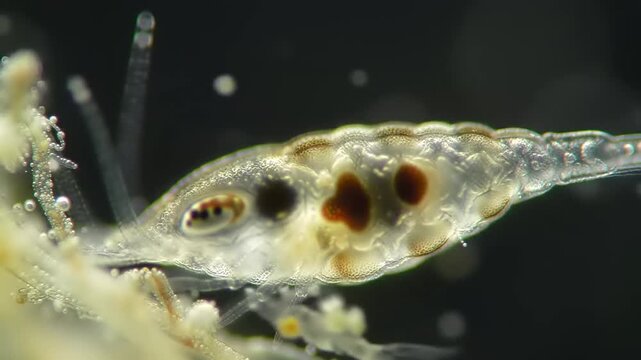
At night, the water column is thick with "sea soup"—larval crabs, tiny jellies, and shimmering worms. This influx of life provides a massive feast for the reef’s permanent residents, turning the nocturnal reef into a high-energy buffet.
Diver’s Guide: How to Observe the Night Shift Responsibly
Diving at night requires a different mindset and a higher level of skill than daytime diving. To truly witness the "Night Shift" without disturbing the natural rhythm of the reef, follow these best practices:
Light Etiquette
- Avoid Direct Blasting: Never shine your high-powered LED light directly into the eyes of an octopus or a sleeping fish. This can "flash-blind" them, making them easy prey for predators.
- Use the Halo: Shine your light to the side of the creature you are observing, using the "spill" or the edge of the beam to illuminate them.
- Red Filters: Many crustaceans and cephalopods cannot see red light. Using a red filter on your torch allows you to observe natural hunting behaviors without the animal even knowing you are there.
Buoyancy and Awareness
- Watch Your Fins: At night, your field of vision is limited to your light beam. It is incredibly easy to accidentally kick a delicate sea fan or a barrel sponge.
- Stay Off the Bottom: Many nocturnal creatures, like the Bobtail squid or the Southern Stingray, hide just beneath the sand. Maintain neutral buoyancy to avoid crushing them.
Night Dive Checklist
- Primary dive light (fully charged)
- Backup dive light (stowed in a pocket)
- Tank marker (chem-light or battery-powered beacon)
- Compass (navigation is much harder at night!)
- Surface signaling device (SMB and whistle)
Pro Tip: To find the hidden gems, turn your light away from the reef and into the "blue" (or black) for a moment. You might catch the silver flash of a hunting squid or the shimmering trail of a comb jelly.
Conclusion: Embracing the Shadows
The reef at night is not a place to be feared; it is a masterpiece of biological engineering. When you descend into the dark, you aren't just seeing the same reef with the lights turned off—you are entering a different world entirely.
Crustaceans and cephalopods are the true architects of this midnight realm. From the tactical brilliance of a hunting octopus to the rhythmic march of the spiny lobster, the "Night Shift" showcases a side of marine biology that is raw, energetic, and endlessly fascinating. By overcoming "night dive nerves" and honing your observation skills, you open a window into an ancient cycle that has played out every evening for eons.
Next time you’re on the boat and the sun begins to set, don't reach for a towel. Reach for your torch. The reef’s most exciting residents are just waking up.
Ready to see the light? Explore our gear guides to find the best underwater torches and UV lights for your next adventure with Pro Dive Vibes.