Loading...
marine-life#parrotfish#coral reef health#how is sand made
The Sand Makers: Why Parrotfish Are the Reef’s Most Important Architects
Pro Dive Vibes
March 22, 20269 min read

If you’ve ever descended onto a healthy tropical reef and paused to listen, you’ve heard it. Amidst the clicks of snapping shrimp and the distant hum of boat engines, there is a distinct, rhythmic crunch, crunch, crunch. It is the sound of heavy-duty demolition. This iconic underwater soundtrack is produced by one of the most charismatic and essential residents of the ocean: the parrotfish.
Often dismissed by novice divers as merely "pretty, colorful fish," parrotfish are actually the unsung heroes of the marine world. They are the reef’s most important architects, playing a dual role that seems almost contradictory: they are both master bioeroders and the primary protectors of coral health. Without them, the vibrant reefs we love would likely vanish, smothered by seaweed or crumbling under their own weight. From their bizarre evolutionary biology to their role as "sand factories," let’s dive into why these fish are the true backbone of the tropical ecosystem.
Evolutionary Engineering: The Secret of the Beak
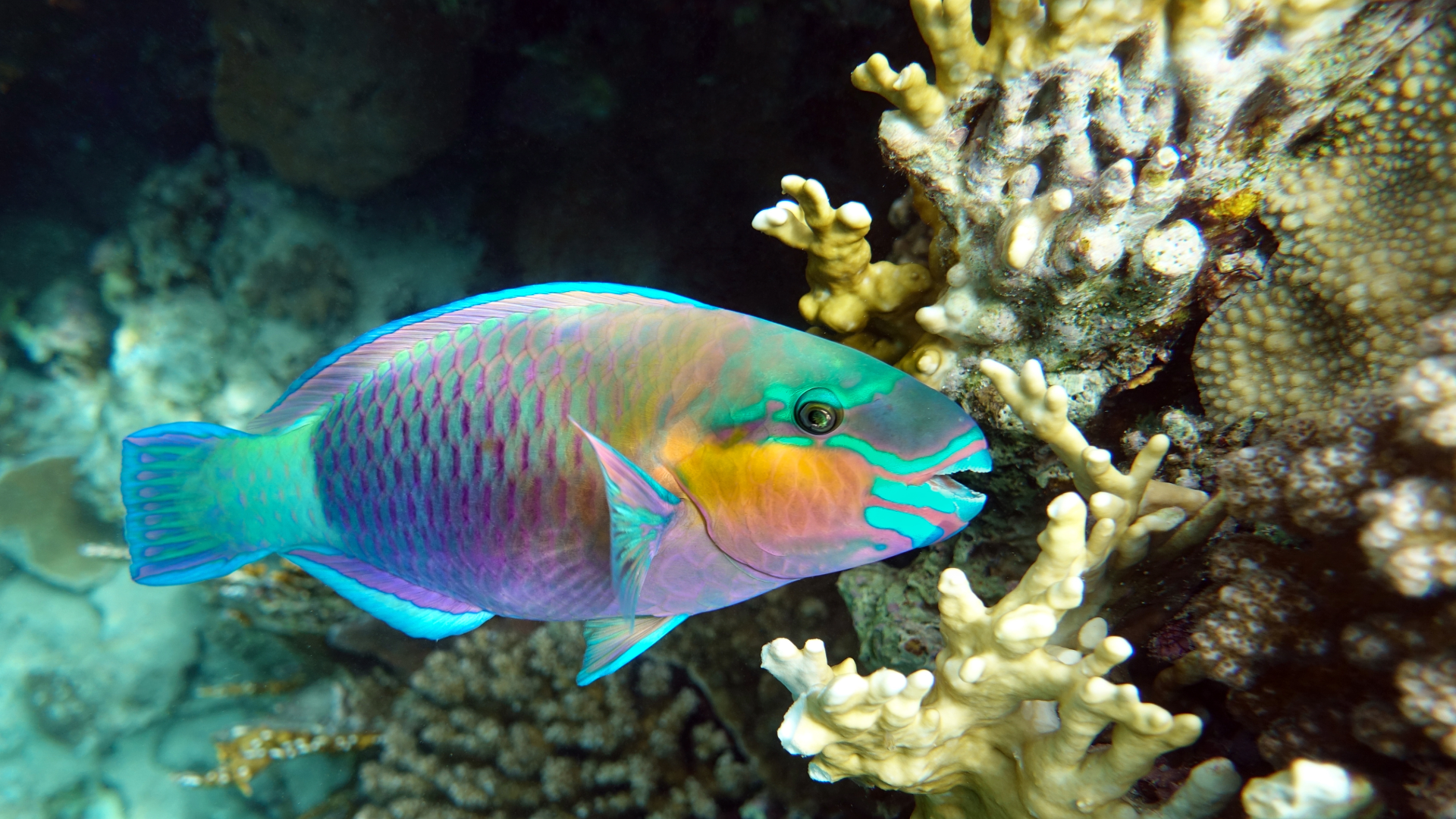
The most defining feature of the parrotfish is, unsurprisingly, its mouth. Unlike most fish that have individual teeth embedded in their jaws, the parrotfish has evolved something far more specialized. Their teeth are fused together into a powerful, beak-like structure that gives them their name.
This isn't just for show. As we explored in our guide to Beyond the Bite, the diversity of teeth in the ocean tells a story of survival. For the parrotfish, that story is one of heavy-duty scraping. Their beak is harder than gold, silver, or copper, allowing them to scrape algae directly off the hard limestone skeleton of the reef.
But the engineering doesn't stop at the mouth. Because they ingest large amounts of calcium carbonate (coral rock) along with their algae, they need a way to process that "gravel." Deep in their throat lies the pharyngeal mill—a second set of internal "teeth" that act as a high-powered grinder. This mill pulverizes the rocky bits into a fine powder before it enters the digestive tract.
| Feature | Specification/Detail |
|---|---|
| Beak Composition | Fused teeth with high fluorapatite content |
| Hardness | Rated higher than most precious metals |
| Bite Force | Capable of snapping through solid Acropora coral |
| Internal Grinder | Pharyngeal mill located in the throat |
The Sand Factory: From Coral Rock to Tropical Beach
Here is a fact that usually changes a diver’s perspective on tropical vacations forever: The white sand on your favorite Caribbean beach is made of shells and rocks — actually, a massive percentage of that sand is parrotfish poop.
As a parrotfish grazes, it inevitably consumes the limestone scaffolding of the reef. Since the fish cannot digest rock, the pulverized limestone passes through its system and is excreted as fine, white sediment. When you see a parrotfish trailing a cloud of white dust behind it, you are witnessing the birth of a beach in real-time.
Expert Insight: A single large parrotfish, such as the Steephead or the Bumphead, can produce upwards of
900 pounds(over 400kg) of sand every single year.
This biological process is vital for the maintenance of tropical islands and atolls. The sand produced by parrotfish helps replenish shorelines that are naturally eroded by waves and currents. Without this constant supply of sediment, many of the world’s most idyllic islands would eventually succumb to rising sea levels and erosion.
The Reef’s Lawn Mowers: Managing Marine Algae
While their sand production is impressive, their most critical ecological service is "lawn mowing." On a healthy reef, there is a constant battle for space between coral and macroalgae. Coral larvae need clean, hard surfaces to settle and grow. However, algae grows significantly faster than coral.
In our previous look at Marine Algae: The Unsung Heroes, we discussed how algae is the foundation of the food web. But there is a tipping point. Without grazers to keep it in check, algae becomes a hazard, overgrowing and smothering the coral colonies, blocking their access to sunlight and preventing new life from taking hold.
Parrotfish act as the primary herbivores on the reef. Their constant grazing creates "halos" of clean rock, providing the perfect nursery for the next generation of coral. This "cropping" effect is so effective that scientists often use parrotfish biomass as a primary indicator of overall reef health.
A Night in a Bubble: The Mucus Cocoon
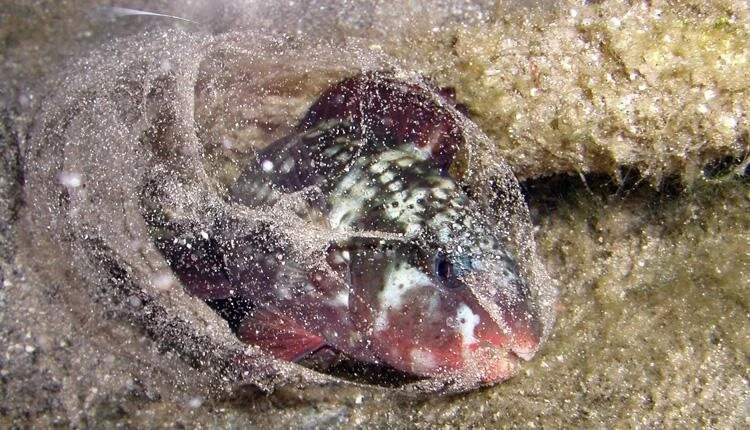
After a long day of sand-making and lawn-mowing, some species of parrotfish exhibit one of the strangest behaviors in the animal kingdom. As the sun sets, they wedge themselves into a crevice and begin to secrete a transparent, gelatinous cocoon made of mucus from their opercular glands.
It takes about 30 minutes to blow this "sleeping bag," which completely envelops the fish. But why do they do it?
- Scent Masking: The primary theory is that the cocoon masks the fish's scent from nocturnal predators, specifically the Moray Eel, which hunts primarily by smell.
- Parasite Protection: The mucus may act as a physical barrier against gnathiid isopods (the "mosquitoes of the sea") that try to feed on the fish's blood at night.
- Early Warning System: If a predator touches the bubble, the vibration alerts the parrotfish, giving it a split-second head start to escape.
Diver Etiquette Warning: If you spot a parrotfish in its mucus bubble during a night dive, do not touch it or shine your light directly on it for more than a second. Breaking the bubble leaves the fish vulnerable and forces it to expend massive amounts of energy to create a new one, which it may not have time to do before a predator finds it.
The Social Ladder: Gender Bending and Harem Life
Parrotfish live complex social lives that often involve "gender bending," a process known as sequential hermaphroditism. Most parrotfish start their lives as females (the Initial Phase) and can later transition into males (the Terminal Phase).
- Initial Phase (IP): Usually smaller, with drabber colors like reds, browns, or grays. They often live in large schools.
- Terminal Phase (TP): These are the "Supermales." They are larger, vibrantly colored with neon blues, greens, and pinks, and they typically defend a harem of females.
Identifying these phases adds a new layer of interest to your dive. While the females are busy grazing in groups, the Supermale will often patrol the perimeter, keeping an eye on his territory and occasionally visiting a cleaning station to have parasites removed from his brilliant scales.
| Phase | Typical Coloration | Social Behavior |
|---|---|---|
| Juvenile | Camouflage patterns, stripes | Solitary or small groups |
| Initial (Female) | Red, brown, earthy tones | Schooling, heavy grazing |
| Terminal (Male) | Neon blue, green, bicolored | Harem defense, territorial |
Guardians of Resilience: Parrotfish and Reef Recovery
The importance of parrotfish has never been more evident than in the face of climate change. As reefs struggle with rising temperatures, the distinction between Coral Bleaching vs. Disease becomes a daily reality for marine biologists.
When a reef suffers a bleaching event, it is at its most vulnerable. If parrotfish populations are healthy, they quickly clear away the algae that tries to take over the dead coral skeletons, allowing the remaining coral to recover or new larvae to settle. However, in areas where parrotfish have been overfished, a "phase shift" often occurs. The reef is "smothered" in seaweed, and it eventually collapses into a rubble pile, losing its ability to support fish life.
In the Caribbean, countries like Belize and Bonaire have seen dramatic reef rebounds after implementing strict bans on parrotfish harvesting. These success stories prove that protecting these architects is the most cost-effective way to build reef resilience.
Where to See the Giants: Finding the Bumphead Parrotfish
If you want to see the "heavyweights" of the family, you need to look for the Bumphead Parrotfish (Bolbometopon muricatum). These giants can grow up to 1.5 meters (5 feet) long and weigh over 45kg (100 lbs). Seeing a school of fifty Bumpheads moving through the water like a herd of underwater buffalo is a bucket-list experience for any diver.
To see them in record-breaking numbers, there is no better place than Cape Kri Raja Ampat. The nutrient-rich currents here support massive populations of these giants.
Tips for Photographing Parrotfish
Capturing a great shot of a parrotfish is notoriously difficult because they are always on the move and rarely stop "crunching" long enough for a portrait.
- Approach from the side: Never swim directly at them; move in a slow, diagonal line.
- Listen for the crunch: Use the sound to locate them behind coral bommies.
- Focus on the eye: Their eyes move independently; wait for the eye to rotate toward your lens for a more engaging shot.
- Watch the "poop": If you see a parrotfish tilt its tail up, be ready—it’s about to create some sand, which can ruin your visibility but makes for a hilarious "action" shot.
Conclusion: Respecting the Architects
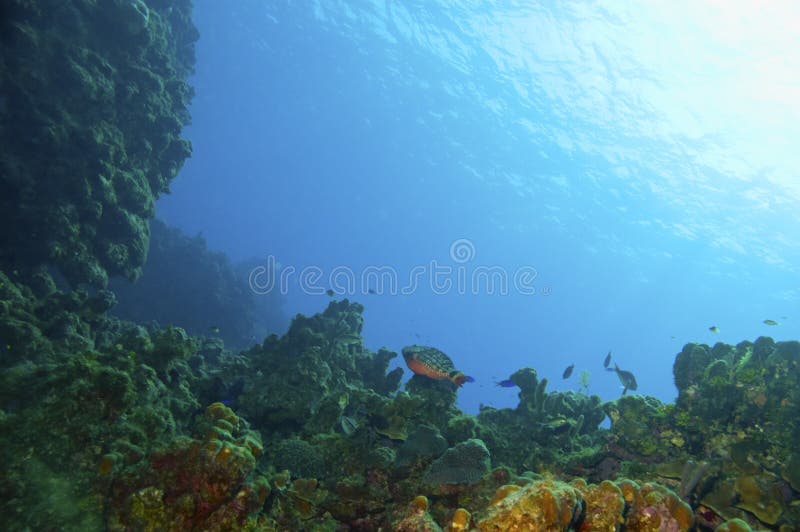
The next time you’re gear-up for a dive, take a moment to appreciate the parrotfish. They aren't just the "pretty face" of the reef; they are the construction crew, the janitors, and the sand-makers that keep the entire ecosystem functioning. Every grain of sand between your toes on a tropical beach is a testament to their hard work.
As divers, we are the primary witnesses to the health of our oceans. By supporting Marine Protected Areas (MPAs) and choosing sustainable seafood, we can ensure that the rhythmic crunch of the parrotfish continues to echo across the reefs for generations to come.
Ready to see these architects in action? Check out our guide to the best dive sites in Raja Ampat and start planning your encounter with the ocean's sand-makers.