Loading...
marine-life#coral spawning dive#underwater blizzard#marine biology
The Great Underwater Blizzard: A Practical Guide to Diving the Coral Spawning
Pro Dive Vibes
March 19, 20269 min read
Introduction: The Night the Reef Comes Alive
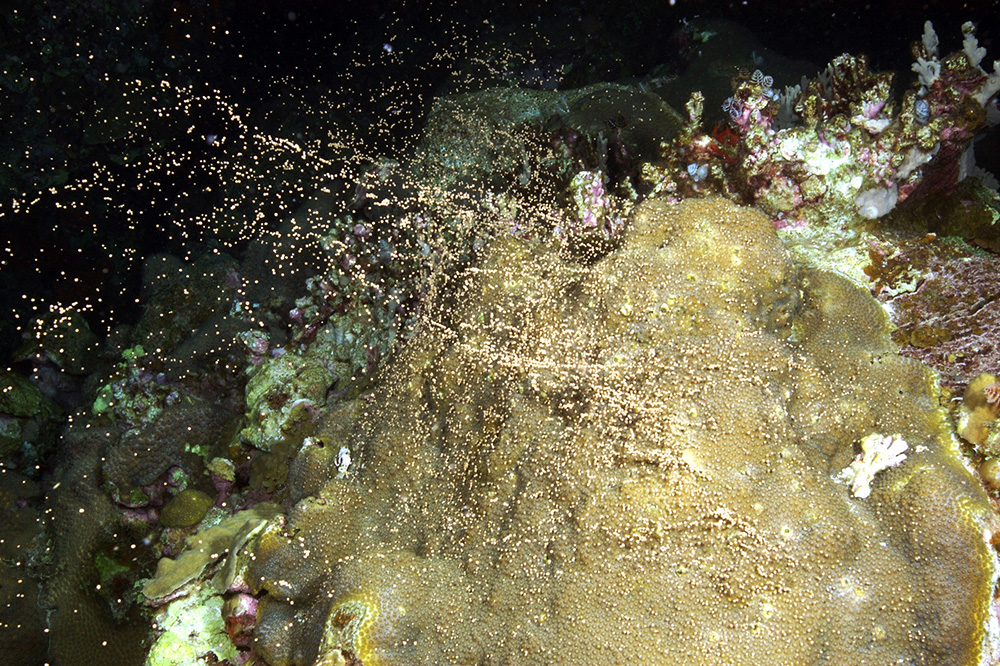
Imagine hovering in total darkness, the beam of your dive light cutting through the obsidian water, when suddenly, the very rock beneath you begins to "smoke." Within minutes, the water is no longer clear. Instead, you are enveloped in a swirling, kaleidoscopic storm of pink, white, and orange spheres. This is the "underwater blizzard," a phenomenon so rare and perfectly timed that many divers spend their entire lives chasing it.
For the uninitiated, witnessing a mass coral spawning event is the pinnacle of underwater experiences. It is the one night of the year when the reef stops being a collection of individual organisms and becomes a single, pulsing entity focused entirely on the future. It is a bucket-list item for every serious diver because it represents the raw, reproductive heartbeat of the ocean.
The evening usually begins with a different kind of magic. As the sun dips below the horizon, seasoned divers often look for the Mandarin Fish dance, a colorful twilight ritual that serves as the perfect opening act. But once the stars come out and the moon reaches its peak, the atmosphere shifts. The reef feels tense, expectant, and then—all at once—the blizzard begins.
The Science of the Blizzard: What is Coral Spawning?
At its core, coral spawning is a biological masterstroke known as synchronous broadcast spawning. Because corals are sessile (meaning they are stuck in one place), they cannot move to find a mate. To ensure reproductive success, entire colonies of coral polyps release their eggs and sperm (gametes) into the water column simultaneously.
This synchronization is not just a beautiful coincidence; it is a survival strategy. By releasing millions of gametes at the exact same time, the corals utilize a tactic called predator swamping. The reef’s resident fish and invertebrates can only eat so much; by overwhelming them with an all-you-can-eat buffet, the corals ensure that a significant percentage of gametes survive to fertilize and become larvae (planulae).
It is also vital for divers to recognize that this event is a sign of a thriving ecosystem. While we often discuss the tragedies of Coral Bleaching vs. Disease, a successful spawn is the ultimate indicator of reef resilience and health. It is the reef’s way of maximizing genetic diversity, allowing different colonies to mix their DNA and create stronger, more adaptable offspring.
Nature’s Alarm Clock: How Corals Time the Event
How does a brain coral in one corner of the reef know exactly when a staghorn coral five miles away is going to "pop"? The precision is staggering, often narrowing down to a specific 20-minute window on one or two nights a year.
The timing is dictated by three primary environmental triggers:
- The Lunar Cycle: The full moon acts as the primary starting gun. Most spawning events occur a few nights after the full moon, when the tides are at their mellowest, preventing the delicate gametes from being swept too far away too quickly.
- Water Temperature: Corals require a "sweet spot" in temperature to trigger gamete maturation. This usually happens in late spring or early summer when the water is warm enough to support rapid larval development.
- Solar Cues: The final trigger is the setting sun. The darkness provides a protective veil, giving the gametes a few hours of safety from diurnal (daytime) predators.
Expert Tip: Even with modern science, spawning can be fickle. Local dive shops often run "spawn watches" for a week straight, as a slight shift in current or a sudden storm can delay the event by 24 hours.
What to Expect: The Visual Spectacle
The visual impact of a mass spawning event is often compared to a reverse snowfall. Instead of white flakes falling from the sky, millions of tiny, colorful bundles—some as small as a pinhead, others the size of a peppercorn—rise slowly from the reef toward the surface.
The colors are surprisingly vivid. Depending on the species, you might see pastel pinks, neon oranges, or translucent whites. As these bundles rise, they create a thick "soup" that can actually reduce visibility to just a few meters.
The experience is also multisensory. Many divers report a distinct, sweet, and slightly "fishy" smell in the air when they surface after a spawn—this is the scent of millions of gametes breaking at the surface tension. While we often talk about the Deep Sea's Daily Commute where creatures move vertically for food, coral spawning is a vertical migration for the sake of life itself.

Top Global Destinations for Spawning Seekers
While coral spawning happens on reefs worldwide, some locations offer more predictability and accessibility than others.
| Destination | Typical Peak Month | Primary Species | Dive Type |
|---|---|---|---|
| Great Barrier Reef, Australia | November | Acropora (Staghorn) | Boat / Liveaboard |
| Bonaire / Curacao | August / September | Boulder & Brain Coral | Shore Dive |
| Flower Garden Banks, Gulf of Mexico | August | Star & Brain Coral | Offshore Boat |
| Red Sea, Egypt | April / May | Various Hard Corals | Boat / Shore |
The Great Barrier Reef remains the heavyweight champion, hosting the largest synchronized event on the planet. However, for those who prefer the flexibility of shore diving, Bonaire and Curacao are legendary. In these Caribbean spots, you can simply walk off the beach with a tank on your back and witness the miracle just thirty feet from shore.
Essential Gear and Skills for the Night
Diving in a "blizzard" requires more than just a standard night dive setup. You need to be prepared for low visibility and high biological activity.
Mastering Buoyancy
Maintaining neutral buoyancy is critical. You will be hovering over delicate coral heads that are in the middle of a vital life process. One stray fin kick can destroy decades of growth or crush a colony just as it's about to spawn.
- Check your weights: You want to be perfectly neutral at
5 meters(15 feet). - Practice your "hover": Use small lung adjustments rather than flapping your arms.
- Keep your distance: Stay at least a foot or two away from the reef to avoid accidental contact.
Lighting Strategies
Standard bright white lights are best for spawning. Actually, high-intensity white light can stress the polyps and even cause them to retract, potentially halting the spawning process. Use a light with a red filter or a dimmable setting to observe the natural behavior without disturbing the polyps.
The Glow Factor
If you have a UV light, this is the time to use it. Many coral gametes and the polyps themselves exhibit incredible fluorescence during the event. To understand why some things glow under your light while others glow on their own, check out our guide on Fluorescence vs. Bioluminescence.

The After-Party: Predators and Scavengers
The spawning event is the reef’s biggest party, and everyone is invited—especially the hungry. As the gametes rise, the "night shift" comes out in full force to capitalize on the nutrient boost.
You’ll see brittle stars climbing to the highest points of the reef, waving their arms to catch the passing bundles. Worms, small fish, and crustaceans like Caribbean Crabs emerge from their hiding spots, gorging themselves on the protein-rich eggs.
This shift in social dynamics is fascinating to watch. Predators that usually spend their time hunting other fish are often distracted by the easy meal, leading to a temporary "truce" similar to what we see at Underwater Cleaning Stations. It is a high-energy window where the usual rules of the reef are suspended in favor of a feeding frenzy.
Photography Tips: Capturing the Snowfall
Capturing the coral spawning on camera is notoriously difficult. The very thing you want to photograph—the gametes—acts as the ultimate source of backscatter.
- Strobe Placement: Move your strobes as far out to the sides as possible. This ensures the light hits the gametes from the side rather than reflecting directly back into your lens.
- Focusing Challenges: In the "soup," your camera's autofocus will struggle. Use a low-intensity spotting light (preferably red) to help your camera lock onto a specific polyp or bundle.
- Composition: Don't just go for the wide shot of the "blizzard." Some of the most compelling images are macro shots of a single polyp in the act of releasing its bundle.

Diver Ethics and Citizen Science
As guests in this underwater nursery, our primary responsibility is to do no harm. The "Look but Don't Touch" rule is never more important than during a spawn. Physical contact can transfer oils from your skin to the coral, interfering with the chemical signals polyps use to coordinate their release.
Be Mindful of Your Bubbles: When hovering under overhangs or inside swim-throughs, remember that your exhaust bubbles can "scour" the ceiling. During a spawn, these bubbles can trap gametes against the rock, preventing them from reaching the surface.
Contribute to Research: You can be a citizen scientist! Organizations like Coral Watch and local reef management authorities often look for diver reports to track the health and timing of spawning events. Note the species, the exact time of release, and the water temperature to help researchers build better models for reef conservation.
Conclusion: A New Perspective on Reef Vitality
Witnessing the Great Underwater Blizzard is more than just a cool dive; it’s a perspective-shifting experience. It reminds us that the reef is not just a backdrop for our underwater adventures, but a living, breathing, and incredibly complex system that fights for its survival every single year.
If you want to experience this for yourself, start planning early. Consult with local dive operators in hotspots like Bonaire or the Great Barrier Reef at least six months in advance, as "spawn weeks" often book up quickly.
When you finally find yourself suspended in that cloud of rising stars, you’ll realize that the reef isn't just a place we visit—it’s a miracle we are privileged to witness. Pack your red lights, hone your buoyancy, and get ready for the greatest show on Earth.