Loading...
marine-life#marine algae#coral reefs#ecosystem
Marine Algae: The Unsung Heroes of Reefs & Why Divers Should Care
Pro Dive Vibes
February 19, 20268 min read

Introduction: Beyond the Coral - Appreciating the Algae
Imagine a vibrant coral reef teeming with life, a kaleidoscope of colors and shapes. Schools of fish dart among intricate coral formations, while sea turtles graze peacefully on the seafloor. What if I told you that the foundation of this breathtaking beauty isn't just the coral, but something often overlooked and even misunderstood: algae?
For many, the word "algae" conjures up images of slimy green ponds or murky water. It's often seen as a nuisance, something to be avoided. But in the marine world, algae are far from being a problem – they are the unsung heroes of the reef ecosystem.
Marine algae are critical for the health and biodiversity of coral reefs, and divers should understand their crucial role in the underwater world. This post will delve into the fascinating world of marine algae, exploring their vital roles in oxygen production, reef structure, and the intricate food web that sustains life beneath the waves. Prepare to see algae in a whole new light!
What Exactly Are Marine Algae?
Marine algae are simple photosynthetic organisms that live in saltwater environments. They are incredibly diverse, ranging from microscopic, single-celled organisms to massive kelp forests stretching for miles.
It's important to understand that algae are not plants in the traditional sense. While they share the ability to photosynthesize, algae are generally classified as protists (or belong to other kingdoms, depending on the specific type). Unlike terrestrial plants, they lack true roots, stems, and leaves. They absorb nutrients directly from the surrounding water.
The diversity of marine algae is truly astounding. Here's a brief overview of some key types:
- Macroalgae: These are the large, visible algae, often referred to as seaweed. Examples include kelp, sea lettuce, and sargassum.
- Microalgae: These are microscopic, single-celled algae, also known as phytoplankton. They form the base of the marine food web.
- Coralline Algae: These are hard, crustose algae that deposit calcium carbonate, playing a crucial role in reef building and stabilization.
The Cornerstone of the Reef Ecosystem: Algae's Vital Roles
Algae play several vital roles in the reef ecosystem, making them indispensable for its health and survival.
Primary Producers
Algae are primary producers, meaning they convert sunlight into energy through photosynthesis. This process forms the very base of the food web. They take carbon dioxide and water, and using the energy from sunlight, create sugars (energy) and oxygen. Without algae, there would be no energy source to sustain the vast array of marine life that depends on the reef.
Oxygen Production
Perhaps the most significant contribution of algae is their role in oxygen production. It's estimated that marine algae produce more than half of the oxygen on Earth! This oxygen is not only essential for marine life but also for all life on our planet.
Habitat Provision
Macroalgae, particularly kelp forests, provide crucial habitat for a wide variety of marine species. These underwater forests offer shelter, nursery grounds, and feeding areas for fish, invertebrates, and marine mammals.

Nutrient Cycling
Algae play a critical role in nutrient cycling within the reef ecosystem. They absorb excess nutrients, such as nitrogen and phosphorus, from the water, preventing nutrient imbalances that can harm corals and other organisms. They also recycle nutrients as they grow and decompose.
Reef Building
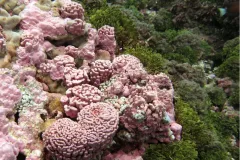
Coralline algae are essential reef builders. They deposit calcium carbonate, which helps to cement reef structures together, making them more resistant to erosion. They also provide ideal settlement surfaces for coral larvae, aiding in reef growth and regeneration.
Food Source
Algae are a direct food source for many herbivores, including sea turtles, parrotfish, sea urchins, and various invertebrates. These herbivores play a vital role in controlling algal growth and maintaining a balance within the reef ecosystem.
Meet the Algae: Key Players on the Reef (With Pictures!)
Let's take a closer look at some of the key types of algae you might encounter while diving:
Coralline Algae
- Description: Hard, crustose algae that deposit calcium carbonate. They come in various colors, including pink, red, and purple.
- Importance: Reef cementers, coral larvae settlement, pH regulation.
Turf Algae
- Description: Short, filamentous algae that cover reef surfaces. They can appear as a fuzzy green or brown layer.
- Importance: Food source for small grazers, but can overgrow corals if unchecked.

Sea Lettuce (Ulva lactuca)
- Description: Thin, green algae resembling lettuce leaves.
- Importance: Fast-growing, nutrient uptake, food for some herbivores. Can indicate nutrient pollution.

Sargassum
- Description: Brown algae with gas-filled bladders that allow it to float.
- Importance: Provides habitat and food for many species, forms floating mats. Excessive blooms can be problematic.

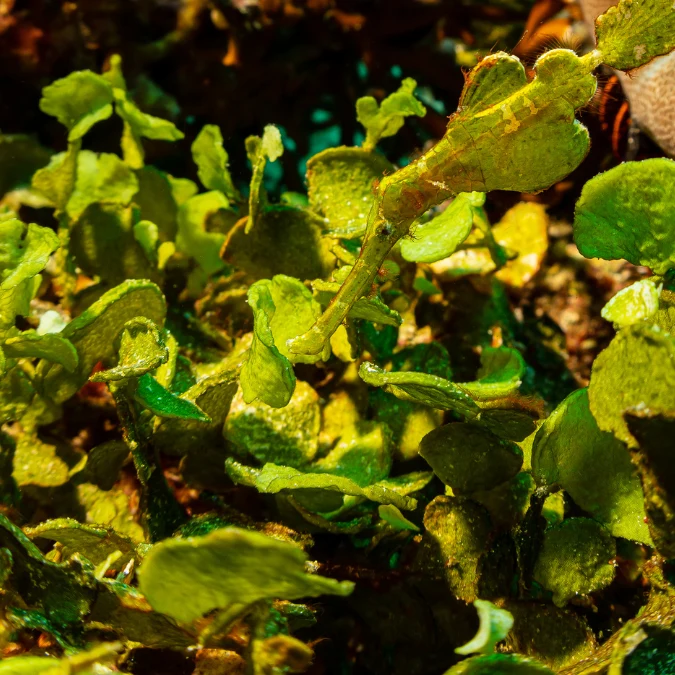
Halimeda
- Description: Green algae with calcified segments, resembling small, flattened discs.
- Importance: Contributes to sand formation, provides habitat.
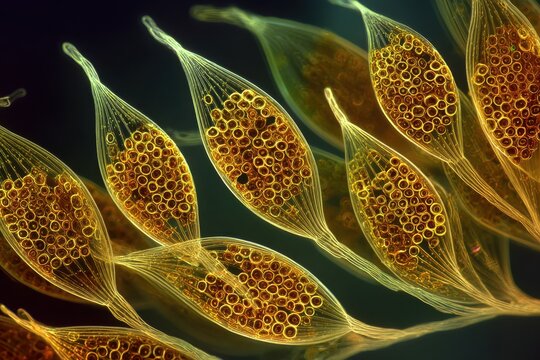
Microscopic Phytoplankton (Diatoms, Dinoflagellates, etc.)
- Description: Microscopic, single-celled algae floating in the water column.
- Importance: Primary producers, oxygen production, base of the food web.
The Threats to Algae and, Consequently, to the Reef
Despite their crucial role, algae face numerous threats that can disrupt the delicate balance of the reef ecosystem.
Nutrient Pollution
Excess nutrients, such as nitrogen and phosphorus, from agricultural runoff, sewage, and industrial discharge can lead to algal blooms. These blooms can smother corals, block sunlight, and deplete oxygen levels, harming other marine life. Some algal blooms can even produce toxins that are harmful to humans and animals.
Overfishing of Herbivores
The overfishing of herbivorous fish, such as parrotfish and surgeonfish, removes a key control on algal growth. Without these grazers, algae can overgrow corals, outcompeting them for space and resources.
Climate Change and Ocean Acidification
Climate change and resulting ocean acidification pose a significant threat to both corals and algae. Rising ocean temperatures can stress corals, making them more susceptible to disease and bleaching. Ocean acidification, caused by the absorption of excess carbon dioxide from the atmosphere, can hinder the ability of corals and coralline algae to build their calcium carbonate skeletons. This can lead to a shift from coral-dominated to algae-dominated reefs.
Physical Damage
Anchors, boat traffic, and even divers can physically damage algae, especially delicate macroalgae and coralline algae.
Why Divers Should Care: What You Can Do to Protect Algae and Reefs
As divers, we have a unique opportunity to witness the beauty and fragility of coral reefs firsthand. We also have a responsibility to protect these precious ecosystems. Here are some ways you can make a difference:
- Be a Responsible Diver:
- Avoid touching or disturbing algae or any other marine life.
- Practice good buoyancy control to prevent accidental damage to the reef.
- Choose eco-friendly dive operators who prioritize reef conservation.
- Support Sustainable Fishing Practices:
- Advocate for regulations that protect herbivorous fish populations.
- Choose seafood from sustainable sources.
- Reduce Your Carbon Footprint:
- Take steps to mitigate climate change, such as reducing energy consumption, using public transportation, and supporting renewable energy sources.
- Consider offsetting your carbon emissions from travel.
- Advocate for Water Quality Improvements:
- Support policies that reduce nutrient pollution from land-based sources.
- Reduce your use of fertilizers and pesticides in your garden.
- Educate Others:
- Share your knowledge about the importance of algae and the threats they face with your friends, family, and fellow divers.
- Spread awareness on social media.
- Participate in Citizen Science:
- Join reef monitoring programs that track algal abundance and reef health. Many organizations offer opportunities for divers to contribute to scientific research.
Here's a quick checklist for responsible diving:
- Maintain neutral buoyancy
- Avoid touching corals and algae
- Secure equipment to prevent dragging
- Do not feed marine life
- Pack out all trash
Expert Tip: When choosing a sunscreen, opt for reef-safe formulas that do not contain oxybenzone and octinoxate, chemicals known to harm coral reefs.
Conclusion: Appreciating the Underwater Forest
Marine algae are the foundation of the reef ecosystem, providing food, oxygen, habitat, and structural support. They are essential for the health and biodiversity of our oceans. It's time we recognize and appreciate these often-overlooked organisms.
As you explore the underwater world, take a moment to admire the beauty and diversity of algae. Observe the intricate patterns of coralline algae, the swaying blades of kelp forests, and the vibrant colors of sea lettuce.
Let's all take action to protect algae and coral reefs for future generations. The health of our oceans, and indeed the health of our planet, depends on it.
Dive in, explore, and protect the underwater forest!