Loading...
marine-life#cephalopod communication#chromatophores#octopus color change
Thinking with Their Skin: The Visual Language of Octopuses and Cuttlefish
Pro Dive Vibes
February 28, 20269 min read
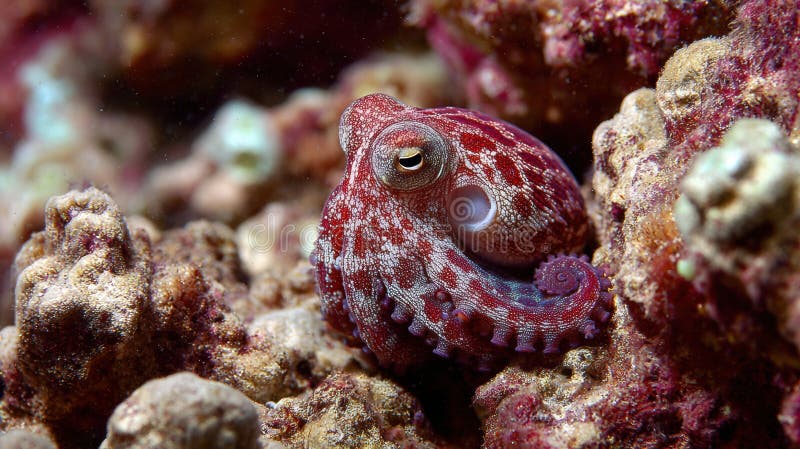
The Living Canvas: An Introduction to Cephalopod 'Speech'
Imagine if your thoughts weren't trapped inside your skull, but instead rippled across your skin for the whole world to see. For us, communication is a matter of vocal cords and gestures, but for the octopus and the cuttlefish, the skin is an extension of the mind itself. In the world of marine biology, we call this a distributed brain. While a human’s nervous system is centralized, a cephalopod’s intelligence is spread throughout its body—nearly two-thirds of an octopus's neurons are located in its arms, not its head.
This unique anatomy allows their skin to function as a "living canvas." While we’ve previously explored the basics of these creatures in our guide Beyond Octopus & Squid, today we are diving deeper into the why and how of their visual language. To a diver, an octopus isn't just a master of disguise; it is a sophisticated communicator.
Cephalopod intelligence is often described as "alien." It evolved entirely independently of vertebrate intelligence, leading to a direct neural link between the brain and individual skin cells. When an octopus "thinks" of a pattern, it doesn't wait for hormones to travel through its bloodstream; it sends an electrical pulse directly to its skin. This is "thinking with skin"—a real-time, high-speed broadcast of internal states, intentions, and reactions.
The Anatomy of a Pixel: Chromatophores, Iridophores, and Leucophores
To understand how these animals "speak," we first have to look at the "pixels" of their display. Their skin is a complex multi-layered system of specialized cells that manipulate light in three distinct ways.
Chromatophores: The Pigment Sacs
At the top layer are the chromatophores. These are tiny, elastic sacs filled with pigment (usually red, yellow, or brown). Each sac is surrounded by a ring of muscles. When the brain sends a signal, these muscles contract, stretching the sac wide and revealing the color. When the muscles relax, the sac shrinks to a microscopic dot, making the color disappear.
Iridophores: The Mirrors
Beneath the chromatophores lie the iridophores. These don't use pigment; instead, they use structural color. They contain layers of protein that reflect light at specific angles to create shimmering greens, blues, silvers, and golds. As we discussed in our guide to Fluorescence vs. Bioluminescence, this is a matter of visual physics rather than chemical light production.
Leucophores: The White Foundation
The deepest layer consists of leucophores. These cells are essentially perfect reflectors that scatter all available light, appearing bright white. They provide the high-contrast background that makes the colors of the chromatophores and iridophores "pop," much like the white primer on a painter's canvas.
| Cell Type | Mechanism | Primary Colors/Effects |
|---|---|---|
| Chromatophore | Muscular expansion | Red, Brown, Yellow, Black |
| Iridophore | Structural reflection | Iridescent Blue, Green, Gold |
| Leucophore | Light scattering | Bright White, High Contrast |
The most mind-blowing aspect? The speed. While fish like the grouper or the flatfish can change color, they rely on hormonal triggers that take seconds or even minutes. Cephalopods change in milliseconds—faster than the blink of a human eye.
Beyond Camouflage: When Color Becomes a Conversation
Most divers associate cephalopod color changes with hiding. While they are indeed Camouflage Masters, color is also used for active, aggressive, and even romantic communication.
The 'Passing Cloud' Display
One of the most mesmerizing sights for a diver is the "Passing Cloud" display, frequently seen in cuttlefish. Dark bands of color ripple across the animal's body in a rhythmic pulse. This isn't for hiding; it's a tactical tool. It is believed to mesmerize prey (like a strobe light) or distract rivals during a standoff.
Warning Signals
Just as nudibranchs use vibrant colors to signal toxicity in the Chemical Arms Race, cephalopods use high-contrast patterns to warn off predators. A common octopus might suddenly flash bright white with dark rings around its eyes—a clear "back off" sign to any curious diver or predator.
The 'Split-Screen' Effect
Perhaps the ultimate display of neural control is the "split-screen." A male cuttlefish, positioned between a female and a rival male, can split his body's appearance right down the middle. On the side facing the female, he displays gentle, attractive mating patterns. On the side facing the rival, he displays aggressive, high-contrast warning stripes. It is the biological equivalent of whispering "I love you" while simultaneously flipping someone the bird.
Deciphering the Octopus: Reading Mood and Intent
As divers, being able to read these signals is key to a respectful and rewarding encounter. Much like understanding Shark Body Language or Dolphin Chatter, reading an octopus requires looking at the whole animal.
- Ghostly White: This is often a sign of fear, shock, or submission. If you approach an octopus and it turns stark white, you have likely startled it.
- Dark Reds and Purples: These are typically colors of excitement or aggression. If an octopus turns deep red and expands its web to look larger, it is defending its territory.
- Texture as Language: Cephalopods use papillae (tiny skin muscles) to change their physical texture. They can go from smooth and hydrodynamic to "spiky" and jagged in an instant. A spiky texture often accompanies a defensive or hunting posture.
Pro Tip: If you see an octopus with raised papillae and a dark mottled pattern, it is likely in "hunting mode," focused on the nooks and crannies of the reef. Stay back and watch—you might see a kill!
The Cuttlefish 'Strobe' and Social Dynamics
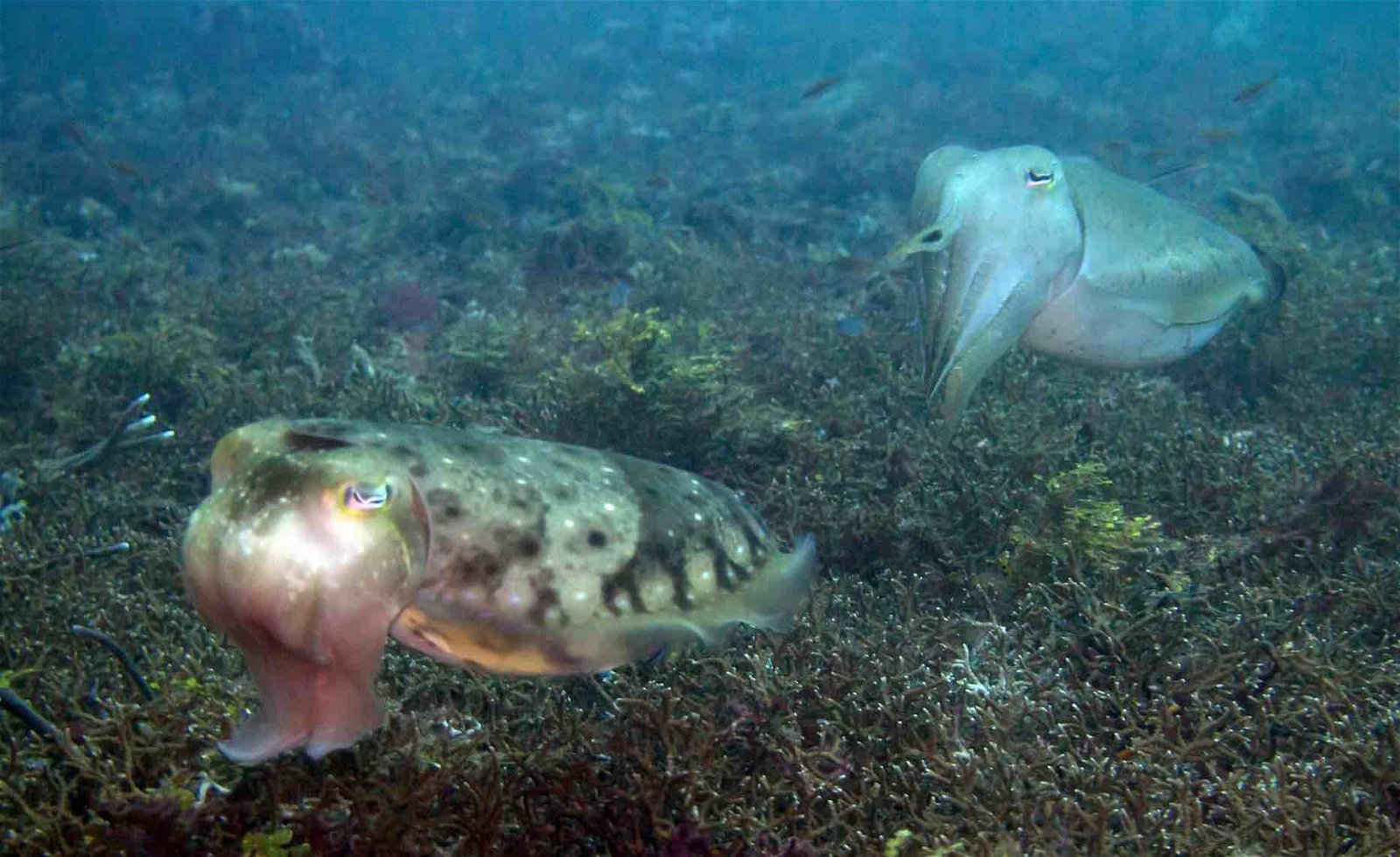
Cuttlefish, particularly the Giant Australian Cuttlefish, take visual communication to a social level. During mating season, hundreds of these animals gather, creating a chaotic neon city of shifting patterns.
Deception in the Deep
One of the most fascinating behaviors is the "sneaker male." In a world where large, aggressive males guard harems of females, smaller males have evolved a clever trick. They mimic the mottled, subdued color patterns and arm postures of females. By "cross-dressing" visually, they can swim right past the aggressive guards to mate with the females undetected.
Visual Handshakes
Cuttlefish often engage in "visual handshakes" to settle disputes. Instead of fighting—which risks injury—two males will face off and cycle through their most intense patterns. They are essentially measuring each other’s "visual volume." Usually, the smaller or less vibrant individual will concede and swim away without a single bite being taken.
The Secret Channel: Polarized Light
Interestingly, cephalopods have a secret communication channel. While humans can't see polarized light without special filters, many cephalopods can. They can produce polarized patterns on their skin that are invisible to most fish (predators) but clearly visible to other cephalopods. It’s like a private, encrypted chat room in the middle of a crowded reef.

The Biological Cost of Constant Conversation
Maintaining a high-definition, 4K skin display isn't free. It comes with significant biological costs:
- Metabolic Energy: Constant muscular contraction of the chromatophores requires a high amount of oxygen and energy.
- The Vulnerability of Being 'Loud': While a "Passing Cloud" might catch a crab’s eye, it also catches the eye of a reef shark. Cephalopods must constantly balance the need to "talk" with the risk of being eaten.
Sleep-Talking
Recent studies have shown that octopuses may even "talk" in their sleep. Observers have filmed sleeping octopuses cycling through rapid, intense color changes that mirror the patterns they use while hunting or hiding. This suggests they may experience a form of REM sleep, where their skin reacts to the "dreams" occurring in their decentralized brains.
A Diver’s Guide to Observing Cephalopod Language
To witness these incredible displays, you need to be a passive observer, not an active participant.
- Neutral Buoyancy: Ensure your buoyancy is locked in so you aren't flailing or scaring the animal.
- Slow Approach: Move in increments. If the animal changes color rapidly when you move, you are too close.
- Watch the Eyes: Cephalopods are highly visual. If it’s watching you, it’s processing you as a potential threat.
- No Touching: Never touch or harass a cephalopod. Their skin is sensitive, and stress can lead to "inking," which exhausts the animal.
Equipment Tips: Video vs. Photo
Flash photography is the best way to capture an octopus — actually, high-quality video is far superior. Because their language is dynamic and temporal, a still photo often misses the "rhythm" of the communication.
Expert Advice: Use a steady video light rather than a strobe. This allows you to capture the shimmering transition of the iridophores and the rhythmic pulsing of the chromatophores without the "startle" effect of a bright flash.

Conclusion: Respecting the Ocean's Most Vibrant Minds
The next time you settle into a hover and spot an octopus tucked into a crevice, take a moment to really look at its skin. You aren't just looking at a creature; you are looking at a living, breathing conversation. These animals represent a peak of evolutionary intelligence that is entirely different from our own—a mind that thinks in color, texture, and light.
Protecting our reefs is about more than just the coral; it’s about preserving the "bandwidth" these sophisticated communicators need to survive. Every time we practice responsible diving and support reef conservation, we ensure that the ocean's most vibrant minds can continue their silent, shimmering dialogue for generations to come.
Ready to see these masters of the skin-mind connection for yourself? Check out our latest [dive travel guides] to find the best spots for cephalopod encounters!
Further Reading
- Octopus, Squid, and Cuttlefish: A Visual, Scientific Guide to the Oceans’ Most Advanced Invertebrates, Hanlon, Vecchione, Allcock
- The neural basis of visual processing and behavior in cephalopods - ScienceDirect
- How Intelligent is an Octopus or a Cuttlefish? Even Smarter Than You Might Think! · Frontiers for Young Minds
- How Octopuses and Squids Change Color | Smithsonian Ocean