Loading...
marine-life#Caribbean crabs#decorator crab#arrow crab
Caribbean Crabs: A Diver's Guide to Decorator, Arrow, and More!
Pro Dive Vibes
February 20, 20267 min read
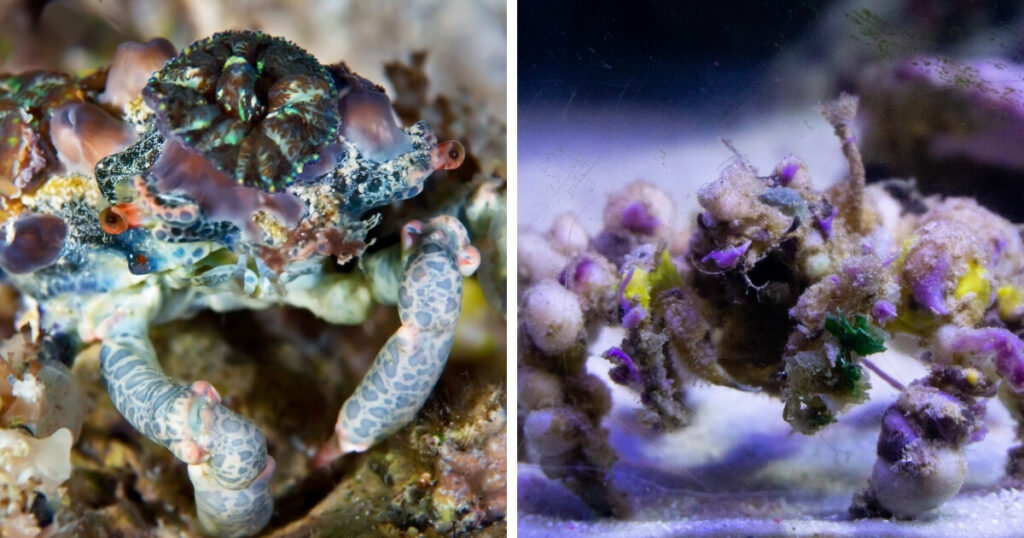
Caribbean Crabs: A Diver's Guide to Decorator, Arrow, and More!
Introduction: Crabs - The Caribbean's Crustacean Gems
The Caribbean Sea, a jewel of biodiversity, teems with marine life, and among its most fascinating inhabitants are crabs. These crustaceans, in their myriad forms, play a vital role in the Caribbean ecosystem, from scavenging detritus to serving as prey for larger animals. For scuba divers and snorkelers, observing crabs offers a unique window into the intricate web of life beneath the waves.
This blog post will guide you through the captivating world of Caribbean crabs, with a focus on the decorator crabs, the masters of disguise, and the arrow crabs, the spindly scavengers of the reef. We'll also introduce you to a selection of other notable species you might encounter on your Caribbean dives.
Prepare to be amazed by the incredible adaptations and behaviors of these creatures. Did you know that some crabs adorn themselves with living organisms, creating a walking garden? Or that others have a symbiotic relationship with sea anemones, acting as personal bodyguards?
Before we dive in, it's important to clarify something. While we often use the term "crab" loosely, true crabs belong to the infraorder Brachyura. Other crab-like crustaceans, such as hermit crabs and porcelain crabs, are related but belong to different groups. This post focuses on true crabs and some close relatives that divers are likely to encounter.
Decorator Crabs: Masters of Camouflage
Decorator crabs are the chameleons of the crustacean world. Their defining characteristic is their remarkable ability to camouflage themselves by attaching materials from their environment to their shells and legs. This isn't just a random act; it's a carefully orchestrated process that allows them to blend seamlessly with their surroundings.
These crabs have specialized, hooked setae (bristle-like structures) on their exoskeletons. These setae act like Velcro, allowing them to attach a wide variety of materials, including:
- Algae
- Sponges
- Hydroids
- Small pieces of coral
- Shell fragments
- Even small invertebrates
The purpose of this elaborate decoration is multifaceted:
- Predator Avoidance: By disguising themselves, decorator crabs become less visible to predators such as fish and larger crustaceans.
- Ambush Predation: Some decorator crabs use their camouflage to ambush unsuspecting prey.
- Protection from UV Light: Certain materials, like algae, can provide a layer of protection from harmful ultraviolet radiation.
Let's meet some of the most fascinating decorator crabs you might encounter in the Caribbean:
Species Spotlight: Sponging Decorator Crab (Microphrys bicornutus)
- Description: This small crab is easily recognizable by its two prominent horns and the colorful sponges it often uses for decoration.
- Habitat: Coral reefs and rocky areas.
Species Spotlight: Spotted Decorator Crab (Stenorhynchus seticornis)
- Description: This slim-bodied crab with long legs is a master of disguise, adorning itself with algae and other small organisms. It is also an arrow crab, demonstrating that crabs can have multiple strategies.
- Habitat: Seagrass beds and coral rubble.

Species Spotlight: Furry Decorator Crab (Mithrax sculptus)
- Description: Covered in dense, hair-like setae, this crab readily attaches algae and debris, creating a "furry" appearance.
- Habitat: Coral reefs and rocky crevices.

Pro Tip: Spotting decorator crabs requires a keen eye. Look closely at seemingly inanimate objects on the reef, paying attention to any subtle movements. A dive light can help reveal the vibrant colors hidden beneath the camouflage.
Arrow Crabs: The Spindly Scavengers
Arrow crabs are another group of fascinating crustaceans commonly found in the Caribbean. Unlike the bulky decorator crabs, arrow crabs are characterized by their long, slender legs and a distinctive triangular body, resembling an arrowhead.
These crabs play a crucial role as scavengers and detritivores on the reef, helping to keep the environment clean and healthy. Their diet consists of:
- Algae
- Small invertebrates
- Dead organic matter
Arrow crabs are efficient recyclers, consuming detritus and breaking it down into smaller particles that can be used by other organisms.
Interestingly, some arrow crabs have a symbiotic relationship with sea anemones and corals. They help keep these invertebrates clean by eating parasites and algae that may grow on them. In return, the anemones and corals provide shelter and protection for the arrow crabs.
Let's take a closer look at two common species of arrow crabs:
Species Spotlight: Caribbean Arrow Crab (Stenorhynchus seticornis)
- Description: This is the most common arrow crab in the Caribbean, easily identified by its long rostrum (the pointed projection between its eyes) and distinctive red stripes on its legs.
- Habitat: Coral reefs, rocky crevices, and seagrass beds.
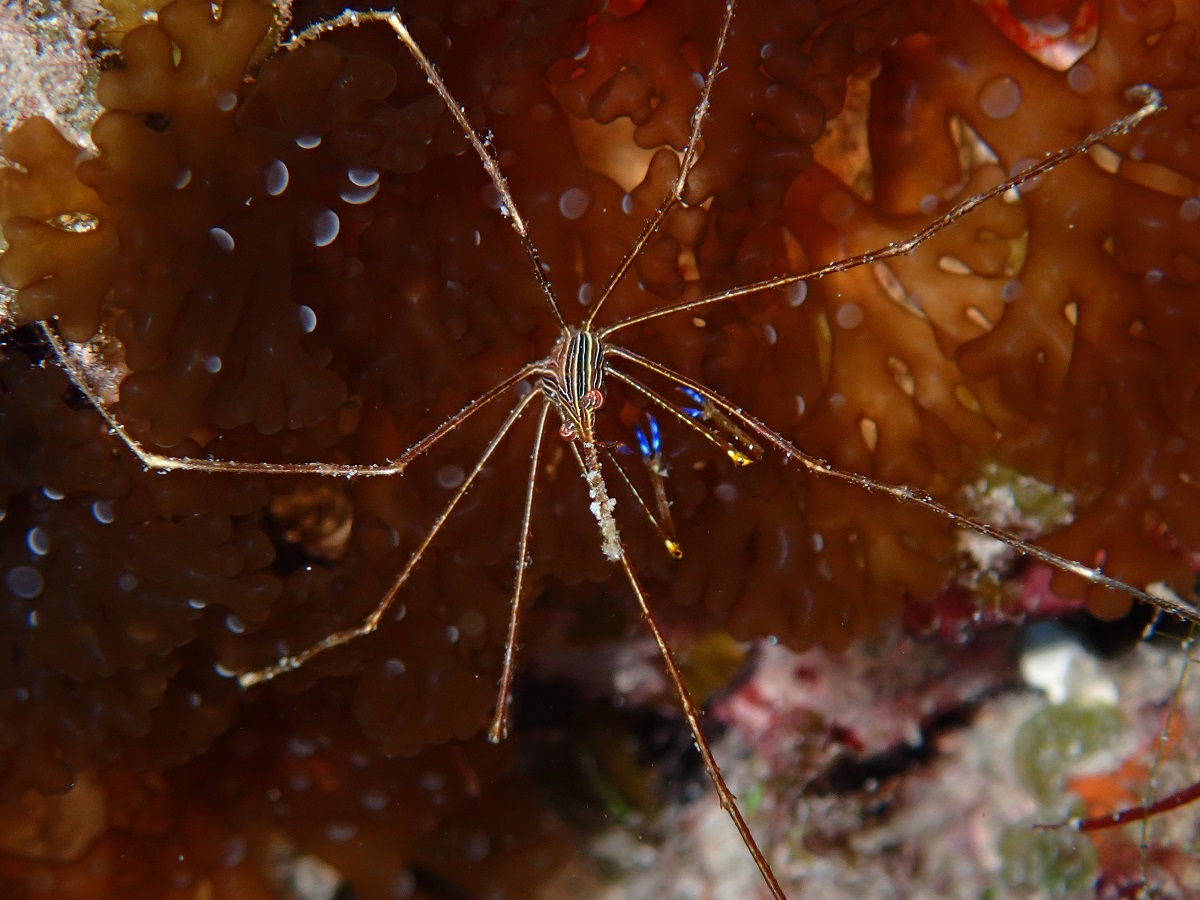
Species Spotlight: Yellowline Arrow Crab (Stenorhynchus lanceolatus)
- Description: Similar in shape to the Caribbean arrow crab, the Yellowline Arrow Crab can be identified by the yellow lines that run along its body and legs.
- Habitat: Deeper reefs, often found in association with sponges.
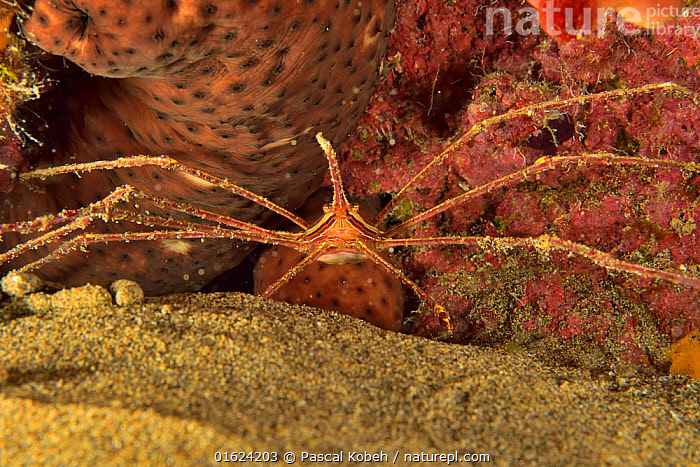
Expert Advice: To spot arrow crabs, look in crevices and under ledges, where they often hide. Observe their slow, deliberate movements. Also, check around anemones and corals, as they may be present, tending to their hosts.
Beyond Decorators and Arrows: Other Notable Caribbean Crabs
The Caribbean is home to a diverse array of crab species beyond decorator and arrow crabs. Here are a few other notable crabs you might encounter on your dives:
Species Spotlight: Yellowline Gobi Shrimp Crab (Tuleariocarcinus parvulus)
- Description: This tiny, commensal crab lives on sea cucumbers. It has a clear body with yellow lines.
- Habitat: On sea cucumbers, usually Synapta maculata.
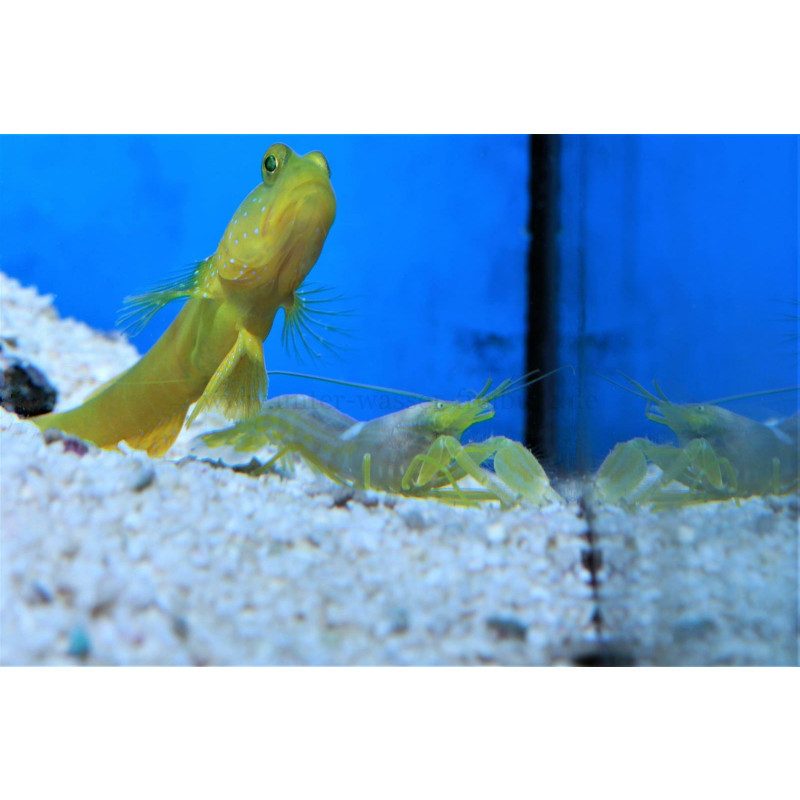
Species Spotlight: Channel Clinging Crab (Mithrax spinosissimus)
- Description: This large, powerful crab has spiny legs and is often found clinging to walls or hiding in caves.
- Habitat: Rocky areas, caves, and overhangs.

Species Spotlight: Sally Lightfoot Crab (Percnon gibbesi)
- Description: This agile, brightly colored crab is found on rocky shorelines and is known for its incredible speed.
- Habitat: Intertidal zone and rocky shores.
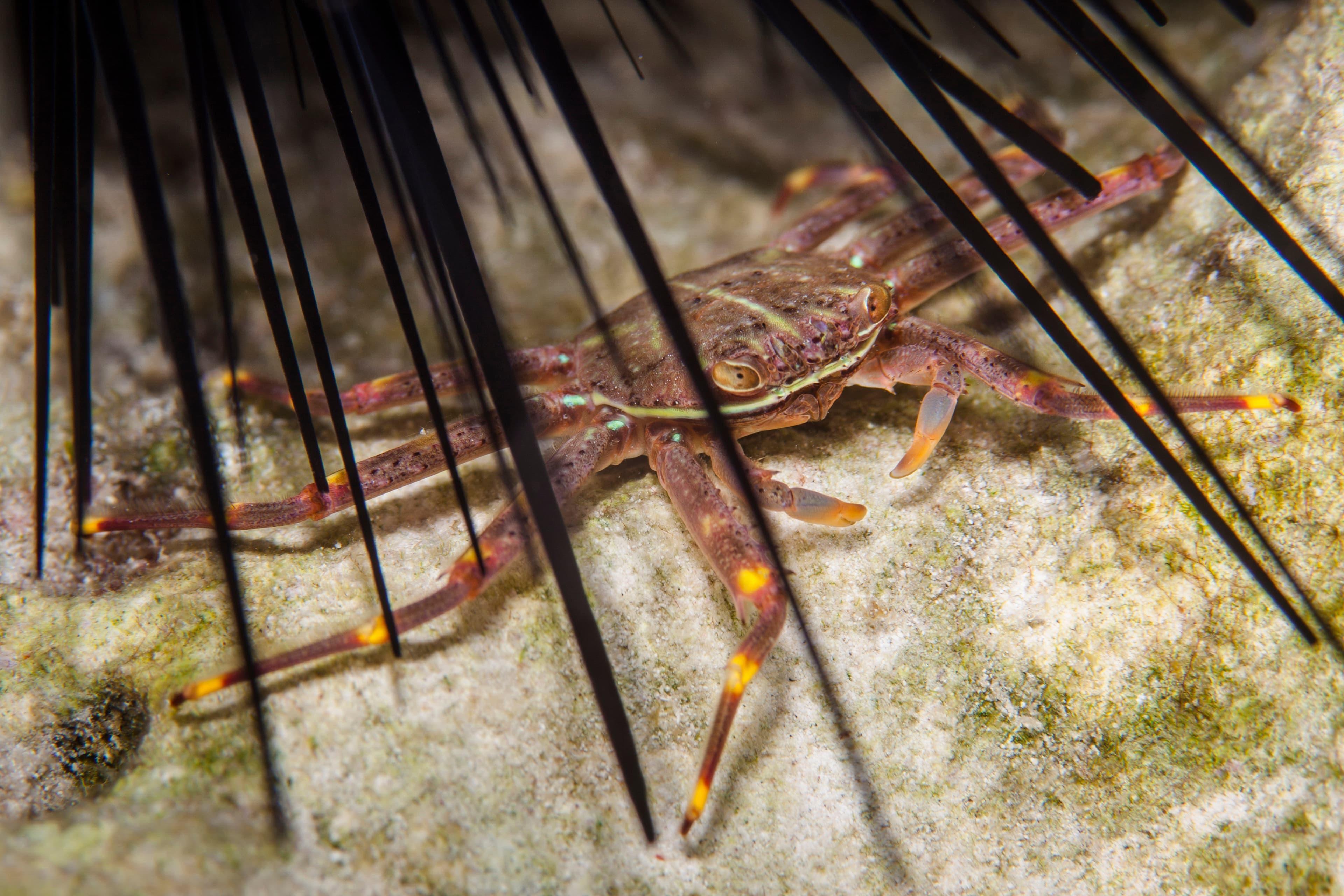
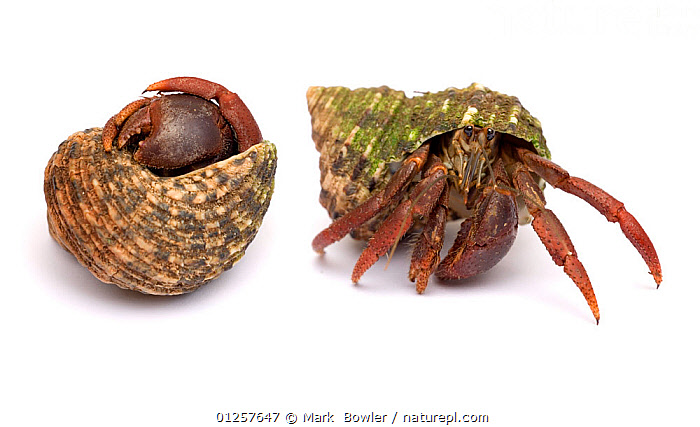
Species Spotlight: Land Hermit Crab (Coenobita clypeatus)
- Description: While not a true crab, this terrestrial crab uses snail shells for protection and is a common sight on Caribbean beaches.
- Habitat: Beaches and coastal areas.
Species Spotlight: Box Crab (Calappa flammea)
- Description: This crab has a distinctive box-like shape and powerful claws used to open shells.
- Habitat: Sandy bottoms.

Crab Conservation and Responsible Diving
Caribbean crab populations face a number of threats, including:
- Habitat Destruction: Coastal development, pollution, and destructive fishing practices can damage or destroy crab habitats.
- Pollution: Runoff from land carries pollutants into the ocean, harming crabs and other marine life.
- Overfishing: Some crab species are targeted for human consumption, and overfishing can deplete their populations.
- Climate Change: Rising sea temperatures and ocean acidification can negatively impact crab survival and reproduction.
It is crucial that divers practice responsible diving habits to minimize their impact on crab populations:
- Avoid Touching or Disturbing Crabs: Observe crabs from a respectful distance and avoid touching or handling them.
- Respect Their Habitat: Be mindful of your surroundings and avoid damaging coral reefs, seagrass beds, or other sensitive habitats.
- Report Any Signs of Distress: If you observe any crabs that appear injured, sick, or entangled in debris, report your findings to local authorities or conservation organizations.
- Do not collect shells: Land Hermit Crabs need these shells for survival.
Important Reminder: Choose sustainable seafood options and support conservation efforts aimed at protecting Caribbean marine life.
Citizen science also plays a vital role. Divers can contribute to monitoring crab populations by:
- Taking photographs of crab sightings
- Reporting sightings to online databases or local research projects
- Participating in citizen science surveys
Conclusion: Appreciating the Underwater World
Caribbean crabs are a vital part of the region's marine ecosystem, playing important roles as scavengers, predators, and prey. Their unique adaptations, such as the camouflage of decorator crabs and the spindly bodies of arrow crabs, make them fascinating subjects for observation.
By learning more about Caribbean crabs and the threats they face, we can become advocates for ocean conservation and help protect these amazing creatures for future generations.
So, the next time you're diving in the Caribbean, take a moment to appreciate the beauty and wonder of these underwater gems. Share your photos of crab sightings, support conservation organizations, and always dive responsibly.
Further reading and resources about Caribbean marine life:
- Local marine park websites
- Online field guides
- Scientific publications
Dive in and discover the enchanting world of Caribbean crabs!