Beyond the Lungs: How Hyperbaric Hyperoxia Reshapes the Diver’s Gut Microbiome

The Internal Frontier: Why Divers Should Care About Gut Health
When we discuss the physiological toll of technical diving, the conversation usually centers on the "big three": the lungs, the brain, and the circulatory system. We track our nitrogen loading on sophisticated computers and monitor our Central Nervous System (CNS) oxygen clock with religious fervor. However, an emerging field of research suggests that the most significant long-term impact of high-pressure environments may be occurring in a place few divers consider: the gastrointestinal tract.
In the world of technical and recreational diving, we frequently utilize Hyperbaric Hyperoxia (HBO). Whether you are breathing Nitrox to extend your no-decompression limits or switching to high-concentration oxygen (up to 1.6 ata) during decompression stops, you are saturating your system with oxygen levels far beyond what evolution intended 2.
The human gut is a marvel of biological engineering, specifically designed as an anaerobic environment. The beneficial microbes that dictate our immunity, mood, and nutrient absorption thrive in the absence of oxygen. To these essential bacteria, oxygen is not the "breath of life"—it is a potent environmental pollutant. This introduces the concept of the Gut-Diving Axis: a bidirectional communication network where the health of your microbiome directly influences your systemic resilience to decompression stress and oxidative damage.
The Mechanism: How High PO2 Reaches the Enteric Environment
To understand how diving affects the gut, we must look at the physics of gas exchange. Under normal surface conditions, the oxygen we breathe is primarily transported by hemoglobin. However, as we descend and the ambient pressure increases, Henry’s Law dictates that more gas will dissolve directly into the liquid portion of our blood—the plasma 14.
At the elevated partial pressures of oxygen (PO2) common in technical diving, the hemoglobin becomes fully saturated, leaving a significant "surplus" of dissolved oxygen circulating in the plasma. This dissolved oxygen bypasses the usual "hemoglobin bottleneck," allowing it to penetrate deep into tissues that are typically oxygen-poor, including the gut mucosa.
This phenomenon is closely linked to The Oxygen Window: Mastering Inherent Unsaturation for Efficient Decompression. While the "oxygen window" is a diver’s best friend for off-gassing inert gases, the same pressure gradient that pulls nitrogen out of the tissues pushes oxygen into the enteric environment. This introduces Reactive Oxygen Species (ROS) directly into the intestinal lumen, creating an environment that is hostile to our native microbial residents.
Microbial Shifts: The War Between Aerobes and Anaerobes
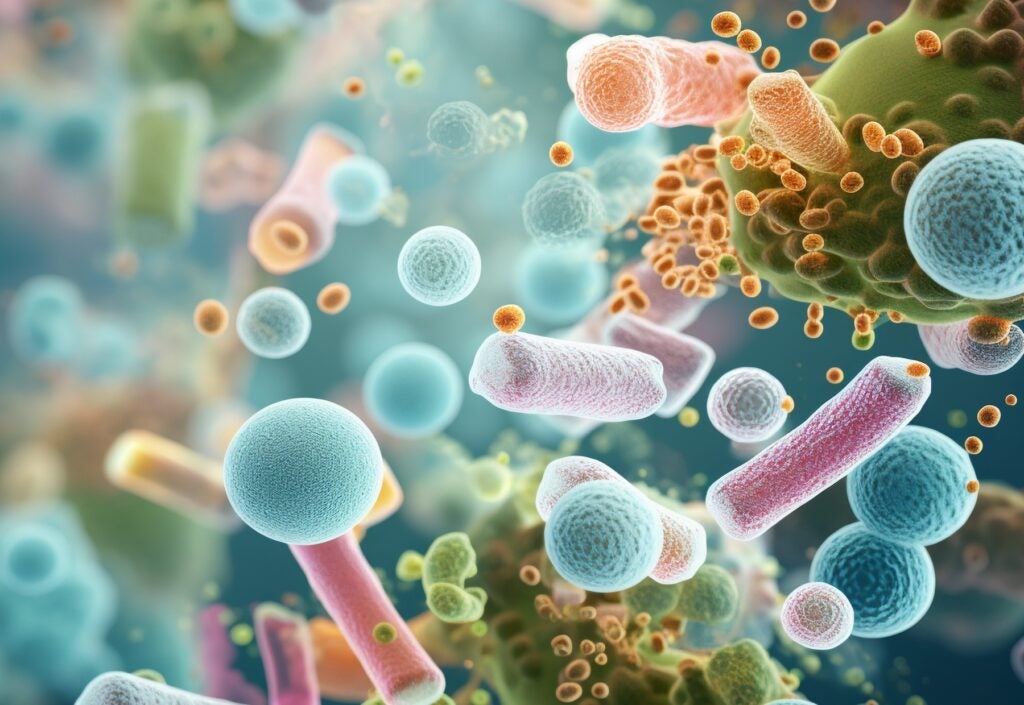
The gut microbiome is composed of trillions of microorganisms, categorized largely into obligate anaerobes (which die in the presence of oxygen) and facultative anaerobes (which can survive with or without it).
Repetitive exposure to high PO2 levels (1.4–1.6 ata) acts as a selective pressure, effectively "weeding out" the beneficial obligate anaerobes like Bacteroidetes and certain Firmicutes 2. When these populations decline, the ecological niches they occupy become vacant, allowing for the proliferation of facultative anaerobes—many of which are opportunistic pathogens.
| Microbe Type | Impact of Hyperoxia | Role in Diver Health |
|---|---|---|
| Obligate Anaerobes | High Mortality | Produce anti-inflammatory short-chain fatty acids. |
| Facultative Anaerobes | Proliferation | Can lead to dysbiosis and increased inflammation. |
| Pathogenic Strains | Opportunistic Growth | Increase risk of "Leaky Gut" and systemic stress. |
This shift in diversity isn't just a temporary inconvenience; it is a fundamental restructuring of the diver’s internal ecosystem. For the expedition diver conducting multiple high-PO2 dives over a week, this selective pressure can lead to a state of chronic dysbiosis, where the gut's ability to regulate the immune system is severely compromised.
Oxidative Stress and the Gut Barrier
We often discuss the Lorrain Smith Effect in the context of pulmonary oxygen toxicity—the inflammation and damage to lung tissue after prolonged exposure to high PO2 2[[K8]]. However, a similar process occurs on a microscopic scale within the epithelial lining of the gut.
The generation of ROS within the intestinal lumen leads to lipid peroxidation, damaging the cell membranes of the gut wall. This is where the Antioxidant Theory in Diving: Mitigating Oxidative Stress and Decompression Risk becomes critical. While we often think of antioxidants as a systemic defense, localized gut antioxidants (found in specific fibrous foods and supplements) may be the primary line of defense against the "enteric Lorrain Smith Effect."
Expert Tip: The gut barrier is only one cell layer thick. Protecting this delicate interface is as vital to your long-term diving career as protecting your ear drums or your lungs.
The Inflammatory Bridge: Dysbiosis and Decompression Stress
One of the most concerning consequences of hyperoxia-induced gut damage is the "Leaky Gut" phenomenon. When the tight junctions of the intestinal wall are compromised by oxidative stress, endotoxins—specifically Lipopolysaccharides (LPS)—can leak into the bloodstream.
LPS is a potent pro-inflammatory marker. Once in the blood, it triggers a systemic immune response that mirrors the early stages of Subclinical DCS: The Hidden Physiological Cost of Repetitive Diving. This creates a synergistic effect: the body is already dealing with the inflammatory cost of microbubbles (VGE), and the addition of gut-derived endotoxins pushes the system toward a state of high decompression stress.
Furthermore, this inflammation impacts our Heart Rate Variability (HRV). As we’ve explored in our guide on Heart Rate Variability and Decompression Stress, a drop in HRV is a signal of autonomic nervous system strain. A compromised gut-brain axis, fueled by dysbiosis, keeps the body in a "sympathetic" (fight or flight) state, slowing down recovery and increasing the physiological cost of every dive.
Hyperoxia and the Immune System: A Diver's Defense
The gut contains approximately 70-80% of the body’s immune cells. When HBO-induced shifts alter the microbiome, they also alter cytokine production—the chemical messengers of the immune system.
There is also a fascinating, though still emerging, link to the Paul Bert Effect (CNS Oxygen Toxicity) 2[[K8]]. The gut is a major site of neurotransmitter production, including GABA and serotonin. If the microbiome is in a state of flux due to repetitive hyperoxic exposures, the levels of these neurotransmitters may shift, potentially altering a diver’s threshold for CNS toxicity. This is especially relevant when considering The Oxygen 'Off-Effect': Why CNS Toxicity Risks Persist During Initial Ascent, where the transition of gas pressures can trigger sudden neurological reactions.
Practical Mitigation Strategies for the Technical Diver
While we cannot avoid oxygen—it is, after all, the gas that keeps us alive—we can mitigate its impact on our internal frontier.
1. Nutritional Priming
Focus on a diet rich in prebiotics (fiber that feeds good bacteria) in the weeks leading up to a heavy dive trip. This builds a robust "anaerobic reserve" of microbes.
- Increase intake of leeks, onions, garlic, and asparagus.
- Consider a high-quality multi-strain probiotic supplement.
2. Timing of Supplementation
The post-dive window is critical. Instead of just focusing on hydration, focus on re-establishing gut equilibrium.
- Consume fermented foods (kefir, sauerkraut, kimchi) in the evening after diving.
- Use targeted antioxidants like Vitamin C and E to neutralize residual ROS in the digestive tract.
3. Hydration and Rheology
Efficient nutrient transport and waste removal depend on healthy blood flow. As discussed in Blood Viscosity and Nitrogen Flow, dehydration increases hemoconcentration, which can exacerbate the concentration of endotoxins in the blood.
- Maintain "clear and copious" hydration to ensure plasma can effectively transport metabolic byproducts away from the gut wall.
The Future of Diving Theory: Personalized Microbiome Profiles
We are moving toward a future where a diver’s "fitness to dive" may be determined by more than just a lung function test or a cardiac stress test. Emerging research is looking at using gut health as a predictor for DCS susceptibility.
In the future, expedition and saturation divers may undergo "probiotic-loading" protocols tailored to their specific microbial profile. By strengthening the gut barrier and ensuring a diverse microbial population, we can potentially lower the systemic inflammatory "floor," making the body more resilient to the unavoidable stresses of the underwater environment.
Diving is just about your lungs and your dive computer — actually, it is a whole-body physiological challenge that starts in your core. By looking beyond the dive computer and into the gut, we can unlock new levels of safety and longevity in this sport.
As we continue to push the limits of depth and time, remember that your most important piece of safety gear isn't hanging off your BCD—it's thriving inside your digestive system. Treat your microbiome with the same respect you give your regulators, and your body will reward you with faster recoveries and clearer heads on every ascent.
Ready to dive deeper into the science of safety? Check out our master guide on Decoding the NOAA Oxygen Tables to ensure your next mission stays within safe physiological boundaries.
Further Reading
- Hyperoxia Provokes Time- and Dose-Dependent Gut Injury and Endotoxemia and Alters Gut Microbiome and Transcriptome in Mice - PMC
- Hyperoxia provokes gut dysbiosis in rats | Critical Care | Full Text
- Emerging Applications of Hyperbaric Oxygen Therapy: Mitochondria, the Microbiome, and the Gut–Brain Connection | Oxygen Oasis
- Oxygen therapy harms lung microbiome in mice | ScienceDaily