Loading...
marine-life#shark body language#diving with sharks#reef shark behavior
Shark Body Language: A Diver’s Guide to Reading Reef Predator Intentions
Pro Dive Vibes
February 27, 20269 min read
Beyond the Fear: Why Understanding Shark Language is a Game-Changer
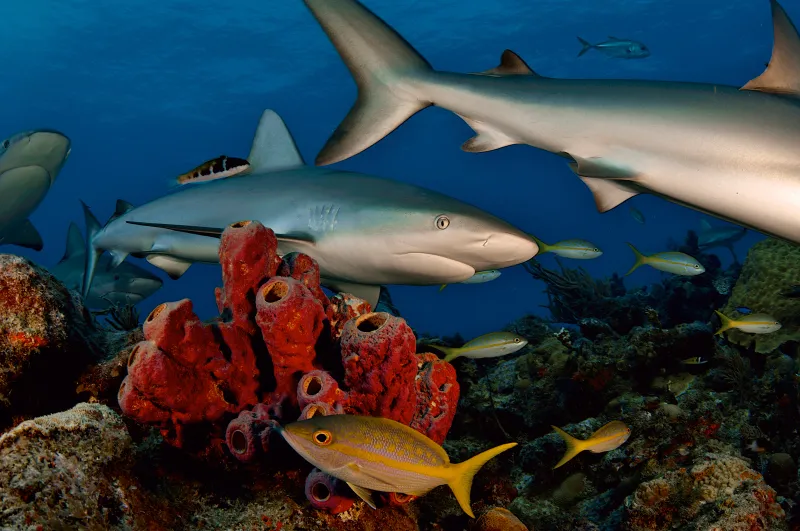
For decades, popular culture has painted a rather one-dimensional portrait of the shark: a mindless killer driven solely by an insatiable hunger. As divers, we know better. When you slip beneath the surface and encounter a reef shark, you aren't looking at a monster; you are witnessing 400 million years of evolutionary perfection. However, the difference between a pulse-pounding, positive encounter and a stressful situation often boils down to one thing: your ability to read their body language.
Understanding shark behavior is the ultimate "level-up" for any scuba diver. It transforms a passive observation into a two-way conversation. For underwater photographers, reading these cues is the secret to getting that perfect frame without spooking the subject. For the recreational diver, it provides the peace of mind that comes from knowing the difference between a shark that is curious and one that is asking for space. By moving past the myths and into the biological reality, we stop being "prey" in our own minds and start being respectful guests in their liquid living room.
More Than Just Teeth: The Sensory World of the Shark
To understand why a shark moves the way it does, we first have to understand how it perceives us. A shark’s body language is a direct reflection of its sensory input. While we rely heavily on sight, a shark is "feeling" the water around it through a sophisticated array of biological hardware.
The lateral line—a visible row of pores running down the shark's flank—detects minute pressure changes and vibrations in the water. This is why a diver thrashing at the surface or kicking erratically sends a "distress signal" that might pique a shark's predatory interest. Furthermore, the Ampullae of Lorenzini (tiny electro-receptors located around the snout) allow them to detect the faint bio-electric fields of living organisms—including the steady beat of your heart and the electronics in your camera strobe.
As we discussed in our exploration of Beyond the Bite, a shark’s dentition is a specialized tool, but it isn't their only way of interacting with the world. Their entire body is a communication device. In the underwater realm, "personal space" is a fluid concept, but it is one that sharks take very seriously. When a shark enters your space, it is often using these senses to build a 3D map of who and what you are.
The 'Chill' Shark: Signs of a Relaxed Predator
Most shark encounters on a healthy reef are incredibly peaceful. A "chill" shark is easy to identify if you know what to look for.
- Horizontal Orientation: A relaxed shark maintains a level, horizontal posture. It isn't tilting its body or making sudden vertical movements.
- Rhythmic Tail Beats: Look for slow, steady, and effortless side-to-side oscillations of the caudal fin (tail). This indicates the shark is in a "cruising" mode, conserving energy.
- The Inquisitive Glide: Often, a shark will circle a group of divers at a distance. If the shark is gliding with minimal effort and keeping a consistent depth, it is likely just curious. It is "sizing you up" using its lateral line, determining if you are a food source (you aren't) or a threat (hopefully not).
Pro Tip: If a shark is "blinking" (using its nictitating membrane to cover its eye), it isn't necessarily being aggressive. This is a protective reflex often used when swimming near abrasive coral or during social interactions. However, if the membrane stays closed, it’s a sign the shark is preparing for a physical encounter.
The Social Contract: Sharks at the Cleaning Station
One of the most fascinating places to observe shark body language is at a cleaning station. Here, the rules of the reef change. As detailed in The Reef’s Spa Day, there is a "social contract" where predators and prey coexist for the sake of hygiene.
When a shark is in "client mode," its body language shifts dramatically:
- The Relaxed Jaw: You may see the shark slightly gape its mouth. This isn't a threat; it's an invitation for cleaner wrasse or gobies to enter and remove parasites.
- Flared Gills: By slowing its movement and flaring its gill slits, the shark allows cleaners to get into the delicate folds of its respiratory system.
- Vulnerability: A shark being cleaned is often at its most docile. It may even "hover" in a head-up position, defying its usual need for forward motion to breathe (in species that aren't ram-ventilators).
However, the moment the "spa session" ends, the shark’s posture will stiffen, its gills will close, and it will transition back into its role as a predator. Recognizing this transition is key to knowing when to give the animal more distance.
Reading the Red Flags: The Agonistic Display
While sharks rarely attack divers, they are very clear about when they are feeling threatened or defensive. This is known as an agonistic display. If you see these signs, it is time to calmly and slowly back away.
| Signal | Appearance | Meaning |
|---|---|---|
| Hunched Back | The shark arches its spine upward, creating a "hump." | High stress; the shark is feeling crowded or threatened. |
| Pectoral Fin Drop | The side fins point almost vertically downward. | A "back off" signal; the shark is preparing for high-maneuverability. |
| Jerky Swimming | Exaggerated, side-to-side head movements. | Agitation; the shark is visually "locking on" to the source of stress. |
| Gap-Mouth | Repeatedly opening and closing the mouth rapidly. | A final warning; often precedes a defensive strike or charge. |
The Pectoral Fin Drop is perhaps the most universal "red flag" in the shark world. By dropping these fins, the shark creates more lift, allowing it to turn or pivot with lightning speed. It’s the shark equivalent of a human squaring their shoulders and clenching their fists.

Curiosity vs. Hunting: Decoding Movement Patterns
It is a common misconception that a shark swimming toward you is "hunting." In reality, hunting behavior is usually covert—sharks are ambush predators. If you can see the shark clearly, it’s likely not hunting you.
The Criss-Cross Approach
Sharks often use a "criss-cross" or zig-zag pattern when approaching something new. Because their nostrils are spaced apart, they use stereo-olfaction to triangulate the source of a scent or vibration. By swimming in a zig-zag, they are simply gathering more data on you.
The "Bump" vs. The "Attack"
In rare instances, a shark may perform an "investigatory bump." This involves the shark nudging a diver with its snout. While terrifying, this is often how sharks "touch" things to see if they are edible. However, environmental triggers can escalate this. High current, low visibility, or the presence of "chum" (bait) in the water can shift a shark's body language from curious to competitive. In these conditions, their movements become faster and more erratic.
Diver Etiquette: How Your Body Language Affects Theirs
Communication is a two-way street. Sharks are just as busy reading your body language as you are theirs. To ensure a peaceful encounter, follow this checklist:
- Stay Horizontal: Vertical divers look large, awkward, and potentially threatening. Staying horizontal makes you look like a natural part of the marine environment.
- Control Your Bubbles: Loud, sudden bursts of bubbles can startle a shark. Try to maintain calm, rhythmic breathing.
- Eye Contact (But Not a Stare): Keeping the shark in your field of vision shows you are aware of it. However, a fixed, intense stare can be perceived as a challenge. Use soft eye contact.
- Keep Your Hands In: Flailing arms can look like the fins of a distressed fish. Keep your arms tucked or holding your camera.
- Stick Together: Group dynamics matter. A lone diver is more likely to be "tested" by a curious shark than a tight-knit group.
Warning: Never corner a shark. Even a small reef shark will become aggressive if it feels its only exit is through you. Always ensure the animal has a clear path to the open blue.
Species-Specific Dialects: Grey Reefs vs. Whitetips vs. Blacktips
Not all sharks "speak" the same way. Different species have different temperaments and "dialects" of body language.
The Grey Reef Shark: The Drama Queen
Grey Reef Sharks are the masters of the agonistic display. They are highly territorial and will very clearly arch their backs and drop their pectoral fins if you get too close to their favorite ledge. They are the most "vocal" with their body language and should be given immediate respect.
Whitetip Reef Sharks: The Lazy Residents
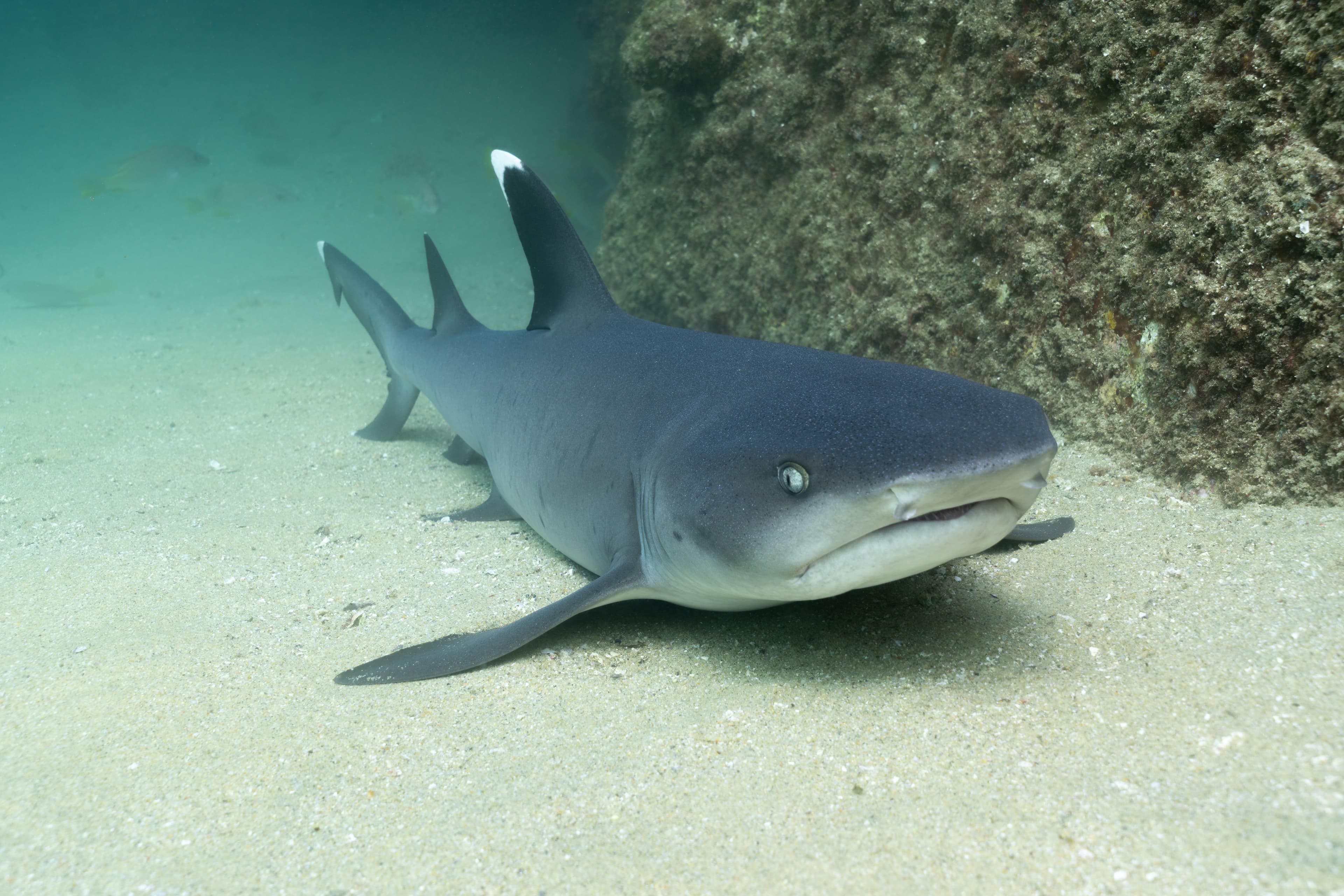
Whitetip Reef Sharks are the "couch potatoes" of the reef. Unlike many sharks, they can pump water over their gills while stationary. You’ll often find them stacked like cordwood in caves. Their body language is usually "leave me alone, I'm sleeping." If they start swimming, it’s usually a slow, annoyed retreat from a diver who got too close.
Blacktip Reef Sharks: The Skittish Sprinters
Blacktips are notoriously shy. Their body language is often "flight" rather than "fight." They move with incredible speed and are easily spooked by bubbles. If a Blacktip is hanging around, it’s a sign of extreme curiosity, but the slightest sudden movement from you will usually send them bolting into the distance.

From Observation to Conservation: Protecting Our Misunderstood Neighbors
Once you learn to read the nuances of shark behavior, the fear that once clouded your vision is replaced by a profound sense of awe. You begin to see them not as threats, but as essential components of a healthy ecosystem.
As we've discussed in our post on Shark Sanctuaries, these animals are in a precarious position. Overfishing and habitat loss threaten the very reefs they patrol. By becoming a diver who understands and respects shark body language, you become an ambassador for their species. When you return from a dive and tell your non-diving friends about the "chill" shark that glided past you with rhythmic grace, you are helping to rewrite the narrative.
Sharing the water with an apex predator is a privilege. It is a reminder that we are part of a vast, complex, and beautiful biological web. The next time you see a fin in the distance, don't reach for your "fear" reflex. Instead, watch the fins, observe the tail, and enjoy the conversation.
Ready to see these predators in action? Check out our guide to the world's best shark diving destinations and join the movement to protect our blue planet!