Loading...
marine-life#nudibranch defense mechanisms#sea slug toxins#aposematism marine life
The Chemical Arms Race: Why Nudibranchs Are the Ocean’s Most Colorful Rebels
Pro Dive Vibes
February 27, 20269 min read
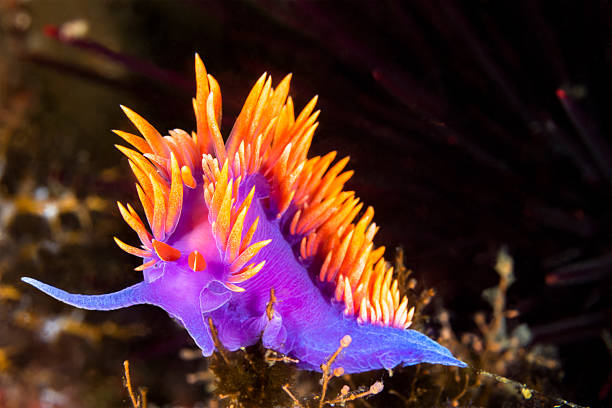
Welcome to the high-stakes world of the nudibranch—nature’s most flamboyant survivalists. If you have ever been on a dive and spotted a tiny, neon-colored creature crawling across a sponge, you haven’t just found a "sea slug." You’ve found a biological marvel that has successfully navigated a millions-of-years-old evolutionary battle. In the underwater world, being bright isn't about fashion; it is a high-decibel shout of defiance.
While most marine creatures spend their lives trying to blend into the shadows to avoid being eaten, nudibranchs do the exact opposite. They are the rebels of the reef, ditching the heavy shells of their gastropod ancestors in favor of soft, exposed bodies and colors that would make a 1980s disco look dull. But don't let the beauty fool you. These tiny titans are some of the most toxic, dangerous, and chemically complex organisms in the ocean.
Aposematism: The Science of 'Don't Eat Me'
In the animal kingdom, there are two main ways to stay alive: hide or fight. Nudibranchs have chosen a third, more psychological path known as aposematism. This is the use of visual signals—usually bright colors or bold patterns—to advertise that an animal is "unprofitable" to a predator. In simpler terms, it is a "Don't Eat Me" sign written in neon.
Predators, particularly reef fish, have highly developed color vision. Through a process of trial and error (and a few very bad stomach aches), fish learn to associate certain color combinations with toxicity or foul taste. Once a predator has tried to nibble on a bright orange or electric blue slug and ended up with a mouthful of chemicals or stinging cells, they won't make that mistake again.
Pro Tip: For divers, these colors are a gift. While camouflaged critters like frogfish or stonefish require an eagle eye to spot, the aposematic nudibranch is designed to be seen. If you want to find them, look for the colors that don't seem to belong in the natural shadows of the reef.
The trade-off is fascinating. A nudibranch gives up the safety of invisibility for the security of being unforgettable. If you are invisible and a predator accidentally bites you, you're dead. If you are bright and toxic, the predator recognizes you before the first bite, and you go about your day undisturbed.
The Stolen Arsenal: Kleptopredation and Chemical Theft
How does a slow-moving, shell-less slug become so dangerous? They don't usually make their own weapons; they steal them. This process is known as kleptopredation (or more specifically, sequestering). Nudibranchs are specialized hunters that feed on toxic or stinging organisms like sponges, bryozoans, and hydroids.
- Chemical Sequestration: Many nudibranchs eat toxic sponges. Instead of being poisoned, the slug breaks down the sponge's tissues and moves the toxic compounds into its own skin.
- Nematocyst Theft: Some species eat hydroids or jellyfish that possess
nematocysts(stinging cells). The nudibranch has evolved a way to swallow these "loaded guns" without triggering them. They move the live stinging cells through their digestive tract and store them in specialized sacs calledcnidosacsat the tips of their body. - Chemical Synthesis: While many steal their toxins, some advanced species have evolved the ability to chemically synthesize their own defensive cocktails from scratch, ensuring they are always armed even if their preferred food source is scarce.
The Pyjama Slug: Stripes of Warning
One of the most iconic sights in the Indo-Pacific is Chromodoris quadricolor, affectionately known as the Pyjama Slug. This species is a masterclass in aposematic signaling.
The Pyjama Slug features bold, longitudinal stripes of orange, black, and white, often set against a vibrant blue background. These stripes serve two purposes. First, they act as a "motion dazzle," making it hard for a predator to determine the slug's exact speed or direction. Second, the high-contrast colors scream "toxic" to any passing fish.
The Pyjama Slug derives its chemical defense from the sponges it eats—specifically those containing latrunculin, a potent toxin that can cause significant distress to any fish brave (or stupid) enough to try a taste. By recycling these chemicals, the Pyjama Slug ensures it remains a permanent resident of the "do not eat" list.
The Blue Dragon: Floating Fire
While most nudibranchs crawl along the bottom, Glaucus atlanticus, the Blue Dragon, spends its life floating on the ocean's surface. This is perhaps the most hardcore member of the family.
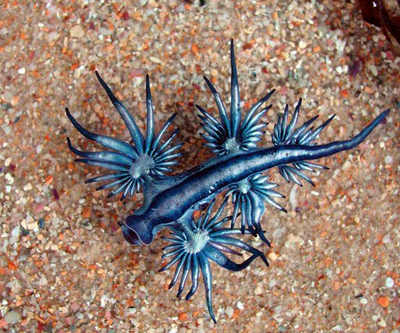
The Blue Dragon is a master of countershading. Its ventral side (which faces the sky) is bright blue to blend in with the water's surface, while its dorsal side (facing the deep) is silver to blend with the sunlight reflecting off the waves. But its real claim to fame is its diet. The Blue Dragon hunts the Portuguese Man o' War, a siphonophore known for its incredibly painful sting.
The Blue Dragon doesn't just eat the Man o' War; it concentrates its venom. Because the slug is so small, the concentration of stinging cells in its cerata (the wing-like appendages) is much higher than in the Man o' War itself.
Warning: Never pick up a Blue Dragon if you find one washed up on the beach or floating during a safety stop. Their sting is significantly more painful than the creature they stole it from!
The Warty Sea Slug: Smelly and Dangerous
Not all nudibranchs rely on stinging cells. The Warty Sea Slug (Phyllidia varicosa) uses a different, more "aromatic" approach. These slugs are easily identified by their blue-grey bumps and ridges tipped with bright yellow.

Unlike many other nudibranchs, Phyllidia species lack the feathery external gills (the "branch" in nudibranch) on their backs. Instead, they have evolved a tough, leathery skin. When threatened, they release a pungent, foul-smelling chemical called 9-isocyanopupukeanane.
This chemical is so potent that it can kill small fish in a confined space, like a tide pool or a collector's jar. To a predator, the Warty Sea Slug doesn't just taste bad—it smells like a warning that the entire animal is a chemical biohazard.
The Spanish Shawl: A Neon Nightmare for Predators
Found along the Pacific coast of North America, the Spanish Shawl (Flabellina iodinea) is a fan favorite for its stunning purple body and neon orange cerata.

The orange color in their cerata comes from a pigment called astaxanthin, which they extract from their diet of hydroids. These cerata aren't just for show; they serve as the slug's respiratory organs and their primary defense system. When a Spanish Shawl is disturbed, it can actually "swim" by flexing its body back and forth, creating a mesmerizing (and confusing) display of purple and orange that further reinforces its toxic status.
The Art of Deception: Mimicry in the Underworld
In the world of the reef, if you can't be toxic, you can at least look the part. This is where the "Chemical Arms Race" gets sneaky.
- Batesian Mimicry: This occurs when a harmless species evolves to look like a toxic one. Many species of flatworms have evolved the exact same color patterns as toxic nudibranchs. By "dressing up" as a nudibranch, the flatworm enjoys the same protection from predators without having to invest the energy into stealing or making toxins.
- Müllerian Mimicry: This happens when two or more toxic species evolve to look like each other. By sharing a "uniform," they make it easier for predators to learn the warning signal, which benefits both species.
Flatworms are just nudibranchs without gills. While they look similar, they are biologically very different. Here is how to tell the difference:
| Feature | Nudibranch | Flatworm |
|---|---|---|
| Body | Thick, muscular | Paper-thin |
| Gills | External "feathers" | None (breathes through skin) |
| Rhinophores | Present (tentacles on head) | None (may have head folds) |
| Movement | Slow, deliberate | Often fast, gliding |
A Diver’s Guide: Finding and Photographing Toxic Beauty
Finding nudibranchs is an exercise in patience and "macro vision." Because they are small, they are often overlooked by divers racing to find the next shark or turtle.
How to Spot Nudibranchs
- Follow the Food: Learn what they eat. If you find a specific type of sponge or hydroid, look closer—the predator is likely nearby.
- Check the Current: Nudibranchs often perch on the edges of fans or corals where the current is strongest to help with respiration.
- Look for "Eggs": Nudibranch egg ribbons are often bright and easier to see than the slugs themselves. If you see a spiral of eggs, the parent is usually close by.
Ethical Photography and Interaction
Pro Dive Vibes Rule: Never move a nudibranch. These creatures are often specialized to a specific food source. Moving them just a few feet for a "better background" can result in them starving or being exposed to predators they aren't equipped to handle.
When photographing these "Rainbow Warriors," lighting is everything. Water absorbs red and orange light very quickly. To capture the true aposematic colors, you must use strobes or a high-quality video light. Without artificial light, that brilliant Spanish Shawl will just look like a dull purple blob.
Conclusion: Respecting the Reef’s Tiny Titans
The vibrant colors of the nudibranch are more than just a visual treat for divers; they are the result of a complex, million-year-old chemical arms race. These creatures represent the incredible adaptability of life—turning the weapons of their prey into their own defense systems and using the power of color to navigate a world full of predators.
Beyond their beauty, nudibranchs are vital indicators of reef health. Because many species are highly specialized to eat only one type of sponge or hydroid, their presence tells us that the delicate balance of the ecosystem is intact.
The next time you’re on a dive and you see a flash of neon on the reef, take a moment to hover and observe. You aren't just looking at a slug; you’re looking at one of the ocean's most successful and colorful rebels. Remember: the beauty of the ocean is often a warning—look, but don't touch!
Ready to find your first nudibranch? Check out our [Gear Guide] for the best macro lenses and strobes to capture these tiny titans on your next dive!