Loading...
marine-life#moray eel behavior#scuba diving marine life#eel breathing mechanism
Moray Eel Behavior Explained: Why That Gaping Mouth Isn't a Threat
Pro Dive Vibes
June 13, 20269 min read
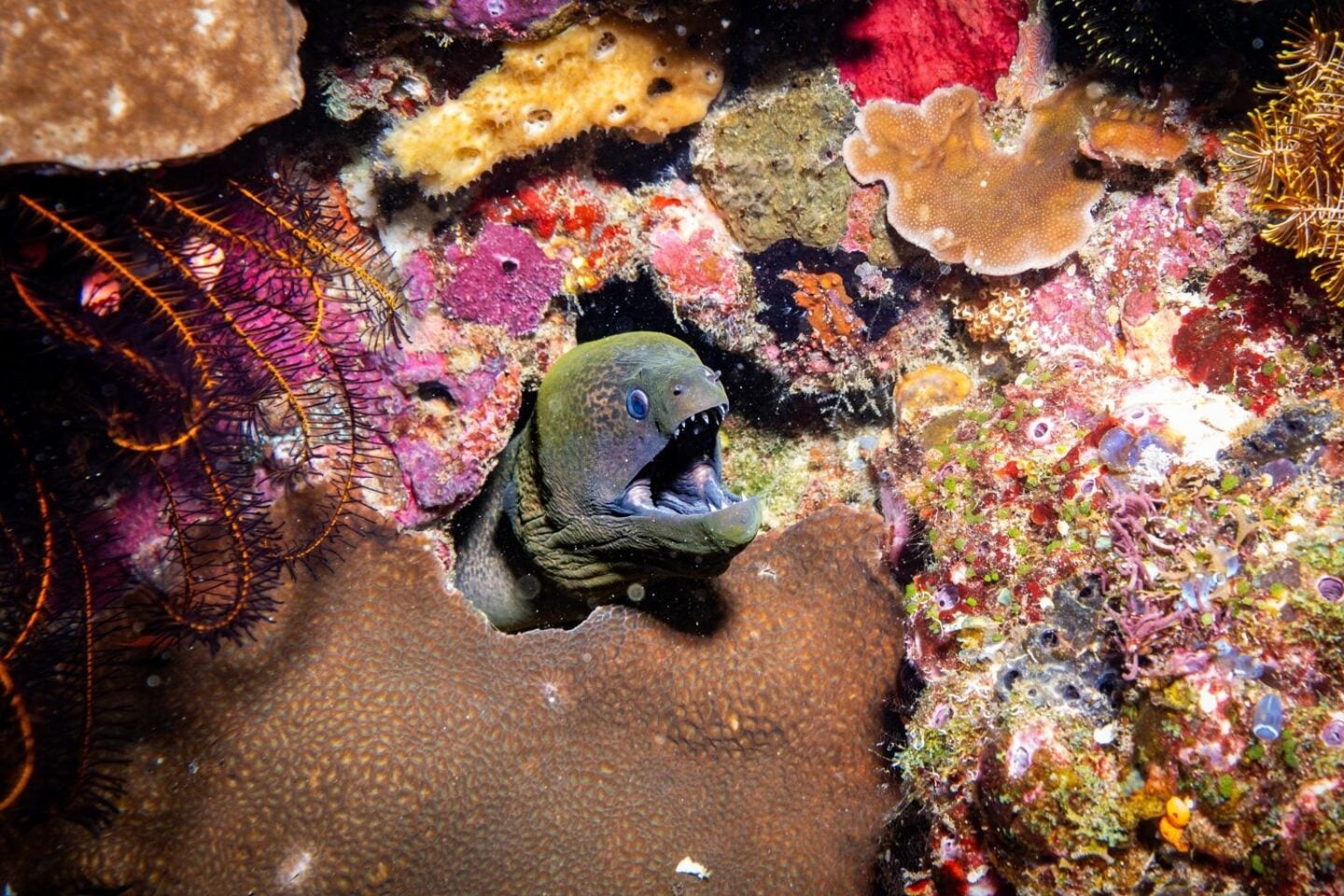
You are drifting along a vibrant coral wall, the sunlight dancing through the turquoise water, when you spot a dark, jagged crevice. As you peer closer, a serpentine head emerges. Its skin is a mosaic of intricate patterns, and its eyes are fixed—but it is the mouth that catches your attention. It opens wide, revealing rows of needle-sharp teeth, and then closes. Open, close. Open, close.
To a new diver, this looks like a clear warning: "Back off, or I’ll bite." It is the classic reef encounter that has fueled decades of "scary" marine life stories. We tend to project human emotions onto animals, and a gaping mouth full of teeth usually signals aggression in our world. However, in the world of the moray eel, things are rarely what they seem.
At Pro Dive Vibes, our mission is to peel back the layers of underwater myths to help you transition from an observer to a knowledgeable part of the marine ecosystem. Today, we are debunking the "grumpy" reputation of the moray eel and explaining why that terrifying gape is actually a sign of life, not a threat of death.
The Biology of the Gape: It’s Just a Breath of Fresh Water
The primary reason a moray eel keeps its mouth open isn't to intimidate you; it is simply to stay alive. Most bony fish you see on the reef—like snappers, groupers, or parrotfish—possess a bony plate called an operculum that covers their gills. By flapping these covers, they can efficiently pump oxygenated water over their gill filaments.
Moray eels are biologically different. They lack these bony gill covers, having only small, circular gill openings further back on their bodies. Without an operculum to move the water, they have developed a mechanism known as the buccal pump.
By rhythmically opening and closing their mouths, morays manually pull water into their oral cavity and force it back through their gill chambers. It is the underwater equivalent of a human taking a deep breath.
| Feature | Standard Reef Fish | Moray Eel |
|---|---|---|
| Gill Cover | Bony Operculum | None (Small Holes) |
| Pumping Method | Opercular Flap | Buccal (Mouth) Pump |
| Visual Cue | Gills Flapping | Mouth Gaping |
| Resting State | Mouth may be closed | Mouth usually opening/closing |
You might notice that sometimes an eel gapes faster or wider than usual. Does this mean it’s getting angry? Not necessarily. Just like you breathe harder after a challenging swim against a current, an eel that has recently been active or is stressed by a strong surge will increase its "breathing rate."
Beyond the Primary Jaws: A Quick Nod to the 'Alien' Within
While the gaping mouth we see is essential for respiration, it isn't the only set of jaws the moray possesses. If you have ever seen the movie Alien, you might be surprised to learn that Hollywood took inspiration from the moray eel.
Behind the visible primary jaws lies a second set of jaws located in the throat: the pharyngeal jaws. While the outer mouth is busy pumping water for oxygen, these internal jaws are the real "business end" of the eel's predatory toolkit. When a moray strikes, the pharyngeal jaws lunge forward into the mouth, grab the prey, and pull it down into the esophagus.
Pro Tip: Don't let the "hidden jaws" scare you. The outer mouth you see gaping in the reef is almost exclusively used for breathing and initial grasping. For a deep dive into the terrifyingly cool science of how these internal jaws work, check out our post on Pharyngeal Jaws: The Alien-Like Secret of the Moray Eel’s Bite.
Understanding this anatomy helps divers realize that the "scary" open mouth is a respiratory tool, while the actual hunting mechanism remains tucked away out of sight.
Aggression vs. Territory: Morays vs. The Real Reef Bullies
In the hierarchy of reef "tough guys," moray eels are surprisingly low on the list of animals likely to pick a fight. They are generally shy, nocturnal, and prefer to spend their daylight hours tucked safely away in the reef structure.
Moray eels are aggressive predators that hunt divers. In reality, morays are quite docile unless provoked or confused by food. If you want to talk about true territorial aggression, look no further than the Titan Triggerfish or even a feisty Damselfish protecting its algae patch.
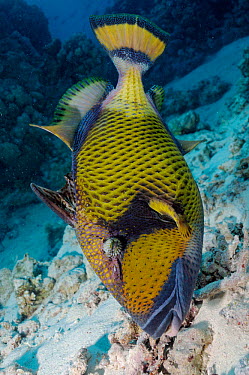
While a moray might look like it’s "guarding" its hole with a gaping mouth, it is usually just watching the world go by. Compare this to the high-intensity, high-speed charges of a nesting triggerfish, and you’ll quickly realize the eel is the one minding its own business. We’ve broken down why the "scary-looking" animals are often the most misunderstood in our guide: Beyond the Bite: Why Triggerfish Are Actually More Territorial Than Sharks.
The Social Moray: Cleaning Stations and Symbiosis
One of the most fascinating reasons a moray eel might hold its mouth wide open for an extended period is the "open-door policy" of the reef's cleaning stations.
Morays are frequent patrons of these underwater spas. Small cleaner shrimp (like the Banded Coral Shrimp) and Wrasses provide a vital service by picking off parasites, dead skin, and food debris from the eel’s skin and—more importantly—from inside its mouth.
During these sessions, the eel will remain perfectly still with its mouth stretched wide, allowing the tiny cleaners to crawl right between its teeth. This is a classic example of mutualism:
- The eel gets a health check and parasite removal.
- The cleaners get a safe, easy meal.
- The "social contract" of the reef ensures the eel doesn't eat the staff.
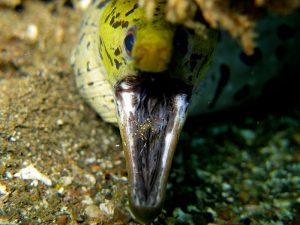
If you see an eel with its mouth open and a few tiny shrimp dancing around its face, you are witnessing a cleaning session. To learn more about how these interactions prevent the reef from descending into chaos, read The Reef’s Spa Day: Understanding the Social Dynamics of Underwater Cleaning Stations.
When the Mouth Closes: Reading Moray Eel Body Language
While the gape is normal, morays do have a way of communicating when they are actually annoyed. As a diver, learning to read these subtle cues is the difference between a great encounter and a stressful one.
If an eel is truly threatened, it won't just sit there breathing. Look for these specific signs of distress:
- Retreating: The eel pulls its head deep into the crevice until it is barely visible.
- The S-Curve: If the eel is out of its hole, it may coil its body into an 'S' shape. This is a strike posture, similar to a snake.
- Abrupt Closure: If the rhythmic breathing stops and the mouth stays clamped shut or opens excessively wide without the rhythmic "pump," the eel is focusing on you as a potential threat.
Comparing this to other predators can help you develop a "sixth sense" for marine life intent. For example, just as a shark drops its pectoral fins to show agitation, an eel uses its body positioning to signal its comfort level. You can learn more about these universal predator cues in our article on Shark Body Language: A Diver’s Guide.
The Midnight Shift: When the Gaping Stops and the Hunting Starts
During the day, the gaping mouth is a sign of a resting eel. But as the sun sets, the moray’s behavior shifts dramatically. They leave the safety of their crevices to become one of the reef's most effective nocturnal hunters.
In the dark, their reliance on sight diminishes, and their sense of smell takes over. Moray eels have large, tube-like nostrils (anterior nares) that allow them to "sniff" out prey hiding in the dark. During the night, you won't see them sitting and gaping; you’ll see them flowing over the coral like liquid, poking their heads into every nook and cranny.

This transition from the "lazy breather" of the day to the "active hunter" of the night is a staple of the nocturnal ecosystem. If you’re curious about how the reef changes after dark, explore The Midnight Shift: A Diver’s Guide to Nocturnal Predators.
Diver Etiquette: How to Safely Admire Moray Eels
Moray eels have poor eyesight but an incredible sense of smell. Most "attacks" on divers are actually cases of mistaken identity or poor diver behavior. To ensure your encounter remains positive, follow these "Pro Dive Vibes" standards:
- Never feed the eels: This is the most important rule. "Hot dogging" (hand-feeding) teaches eels to associate divers with food. Since they can't see well, they will bite at anything that smells like fish—including your fingers.
- Watch your hands: When navigating through tight swim-throughs or adjusting your buoyancy near the reef, never put your fingers in a hole you haven't visually inspected.
- Maintain neutral buoyancy: Crashing into an eel's home is the fastest way to trigger a defensive strike.
- Give them space: If you are taking photos, don't shove your camera lens inches from their face. Use a zoom or stay back to allow them to continue their "buccal pumping" undisturbed.
Warning: Moray eel bites are prone to infection due to the bacteria present in their mouths. If a bite occurs, seek medical attention immediately, even if it seems minor.
Conclusion: Respecting the Reef’s Most Misunderstood Resident
The moray eel is a perfect example of why we shouldn't judge a book by its cover—or a fish by its teeth. That "menacing" gape is nothing more than a breath of water, a vital biological function for a creature that lacks the gill covers of its neighbors.
When we take the time to understand the "why" behind marine life behavior, the underwater world becomes much less intimidating. The moray isn't a grumpy monster waiting to strike; it is a shy, fascinating predator that plays a crucial role in the health of the reef.
Next time you find yourself face-to-face with a gaping moray, don't swim away in fear. Stay still, check your buoyancy, and watch closely. You might just see a cleaner shrimp move in for a "spa day" or catch the subtle rhythmic pulse of a creature perfectly adapted to its environment.
Have you had a memorable moray encounter? Share your stories with the Pro Dive Vibes community in the comments below, and let’s keep debunking those reef myths together!