Loading...
marine-life#Invasive Species Underwater: How Unnatural Shifts Impact Local Marine Life#marine-life#a scuba diving and underwater adventure website
Invasive Species Underwater: How Unnatural Shifts Impact Local Marine Life
Pro Dive Vibes
November 16, 20268 min read
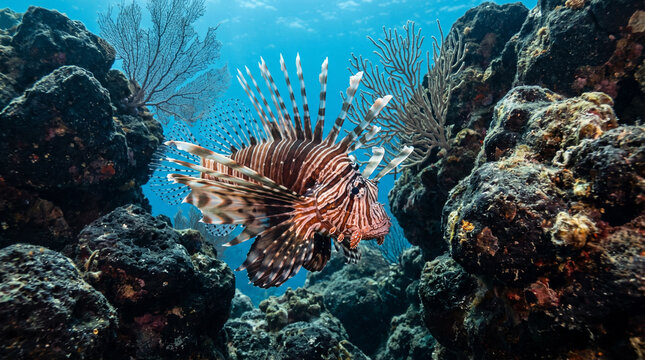
You plunge beneath the surface on a dive site you’ve visited dozens of times, expecting to greet the usual cast of local characters—territorial damselfish, resting nurse sharks, and vivid parrotfish grazing on coral heads. But on this descent, something feels entirely wrong. A strangely striped fish with fan-like, venomous spines hovers motionless over a soft coral stem, or a thick mat of unfamiliar bright green algae smothers the sea floor.
You are looking at a marine biological invasion in real time. Understanding invasive species underwater: how unnatural shifts impact local marine life is critical for every scuba diver who cares about the health of our oceans. As divers, we act as the eyes and ears of the aquatic world, making us uniquely positioned to recognize, record, and combat these ecological disruptions before they permanently alter our favorite underwater playgrounds.
The Unseen Invaders: What Are Marine Invasive Species?
To understand how alien species alter aquatic environments, we first need to distinguish between native, non-native, and truly invasive marine organisms.
- Native Species: Organisms that naturally evolved in or migrated to a specific region over thousands of years without human help, establishing balanced roles within the local food chain.
- Non-Native (Exotic) Species: Organisms introduced outside their natural geographic range due to human activity, but which do not necessarily cause ecological damage.
- Invasive Species: Non-native organisms that establish self-sustaining populations, reproduce rapidly, and actively harm local ecosystems, native economies, or human health.
Marine ecosystems are exceptionally vulnerable to non-native introductions compared to terrestrial environments. Oceans are continuous, dynamic fluids with few physical barriers preventing microscopic larvae from spreading once introduced. Furthermore, stressed marine environments—suffering from ocean warming, overfishing, or coastal development—have compromised natural defenses, making it easy for opportunistic invaders to move in and take over.
All non-native species immediately destroy local reefs—in reality, many non-native marine organisms perish quickly in unfamiliar conditions, but the few that adapt without natural predators can completely dismantle a balanced ecosystem.
Hitchhiking the Ocean Highways: How Invasives Arrive
How do critters from the Indo-Pacific end up in the Atlantic Ocean, or Mediterranean seaweeds end up in Southern California? Marine invasive species rely on human transportation networks to cross planetary barriers that once kept them contained.
- Commercial Shipping and Ballast Water: Large cargo vessels take on millions of gallons of ballast water in one port for stability and discharge it in another thousands of miles away. This ballast water acts as an biological soup, transporting microscopic larvae, plankton, crustaceans, and small fish across global oceans.
- The Aquarium Trade and Escapes: Well-intentioned aquarium hobbyists sometimes release non-native marine life directly into coastal waters, releasing aggressive predators into environments that have no evolutionary defense against them.
- Artificial Canals: Man-made marine highways like the Suez Canal and Panama Canal connect previously separated bodies of water, allowing marine life to migrate into entirely new biogeographic realms (a process known as Lessepsian migration in the Mediterranean).
Once an invasive species arrives, natural oceanic forces step in to finish the job. As detailed in our guide on how ocean currents shape marine life distribution, powerful ocean currents act as underwater superhighways, sweeping invasive larvae and floating fragments across vast expanses of open ocean to colonize entire coastline chains in a matter of months.
Ripples in the Food Web: Ecological Impacts from Reef Floor to Open Ocean
When an invasive species successfully settles into a new habitat, it causes cascading impacts across the entire aquatic food web. Without co-evolved predators, diseases, or parasites to keep their numbers in check, invasive populations explode, consuming available food sources and taking up vital physical territory.
| Ecological Zone | Primary Invasive Impact | Typical Invasive Invaders | Native Life Affected |
|---|---|---|---|
| Benthic (Seafloor) | Habitat smothering, space competition | Encrusting tunicates, Caulerpa algae | Hard corals, sponges, macroalgae |
| Pelted Reef Structures | Direct predation, nursery destruction | Lionfish, invasive crabs | Juvenile reef fish, crustaceans |
| Pelagic (Open Water) | Plankton competition, food chain shifts | Invasive comb jellies, larval hitchhikers | Baitfish, pelagic filter-feeders |
The consequences vary greatly depending on whether these invaders target bottom-dwelling ecosystems or open water columns. To understand how these environments differ, explore our comparative guide on pelagic and benthic marine life.
[Invasive Species Introduced]
            │
            ├──► Outcompetes Native Grazers for Space
            │
            ├──► Consumes Primary Consumers (Juvenile Fish)
            │
            └──► Destroys Structural Habitat (Corals & Algae)
In benthic habitats, smothering seaweeds and encrusting tunicates choke out beneficial algae and live coral. While native algae play an essential ecological role—as explained in our feature on marine algae as the unsung heroes of reefs—aggressive invasive seaweeds blanket hard substrate, preventing coral polyps from settling and suffocating the foundational architects of the reef.
Infamous Case Studies: Ocean Invaders Transforming Dive Destinations
To see the real-world impact of marine biological invasions, look no further than these three high-profile ecological crises:
The Caribbean Lionfish Crisis
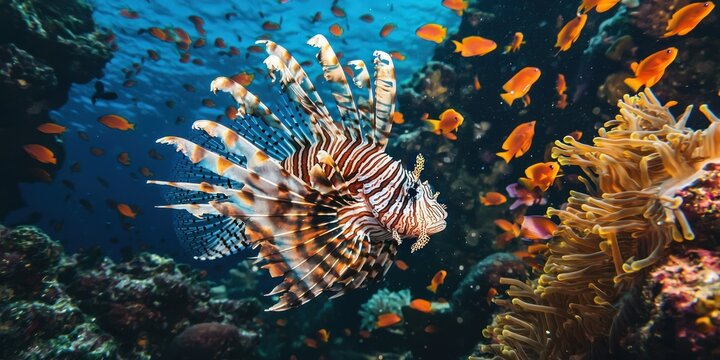
Native to the Indo-Pacific, the Red Lionfish (Pterois volitans) was introduced off the coast of Florida in the late 20th century. With venomous spines protecting them from local apex predators and an unquenchable appetite, lionfish can reduce native juvenile fish recruitment on a reef by up to 79% in just a few weeks. They consume native grazers, cleaner shrimp, and commercial reef fish alike.
Caulerpa taxifolia ("Killer Algae")
A cold-tolerant strain of Caulerpa taxifolia escaped from an aquarium into the Mediterranean Sea in the 1980s. Dubbed "Killer Algae," it expanded from a tiny patch into tens of thousands of acres of dense seafloor carpet. It produces toxins that repel native herbivores, choking out native Posidonia seagrass beds and turning rich biodiversity hotspots into underwater monocultures.
The Asian Green Mussel & Sea Squirt Overruns
In coastal waters worldwide, invasive bivalves like the Asian Green Mussel and colonial tunicates (sea squirts) form dense, encrusting colonies on man-made structures and natural reefs. While piers are normally macro life hot spots, as explored in our post on why pier piles and jetty debris are ultimate marine life hotspots, invasive tunicates cover every square inch, smothering local sponges and sessile organisms.
Threats to Native Reef Architects and Complex Behaviors
The physical presence of aggressive invaders alters how native reef inhabitants interact, feed, and protect themselves.
For instance, clean-up operations at reef cleaner stations suffer when invasive predators set up territory near cleaning coral heads. Native cleaner wrasses become wary of operating, leading to higher parasite loads among local fish populations.

Intelligent species face immediate threats as well. Consider the reef’s most clever problem-solvers: the tool-using wrasses. In our spotlight on tool-using wrasses and their unique architectural skills, we examine how these fish utilize specialized rock "anvils" to smash open hard-shelled prey. When encrusting invasive tunicates or dense marine algae mats bury these anvils and alter native crustacean populations, these complex, learned behaviors are disrupted.
Furthermore, traditional schooling defense mechanisms fall apart in the presence of novel predators. As broken down in our study on why fish school and the physics of group swimming, schooling relies on precise pressure sensory responses and collective reaction times to evade familiar hunting patterns. When facing invasive hunters like lionfish—which use slow, flared fins to corner prey without triggering standard fight-or-flight instincts—native fish simply do not recognize the threat until it is too late.
Divers on the Frontlines: How You Can Help Protect Marine Life
Scuba divers are uniquely equipped to slow the spread of invasive ocean species. Through active conservation dive events, accurate reporting, and gear care, you can make a tangible difference on your next ocean dive.
Pro Tip: Always check with local dive shops or marine park authorities before attempting to capture or cull any underwater life. Unsanctioned removals can disturb native species or violate local conservation laws.
How to Take Action as a Diver
- Participate in Culling Events: Join organized, sanctioned lionfish derbies or invasive seaweed cleanups run by local marine parks.
- Log Sightings with Citizen Science: Use apps like iNaturalist, REEF (Reef Environmental Education Foundation), or local