Loading...
marine-life#How Ocean Currents Shape Marine Life Distribution and Your Dive Conditions#marine-life#a scuba diving and underwater adventure website
How Ocean Currents Shape Marine Life Distribution and Your Dive Conditions
Pro Dive Vibes
August 19, 20263 min read
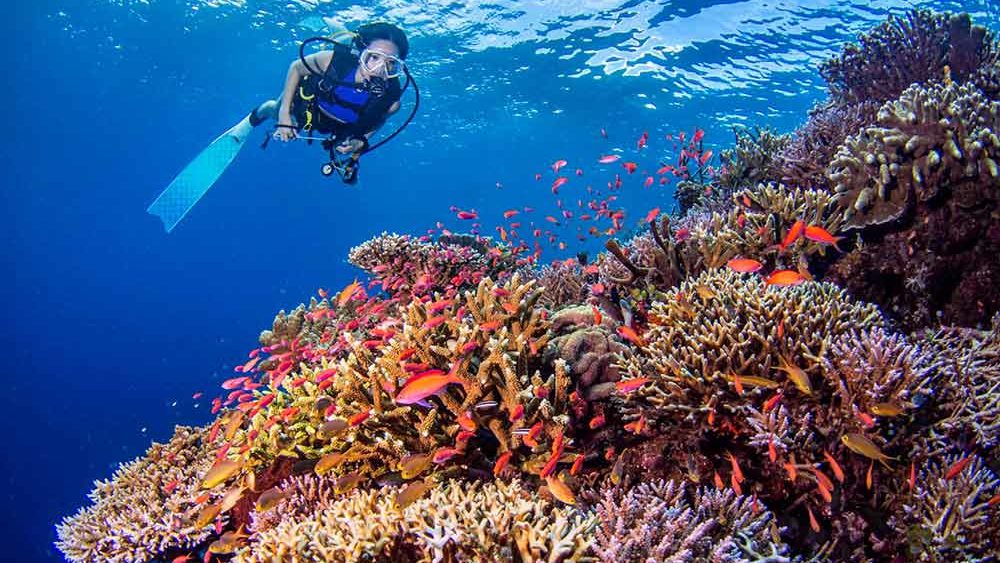
Imagine stepping off the dive platform, deflating your BCD, and instantly transitioning from a heavy, gear-laden human into a weightless astronaut flying through a bustling underwater metropolis. There is no need to kick; you simply hover, steering with subtle tilts of your fins as a vibrant kaleidoscope of coral reefs, schooling jacks, and cruising reef sharks sweeps past you.
This is the magic of drift diving, where you let go of control and ride the ocean’s invisible highways. But these moving waters do much more than give divers an effortless, adrenaline-fueled ride. Today, we are exploring How Ocean Currents Shape Marine Life Distribution and Your Dive Conditions to understand the profound science behind these liquid conveyor belts.
Welcome to Pro Dive Vibes, a scuba diving and underwater adventure website dedicated to helping you decode the mysteries of the deep. By understanding how ocean currents act as the circulatory system of our planet—carrying heat, oxygen, nutrients, and life itself—you will transform from a passive observer into a smarter, safer, and more appreciative diver.
The Biological Engine: How Currents Distribute Marine Life
To understand why certain dive sites are teeming with biological wealth while others remain relatively barren, we must look at how ocean currents dictate the distribution of marine-life. At the heart of this distribution is a biological engine powered by physics, chemistry, and fluid dynamics.
The Power of Upwelling
One of the most critical oceanographic phenomena for divers to understand is upwelling. This occurs when strong, offshore winds push warm surface water away from a coastline, causing deep, cold, and highly nutrient-rich water to rise from the abyss to replace it.
These deep waters are packed with dissolved nitrates and phosphates—the ultimate fertilizer for the oceans. When this nutrient cocktail reaches the sunlit surface layer (the photic zone), it triggers massive phytoplankton blooms. Phytoplankton are the foundation of the marine food web. These blooms attract zooplankton, which in turn attract baitfish, eventually drawing in the ocean's heavy hitters: manta rays, whale sharks, and schooling pelagics.
Larval Dispersal: The Reef’s Highways
Most reef-dwelling organisms, from corals and sponges to crabs and reef fish, start their lives as microscopic larvae drifting in the water column. Without ocean currents, these species would remain localized, leading to inbreeding and vulnerability to localized extinction events.
Instead, currents act as global transit systems. During mass spawning events, millions of eggs and sperm are swept into major current systems, traveling hundreds of miles before settling down to seed remote reefs. This genetic exchange is what keeps reef ecosystems resilient and biologically diverse.
Case Study: The Indonesian Throughflow
There is no better real-world example of this biological engine than the **Indonesian Through
Further Reading
Related Articles
marine-life
The Sounds of the Reef: What Marine Life Is Actually Telling Us
Unlock the secrets of the underwater symphony! Discover what reef animals are communicating and how their sounds signal the health of the entire ecosystem.
marine-lifeCoral Reefs as Cities: How Different Marine Life Zones Coexist
Explore the bustling underwater metropolis! Discover how coral reefs function like cities, with distinct neighborhoods, zoning, and busy marine citizens.
marine-lifeThe Pelican of the Sea: Understanding the Bizarre Feeding Habits of Frogfish
Discover how the bizarre frogfish uses a built-in fishing rod and a massive, expandable mouth to swallow prey whole in the blink of an eye.