Loading...
marine-life#whale shark encounters#ethical diving#Rhincodon typus biology
Gentle Giants: A Biologist’s Guide to Ethical Whale Shark Encounters
Pro Dive Vibes
April 4, 20269 min read

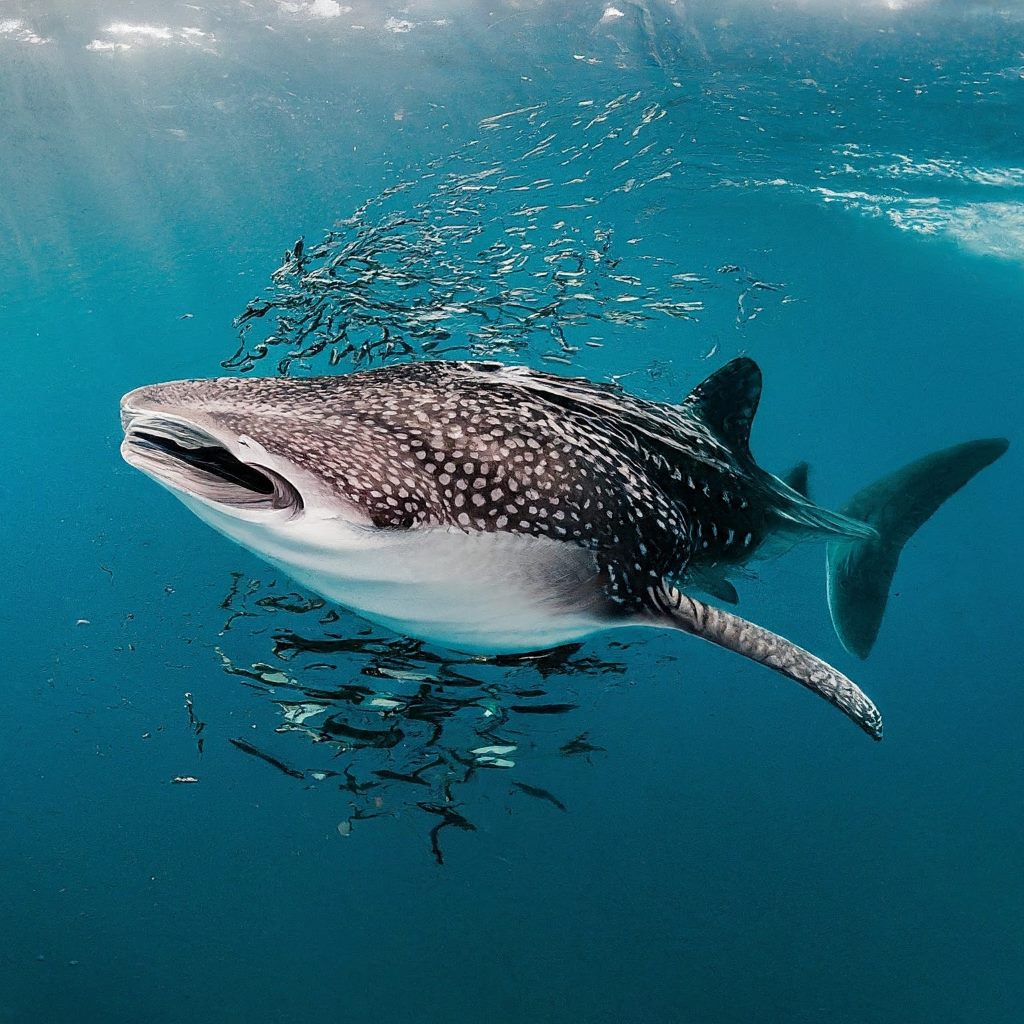
There is a moment in every diver’s life that divides time into "before" and "after." It usually happens when a shadow, so vast it seems to swallow the sun, materializes from the blue gloom. At first, you might mistake it for a cloud or a submersible. Then, the rhythmic sweep of a massive caudal fin and the constellation of white spots come into focus. You are in the presence of a whale shark (Rhincodon typus).
For many, this is a bucket-list pinnacle. But as a marine biologist, I see more than just a magnificent photo opportunity. I see a prehistoric lineage that has survived for millions of years, now facing a modern world that isn't always kind to giants. While we often focus on Shark Body Language to understand reef predators, the whale shark requires a different set of observational skills. Understanding their biology isn't just about trivia; it is the foundation of "ethical" interaction. In the world of marine conservation, ethics isn't a buzzword—it is a survival necessity for a species that grows slowly and matures even slower.
Whale Shark Biology: More Than Just a Large Shark
To understand why we must act a certain way around these animals, we first need to understand what they are. Despite their name, whale sharks are whales—they are actually the largest fish in the sea. They belong to the order Orectolobiformes, a group of carpet sharks that includes the bottom-dwelling wobbegong.
Anatomy of a Filter Feeder
Whale sharks are one of only three known filter-feeding shark species. Unlike their toothy cousins, they utilize a ram-filter mechanism. As they swim with their mouths agape, water is forced over internal "gill rakers"—mesh-like structures that trap plankton, krill, and small fish while letting water pass through the gills.
The Mystery of Their Skin
If you were to touch a whale shark (which you absolutely should not), it would feel like coarse sandpaper. Their skin is covered in dermal denticles—tiny, tooth-like scales. On a whale shark, this skin can be up to 4 inches (10 cm) thick, making it the thickest skin of any animal on Earth. This provides protection from predators and helps reduce drag as they cruise the open ocean.
Thermal Regulation
Whale sharks are often seen basking at the surface, a behavior that earned them the nickname "sunfish" in some cultures. However, they are also incredible divers, reaching depths of over 1,900 meters (6,000 feet). Biologists believe they spend time at the surface to "reheat" their massive bodies after deep dives into the frigid, high-pressure depths where they may be hunting for squid or deep-water plankton.
| Feature | Whale Shark (Rhincodon typus) | Reef Shark (e.g., Caribbean Reef) |
|---|---|---|
| Feeding Method | Filter-feeding (plankton) | Active predation (fish/crustaceans) |
| Max Length | Up to 18 meters |
Up to 3 meters |
| Skin Thickness | Up to 10 cm |
Less than 1 cm |
| Movement Style | Slow, constant cruising | Burst speed and patrolling |
| Social Structure | Mostly solitary/aggregations | Territorial/hierarchical |
Reading the Giant: Whale Shark Behavior and Intent
While we’ve previously explored how to read Shark Body Language for reef predators, whale sharks communicate their comfort levels in more subtle ways. Because they lack the aggressive posturing of a Grey Reef shark, divers often mistakenly assume they are indestructible or indifferent.
Recognizing Feeding vs. Cruising
A cruising whale shark moves with a steady, rhythmic tail beat. However, when they find a dense patch of food, their behavior changes. You might witness "bottling"—where the shark hangs vertically in the water, bobbing up and down to gulp water and food. During this time, they are hyper-focused on feeding and may be less aware of their surroundings, making them vulnerable to boat strikes.
Signs of Stress
If a whale shark feels crowded or threatened, it won't bite, but it will tell you to back off. Watch for these signals:
- Banking: The shark tilts its body, showing its back or belly to the diver. This is often a defensive move to put its thickest skin between itself and a perceived threat.
- Eye Rolling: If you get too close to the head, the shark may roll its eye back into its socket for protection.
- Rapid Tail Beats: A sudden increase in speed or a change in direction away from the group is a clear "goodbye."
Expert Tip: If a whale shark banks toward you, it isn't trying to be friendly. It is likely trying to shield itself. Back away immediately to give the animal space to level out.

The Golden Rules of Ethical Encounters
Responsible tourism is the only way to ensure these animals continue to return to their aggregation sites. As divers, we are the frontline of this protection.
- The 3-4 Meter Rule: Maintain a minimum distance of
3 meters(10 feet) from the body and4 meters(13 feet) from the tail. Their tails are incredibly powerful; a single defensive flick can cause serious injury to a diver and stress the shark. - The No-Touch Policy: This is non-negotiable. Humans carry bacteria that the shark’s immune system isn't equipped to handle. Furthermore, touching the shark can disturb the protective mucus layer on its skin, leading to infections.
- No Flash Photography: Whale sharks have eyes adapted for low-light, deep-sea environments. A high-powered strobe at close range is the equivalent of a flashbang to a human. Stick to natural light; their white spots provide excellent contrast anyway!
- No-Wake Zones: If you are on a boat, ensure the captain maintains a "no-wake" speed within
150 metersof a shark. Propeller scars are one of the leading causes of non-natural mortality for these giants.
The Whale Shark Spa: Visiting Cleaning Stations
Just like the residents we discussed in The Reef’s Spa Day, whale sharks utilize cleaning stations. These are specific areas on the reef where the "social contract" of the ocean is on full display.
When a whale shark enters a cleaning station, it slows down significantly, often hovering almost motionless. This allows Blue-streak Cleaner Wrasse and Remoras to pick off parasites and dead skin.
- Stay Low: When observing a shark at a cleaning station, stay close to the seabed or the reef wall.
- Clear the Lane: Do not swim between the shark and the reef. This is the "cleaning lane." If you block it, the shark will leave before the "job" is finished, depriving it of essential hygiene and the cleaners of a meal.
Citizen Science: Turning Your Dive into Data
One of the most exciting developments in marine biology is the rise of citizen science. Much like how we use Manta Ray Fingerprints to identify individuals, whale sharks have their own unique identifiers.
The Star Chart Patterns
Every whale shark has a unique pattern of spots behind its gills. These spots are like a human fingerprint or a galactic star chart. No two sharks are identical. By photographing this specific area, you can contribute to global migration tracking.
How to Take a "Gold Standard" ID Photo
To make your photo useful for scientists (and for databases like Wildbook for Whale Sharks), follow these steps:
- Position yourself parallel to the shark's left side (if possible).
- Focus on the area directly behind the fifth gill slit and above the pectoral fin.
- Ensure the photo is as "flat" as possible (not at an extreme angle).
- Note the time, date, and GPS coordinates of the sighting.
By uploading these photos, you might discover that "your" shark was spotted in the Galapagos three years ago or was recently seen in the Philippines. You become a part of the shark's life story.
Conservation and Sanctuaries: The Fight for the Future
Despite their size, whale sharks are vulnerable. They are currently listed as Endangered on the IUCN Red List. Their populations have declined by over 50% in the last 75 years due to several factors:
- Targeted Fishing: Though banned in most countries, they are still hunted for their fins and oil in some regions.
- Bycatch and Ghost Nets: These giants often get entangled in abandoned fishing gear, which can lead to starvation or exhaustion.
- Ship Strikes: Because they spend so much time at the surface, they are frequently hit by large commercial vessels in shipping lanes.
The creation of Shark Sanctuaries is a critical step in their protection. These zones provide safe corridors for migration, free from industrial fishing. When choosing a dive operator, always ask about their conservation policies. Do they limit the number of divers? Do they brief you on ethical guidelines? Your money is a vote for how these animals are treated.

Conclusion: Becoming an Ambassador for the Giants
A whale shark encounter is more than a checkmark on a list; it is a profound connection with the ancient history of our planet. When you surface from a respectful, ethical encounter, you carry a responsibility. You are no longer just a diver; you are an ambassador for the blue.
Share your photos and your data, but also share the story of their vulnerability. Remind your friends that we are guests in their living room. Whether you are watching a sea turtle resting or a whale shark cruising the blue, the rule remains the same: observe, respect, and protect.
The ocean’s biggest fish has survived for millions of years. With a little bit of empathy and a lot of science, we can ensure they are still cruising the currents for millions more.
Ready to turn your next dive into a mission for conservation? Check out our guide on Manta Ray Fingerprints to learn more about how your camera can save the sea!