Dancing in the Dark: My Unforgettable Kona Manta Ray Night Dive Experience

There is a specific moment during the Kona manta ray night dive when the world as you know it simply ceases to exist. It happens right after you settle onto the sandy floor of Garden Eel Cove, your knees tucked into the volcanic rubble, and click on your dive light. Suddenly, the pitch-black Pacific isn’t empty anymore. It becomes a liquid stage, illuminated by a dozen beams of light piercing through the darkness like spotlights in a theater.
The Magic of the Kona 'Campfire'
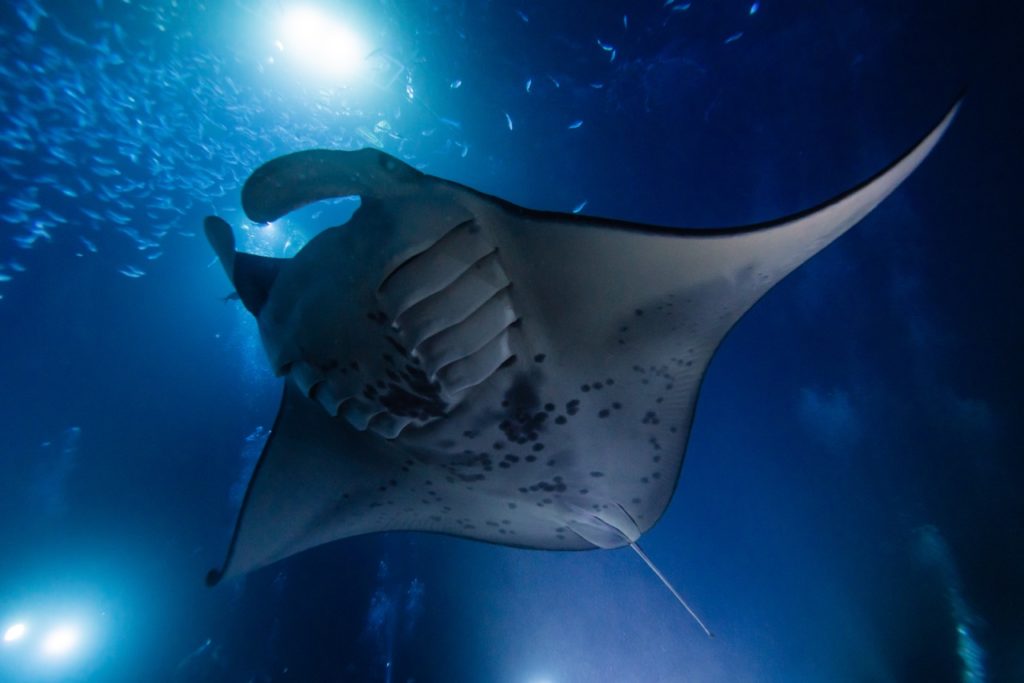
The descent into the darkness of Garden Eel Cove is a transition from the familiar to the surreal. As the sun dips below the Hawaiian horizon, divers descend to a depth of roughly 30 feet to 40 feet. We aren’t here to swim; we are here to sit. This is the famous 'Campfire' setup—a circle of divers kneeling on the bottom, their lights pointed upward, while snorkelers float on the surface, their lights pointed down.
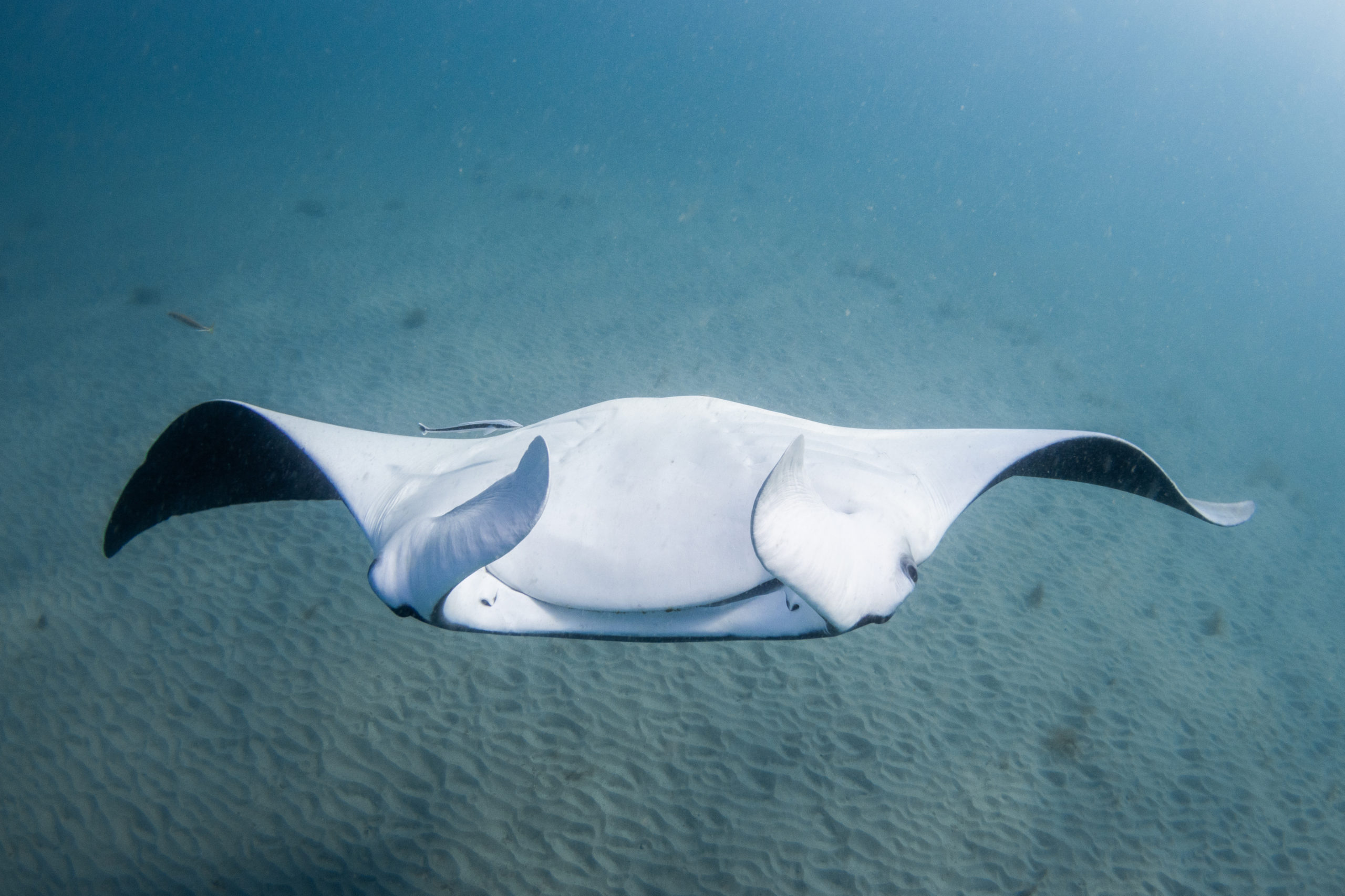
The initial impressions are of an ethereal, blue-green glow. Tiny specks of life—copepods and various larval critters—dance in the light beams like dust motes in a sunbeam. There is a palpable sense of anticipation. You check your pressure gauge, adjust your mask, and wait. Then, out of the darkness, a massive, ghostly shape materializes. It isn’t a shark or a whale; it’s a Reef Manta Ray (Mobula alfredi), its white underbelly shimmering as it glides into the light.
The Science Behind the Spectacle
Why does this happen here, night after night? Kona is home to a unique resident population of manta rays that have learned to associate artificial light with an easy meal. This isn't a "staged" feeding in the traditional sense; no one is handing out fish scraps. Instead, it is a clever exploitation of phototactic plankton.
These microscopic organisms are naturally drawn to light. When divers and snorkelers concentrate their beams in one spot, they create a dense "soup" of plankton. The mantas, being the intelligent filter feeders they are, simply show up for the buffet. This phenomenon is a fascinating localized example of the The Deep Sea's Daily Commute: Witnessing Vertical Migration as a Diver, where marine life moves toward the surface under the cover of darkness to feed. While most vertical migration happens far out at sea, the "Campfire" brings a piece of that deep-sea rhythm right to our fingertips.
Face-to-Face with Hawaii’s Gentle Giants
When a manta ray decides to feed, it doesn't just swim by; it performs. The most iconic move is the 'barrel roll'. The manta swims directly toward the light source, then somersaults backward at the last possible second, mouth agape, to scoop up the concentrated plankton.
The sensory experience is overwhelming. I remember a 12-foot female passing so close to my head that the rush of water from her wingbeats vibrated through my hood. You can hear the silence of the ocean broken only by the rhythmic whoosh of water and your own bubbles. Up close, you can see the cephalic fins (the "horns") unfurled to funnel food into their mouths and the intricate, dark spots on their bellies. These markings are more than just patterns; they are the fingerprints of the sea, unique to every individual.
| Feature | Observation |
|---|---|
| Average Wingspan | 10-14 feet |
| Feeding Style | Ram filtration / Barrel rolling |
| Skin Texture | Rough, sandpaper-like (dermal denticles) |
| Behavior | Curious, non-aggressive, highly social |
Citizen Science: Your Photos Matter
One of the most rewarding aspects of the Kona dive is knowing that your experience contributes to a larger cause. During my dive, I managed to snap a clear shot of a manta with a distinctive notch in its left wing. Later, I learned how Manta Ray Fingerprints: How Your Photos Help Global Marine Research by allowing organizations like the Manta Pacific Research Foundation to track individuals.
By submitting your belly shots to local databases, you help scientists monitor the health, growth, and migration patterns of the population. There is a genuine thrill in identifying a 'regular' visitor. You might meet 'Lefty', one of the most famous residents known for her permanent wing injury, or 'Koie', a younger male frequently spotted at the cove. Your vacation photos become vital data points in the fight for marine conservation.
Ethical Encounters: Respecting the Giants
While the mantas may come within inches of your face, the 'No Touch' rule is absolute. It is tempting to reach out when a 1000-pound animal is hovering over you, but doing so can be devastating for the ray. Mantas are covered in a protective mucus coating that shields them from bacteria and parasites. Human touch can rub this layer off, leaving the animal vulnerable to infections.
We practice passive interaction. This means:
- Keeping your hands tucked in or holding your light.
- Remaining stationary on the bottom to avoid spooking the rays.
- Never chasing or "herding" an animal.
These guidelines are similar to those found in our Gentle Giants: A Biologist’s Guide to Ethical Whale Shark Encounters, emphasizing that the best wildlife encounters are those where the animal dictates the terms of the engagement.
The Night Shift: Other Creatures of the Dark
While the mantas are the undisputed stars, the supporting cast at Garden Eel Cove is equally fascinating. If you turn your light away from the "Campfire" for a moment, you’ll see the reef's nocturnal hunters in action. Yellowmargin moray eels often slither between the legs of divers, using the light to find sleeping fish.
This experience is a stark contrast to The Midnight Shift: A Diver’s Guide to Nocturnal Predators and Their Hunting Tactics. While a standard night dive involves searching for hidden predators, the manta dive is an organized chaos of feeding. Just a few yards away from the lights, the reef remains quiet, with parrotfish tucked into their mucus cocoons and Sleeping Sea Turtles wedged into volcanic crevices, blissfully unaware of the circus happening nearby.
Practical Tips for Your Kona Manta Dive
To make the most of this experience, you need to prepare differently than you would for a standard reef dive.
Choosing the Right Operator
Look for operators that are members of the Manta Ray Green List. These charters adhere to strict safety and conservation standards, ensuring that the dive remains sustainable for years to come.
Gear Considerations
- Thermal Protection: Because you are stationary for
45-60 minutes, you will get cold faster than on a moving dive. Even in Hawaii’s78°Fwater, a5mm wetsuitor a hooded vest is highly recommended. - Light Placement: Hold your light at chest level, pointing straight up. Do not wave it around, as this can disorient the rays.
- Extra Weight: You may want to add
2-4 lbsof extra lead to your belt. Since you aren't swimming, being "heavy" helps you stay planted on the bottom in the surge.
Pre-Dive Checklist
- Check primary and backup light batteries
- Confirm
5mmor thicker exposure protection - Add extra weight for negative buoyancy
- Review "No Touch" hand signals with your buddy
Why This Dive Belongs on Every Diver's Bucket List
I’ve been fortunate enough to dive some of the world's most incredible sites, from the "fish soup" of Cape Kri Raja Ampat: Diving the World Record Holder for Fish Diversity to the kelp forests of California. Yet, the Kona manta dive remains in a league of its own. It is one of the few places on Earth where you are guaranteed a high-octane encounter with megafauna in a way that feels intimate and prehistoric.
Some people say night diving is scary — actually, once the mantas arrive, the fear of the dark vanishes, replaced by pure awe. The emotional impact of having an animal that large look you in the eye is something that stays with you long after you’ve rinsed your gear.
If you find yourself on the Big Island, don't just settle for the sunset views. Get in the water. Join the "Campfire." The dance in the dark is waiting for you, and I promise, it’s a performance you’ll never forget.
Ready to plan your Hawaiian adventure? Check out our latest gear guides to ensure you're ready for the night shift!