Surviving the Current at Komodo’s Crystal Rock: An Adrenaline Junkie’s Guide
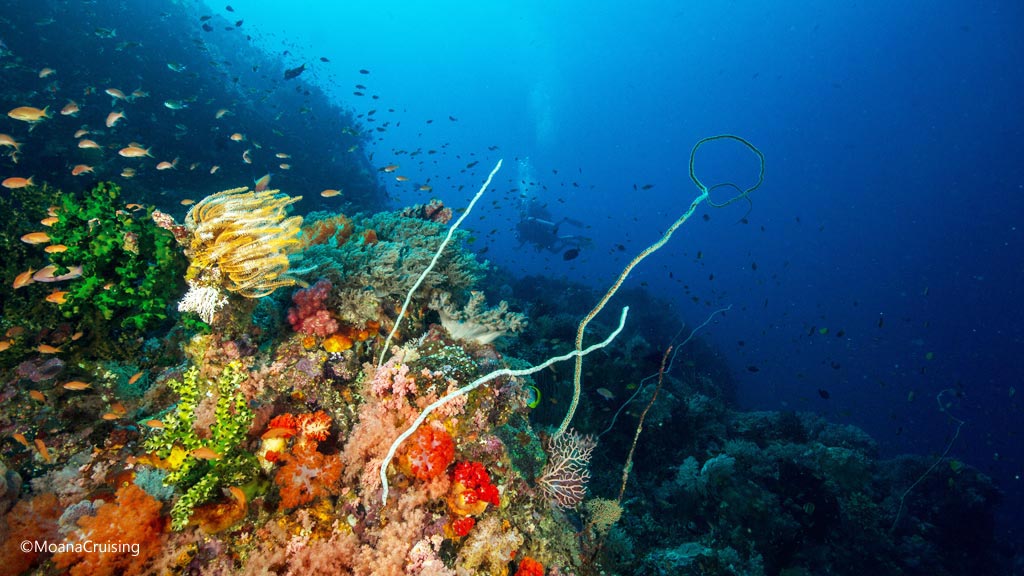
If you’ve ever wanted to feel the raw, unbridled pulse of the ocean, there is no better place than the northern reaches of Komodo National Park. Among the cluster of world-class sites, one name stands out with a reputation that precedes it: Crystal Rock.
This isn't just another dive; it’s a high-velocity encounter with the Indonesian Throughflow—a massive movement of water from the Pacific to the Indian Ocean. Crystal Rock is a submerged pinnacle that barely breaks the surface at low tide. When the current is pumping, it transforms into a vertical playground for apex predators and a test of skill for even the most seasoned divers.
The name "Crystal Rock" isn't marketing fluff. On a typical day, the visibility here is staggering, often exceeding 30 meters. Looking down from the surface, you can see the jagged contours of the rock shimmering through the turquoise water. But don't let the beauty fool you. Below the surface, the "washing machine" current is waiting to challenge your buoyancy, your nerves, and your gear.
Topography 101: Navigating the Submerged Pinnacle
Understanding the layout of Crystal Rock is essential for your safety and your enjoyment. This isn't a site where you can just wander aimlessly; you need a tactical plan.
The site consists of a primary large pinnacle and a smaller mound located to the northwest. Between these two structures lies a "saddle" at approximately 20-24 meters deep. This saddle is often where the most intense action occurs.
The most critical part of the topography is the split point. This is the exact location where the oncoming current hits the rock and divides to flow around it. At the split point, you’ll find the highest concentration of life, as predators gather to hunt the smaller fish being pushed toward them. However, it’s also where the current is strongest.
| Feature | Depth Range | Best For |
|---|---|---|
| Pinnacle Tip | 0m - 5m |
Safety stops & surge |
| The Saddle | 18m - 25m |
Shark sightings & biomass |
| Northwest Mound | 15m - 28m |
Pygmy seahorses & macro |
| Deep Wall | 30m+ |
Large pelagics & tuna |
Because of the depth and the potential for "down-currents" (currents that pull you deeper), Crystal Rock is strictly an advanced dive. If you aren't comfortable with deep water and heavy flow, you'll want to log a few more drift dives before tackling this icon.
The High-Octane Entry: Mastering the Negative Descent
At Crystal Rock, a standard "giant stride" followed by a slow surface check is a recipe for disaster. If you linger on the surface for even 30 seconds, the current can sweep you hundreds of meters away from the rock, effectively ending your dive before it begins.
This is where the Negative Entry comes into play.
- Preparation: Check your computer, air, and buddy on the boat.
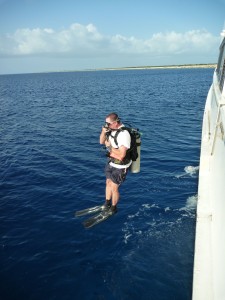
- The Exhale: As the dive master counts down "3, 2, 1, GO!", you jump with an empty BCD and immediately exhale.
- The Drop: You sink like a stone, kicking hard toward the rock to find the "lee" (the protected side) or to reach the bottom where the current is slightly less intense.
Mental preparation is key. The initial rush of dropping into the deep blue with nothing but a wall of water rushing past you can be disorienting. Stay focused on your depth gauge and your buddy. Once you reach the shelter of the rock, the chaos subsides, and the magic begins.
Gear and Tactics: Reef Hooks and Current Management
If you’ve read our guide on Blue Corner Palau, you know that a reef hook is a diver's best friend in high-current environments. At Crystal Rock, it is an essential piece of kit.
Using the Reef Hook
When you reach the split point, you don't want to spend the entire dive finning against the current. Not only will you burn through your air, but you'll also miss the show. Instead, find a piece of dead rock (never hook into living coral!), deploy your hook, and add a small amount of air to your BCD to keep yourself hovering. This allows you to "fly" in the current like a kite, watching the sharks patrol just inches away.
Finding "Dead Spots"
Even without a hook, you can manage the current by understanding the "shadow" of the rock. Just like a boulder in a fast-moving river, the pinnacle creates a pocket of calm water behind it. Use these dead spots to rest, check your air, and communicate with your buddy.
Streamlining for Success
Every dangling hose or loose strap creates drag. In a 3-knot current, a loose pressure gauge acts like a parachute.
- Secure all hoses with clips or bungees.
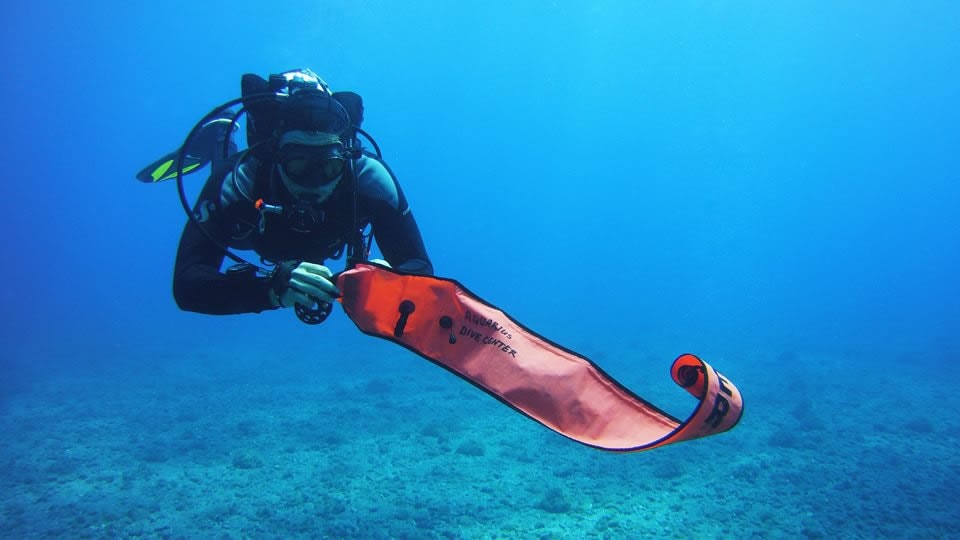
- Use a compact DSMB (Delayed Surface Marker Buoy).
- Ensure your mask strap is tight—currents can literally rip a loose mask off your face.
The Main Event: Sharks, Trevally, and the 'Fish Soup'
Once you are settled at the split point, prepare for sensory overload. The biomass here is legendary, rivaling the world-record diversity found at Cape Kri in Raja Ampat.
The "Fish Soup" at Crystal Rock is a living wall of silver. Thousands of fusiliers, surgeonfish, and midnight snappers swarm the pinnacle. Through this blizzard of fish, the predators emerge. Grey reef sharks and Whitetip reef sharks are the local residents, often seen cruising effortlessly against the current that divers struggle to navigate.
Look out for the Giant Trevally (GT). These massive, muscular fish are the true bosses of the reef. You’ll also frequently spot large Napoleon Wrasse and schools of Sweetlips huddled in the crevices.

The Sensory Challenge: Staying Grounded in the Surge
Diving in heavy current isn't just a physical challenge; it’s a mental one. The sheer volume of moving fish combined with the rushing water can lead to a phenomenon known as proprioceptive distortion. Your brain can become overwhelmed, making it feel like you are moving when you are stationary, or vice versa.
Spatial Awareness and Communication
The "fish blizzard" can make it easy to lose sight of your buddy. Stay within an arm's reach. Use high-visibility signals or a tank banger to get attention if the visibility drops due to a sudden surge of plankton.
Gas Management
High-energy dives demand a conservative approach. We recommend the Rule of Thirds:
1/3of your air for the descent and exploration.1/3for the return to the exit point or the drift.1/3as a safety reserve for the surface and unexpected delays.
Sharks are the biggest danger at Crystal Rock — actually, the biggest danger is running low on air while fighting a current or getting separated from the group.
Surfacing Safely: The Drift and the Buffer
When it’s time to end the dive, you won't be swimming back to the boat. Instead, you’ll let go of the rock and become part of the current.
As you drift away from the pinnacle into the blue, you’ll perform your safety stop. Because you’ve been working hard and potentially diving deep, the science of the safety stop is more important than ever. Staying at 5 meters for at least 3 minutes (or longer if your computer suggests) allows your body to off-gas the nitrogen accumulated during the strenuous parts of the dive.
The DSMB: Your Lifeline
In the swirling waters of Komodo, a DSMB is non-negotiable. Deploy your buoy early so the boat captain can track your position as you drift. The surface of North Komodo is full of whirlpools and "boils" that can make it difficult for a boat to spot a lone diver's head.
Expert Tip: While drifting in the blue, keep an eye out for sleeping sea turtles tucked into the upper ledges of the reef as you pass by. They often find clever spots to wedge themselves in to avoid the current.
Conclusion: Why Crystal Rock is the Ultimate Test
Crystal Rock is more than just a dive site; it’s a rite of passage. It demands respect, preparation, and a level head. But the reward is an experience that few other places on Earth can offer—a front-row seat to the raw power of the ocean’s food chain in action.
When planning your Komodo liveaboard, ensure you check the moon phases. The currents at Crystal Rock are strongest around the full and new moons. If you're looking for that maximum adrenaline hit, that’s the time to go.
Have you ever survived a "washing machine" dive that left your heart racing? Or perhaps you’ve mastered the art of the reef hook at another world-class site? Share your most intense current diving experiences in the comments below—we’d love to hear your stories from the deep!