Loading...
marine-life#Cooperative Ocean Hunters: How Different Species of Marine Life Team Up#marine-life#a scuba diving and underwater adventure website
Cooperative Ocean Hunters: How Different Species of Marine Life Team Up
Pro Dive Vibes
October 19, 20269 min read
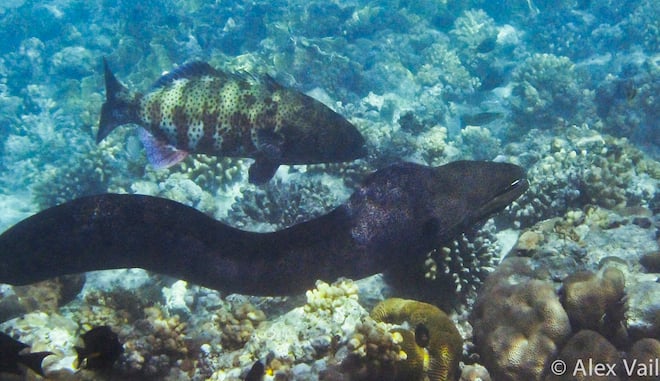
Welcome to Pro Dive Vibes, your ultimate scuba diving and underwater adventure website for exploring the most fascinating behaviors beneath the waves! When we imagine top ocean predators, our minds usually picture solitary hunters stalking prey through coral gardens or pelagic blue waters. We tend to assume that competition drives marine interactions—apex predators are fiercely solitary loners that never share a meal. However, groundbreaking marine biology research and underwater observations reveal a far more sophisticated reality: cooperative ocean hunters: how different species of marine life team up to execute high-stakes tactical strikes.
In the complex environment of a coral reef, single-handed hunting strategies often fail. A fast swimmer cannot reach a tiny damselfish once it ducked into a deep coral head, while a slithering predator hidden inside the reef framework lacks the speed to catch prey out in open water. To solve this tactical dilemma, vastly different species have evolved mutualistic predation—cross-species teamwork where each animal contributes unique hunting skills.
Whether you are an aspiring divemaster or a recreational underwater photographer, understanding these alliances changes how you read a dive site. Let's dive deep into the fascinating mechanics of cooperative ocean hunters and discover how interspecies teamwork drives underwater survival.
The Ultimate Reef Tag-Team: Roving Coral Groupers and Moray Eels
One of the most widely documented examples of interspecies hunting occurs between the roving coral grouper (Plectropomus pessuliferus) and the giant moray eel (Gymnothorax javanicus). These two animals possess entirely complementary skill sets:
- The Grouper (Speed & Vision): An open-water swimmer with powerful acceleration, capable of trapping prey that strays too far from cover.
- The Moray Eel (Flexibility & Agility): A slender, snake-like hunter that can slither into narrow cracks, crevices, and swim-throughs where groupers cannot fit.
When a small prey fish flees a grouper and hides inside a narrow coral nook, the hunt isn't over. Instead, the grouper swims to a nearby moray eel and initiates a surprisingly clear form of interspecies communication.
Interspecies Sign Language: Signals and Headstands
Groupers use distinct gesture-based communication to recruit morays for a joint venture. If a grouper spots prey locked inside a tight fissure, it approaches the moray and performs a fast, rhythmic head-shake at roughly 3–5 Hz. This motion invites the moray to leave its lair and join the hunt.
If the moray accepts, the grouper guides its partner directly to the target location. Upon arrival, the grouper performs a dramatic headstand—pointing its head straight down at an angle of 90° toward the exact crevice where the prey is hidden, while gently shimmying its body.
Expert Dive Tip: If you see a grouper positioned upside-down above a coral head motionless except for a twitching tail, do not swim away! It is actively pinging a hidden prey item for a hunting partner.
No Exit for Prey
Once the moray eel arrives, it wedges itself into the crevice indicated by the grouper. This places the prey fish in an unwinnable dilemma:
- Stay in the crevice: Risk getting trapped and swallowed by the incoming moray eel.
- Flee into open water: Run directly into the waiting jaws of the coral grouper.
       [ Open Water ]  <--- Waiting Coral Grouper
             |
   [ Coral Crevice Entrance ]
             |
   [ Trapped Target Fish ]
             |
  [ Deep Coral Tunnel ] <--- Incoming Moray Eel
Neither partner is guaranteed a meal on every attempt, but statistics show that joint hunts yield significantly higher success rates for both species compared to solo foraging. This coordination relies heavily on keen sensory processing—to dive deeper into how marine life detects movement and signals underwater, check out our guide on how fish senses work.

Brain and Brawn: Octopus and Coral Trout Interspecies Packs
While groupers and morays form an iconic pair, multi-species hunting packs on tropical reefs can get even more complex. In the Indo-Pacific, coral trout (Plectropomus maculatus) and bluefin trevally (Caranx melampygus) frequently form hunting parties with day octopuses (Octopus cyanea).
This dynamic combines the extraordinary intelligence and tactile dexterity of a cephalopod with the speed and high-level surveillance of predatory fish.
Tentacles Meet Fast Fins
An octopus hunts by flinging its webbed arms over coral heads, using hundreds of sensitive suckers to probe tiny gaps in the substrate. As the octopus flushes out hidden crustaceans and small fish, a entourage of coral trout and trevally patrols the immediate perimeter at a distance of 0.5–1.0 meters.
When prey shoots out of the coral to escape the octopus's probing tentacles, the waiting fish snap it up instantly. Conversely, if a coral trout flushes a fish into a deep crack, it signals the octopus using vertical body positioning to direct its flexible partner to investigate.
Dynamic Leadership and Underwater "Discipline"
Recent high-definition video studies revealed that these hunting packs feature surprising social dynamics. Octopuses do not simply accept fish presence passively—they actively direct traffic.
- Tactical Nudging: Octopuses occasionally extend an arm to shove overly aggressive trevally away from choice feeding spots.
- Fish Punching: Biologists have documented octopuses executing explosive arm thrusts—literally "punching" partner fish—to enforce discipline when a trout or trevally attempts to steal prey directly from beneath the octopus's body mantle.
Despite these occasional underwater scuffles, both parties remain together for hours, proving that mutual gains outweigh short-term friction.
Pelagic Power Couples: Seabirds, Dolphins, and Whales
Cooperative hunting isn't restricted to shallow coral reefs. Out in the blue water, pelagic predators orchestrate massive, multi-realm feeding frenzies targeting schooling baitfish like sardines, anchovies, and herring.
                  [ Sky / Air Surface ]
              * * * Seabirds Plunge-Diving * * *
                         |  |  |
===================== Surface Layer =====================
                     [ BAIT BALL ]
                         |  |  |
             ^ ^ ^ Marine Mammals Driving Up ^ ^ ^
                 [ Dolphins / Whales ]
Creating the Bait Ball
In the open ocean, baitfish rely on safety in numbers, forming dense, shifting schools. To break down these defenses, pelagic mammals and seabirds collaborate in coordinated multi-front attacks:
- Dolphins and False Killer Whales circle beneath the school at depths between
10–30 meters, blowing bubble nets and emitting high-frequency echolocation clicks to compress thousands of fish into a tightly packed bait ball. - Dolphins drive the bait ball upward toward the sea surface, effectively using the air-water barrier as a wall to trap the fish.
- Seabirds (Gannets, Boobies, Shearwaters) observe the action from above and launch high-speed plunge dives from heights up to
20 meters, penetrating the surface to hit the bait ball from above.

Ocean Currents and Temporary Truces
These massive pelagic events are dictated by large-scale ocean dynamics. Nutrient-rich upwellings create plankton blooms that draw small schooling fish into concentrated channels. To understand how water movement concentrates these offshore feeding events, read our article on how ocean currents shape marine life.
During a full-scale bait ball attack, normal interspecies competition is suspended. Apex species like Bryde's whales, sea lions, tuna, and oceanic sharks participate in a temporary truce, executing coordinated passes to feed without attacking each other.
How Cooperative Hunting Differs from Other Symbiotic Relationships
Marine ecosystems feature endless variations of interspecies cooperation. To truly appreciate cooperative ocean hunters, it helps to distinguish active joint predation from other forms of mutualism found on the reef.
| Symbiotic Relationship | Key Species Involved | Ecosystem Role | Primary Mechanism | Dynamic Level |
|---|---|---|---|---|
| Cooperative Hunting | Groupers, Moray Eels, Octopuses | Active Predation | Tactical signaling & prey flushing | Highly dynamic, temporary, event-driven |
| Defensive Burrowing | Gobies & Pistol Shrimps | Protection / Shelter | Shared hole-digging & sight alerts | Static, long-term pair bonding |
| Service Cleaning | Cleaner Wrasses & Reef Fish | Parasite Removal | Tactile stimulation & grooming | Station-based, transactional |
Unlike the static partnership between a blind shrimp and a guard goby—detailed in our guide to goby and pistol shrimp symbiosis—cooperative hunting is fluid, goal-oriented, and opportunistic.
Similarly, while reef cleaning stations act as peaceful service centers where predators refrain from eating tiny cleaners—as discussed in our guide on underwater cleaning stations—cooperative hunting is all about aggressive prey capture. Different reef zones act as specialized hunting grounds, operating much like distinct districts within an underwater city. Learn more about how spatial distribution works in our exploration of coral reefs as cities.
A Diver's Guide: How to Spot and Photograph Cooperative Hunting in Action
Witnessing cooperative ocean hunters in action is one of the most rewarding experiences a scuba diver can have. However, predatory signals are subtle, and poor diving etiquette can quickly spook hunters and disrupt the hunt.

Reading the Signs on Your Dive
To spot a hunting alliance before it unfolds, train your eyes to scan for these focal behaviors:
- Unusual Fish Orientation: Look for large groupers, coral trout