Loading...
marine-life#underwater acoustics#marine life sounds#identifying fish by sound
Beyond the Bubbles: A Diver’s Guide to Identifying Marine Life by Sound
Pro Dive Vibes
April 1, 20269 min read
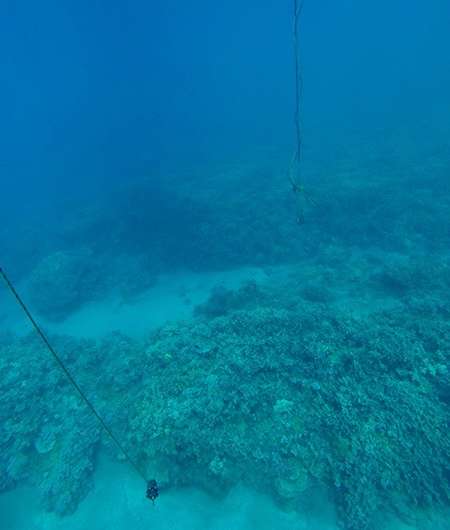
When you roll off the boat and descend into the blue, the first thing you notice is the rhythmic, mechanical sound of your own regulator. For decades, we’ve been told that we are entering a "silent world." This was the famous moniker used by Jacques Cousteau in his 1956 documentary, suggesting that the ocean is a place of profound quiet, broken only by the occasional splash or human-made hum.
As it turns out, the ocean is a silent world—it is actually one of the noisiest environments on the planet. If you stop breathing for just a few seconds and truly listen, you’ll realize the reef is a bustling metropolis of clicks, grunts, pops, and melodies.
The Myth of the 'Silent World'
The idea of a silent ocean was largely a limitation of early recording technology. Today, we know that sound is the primary sense for many marine organisms. Because light is absorbed quickly by water, visibility is often limited to a few dozen meters. Sound, however, is a different story.
In the underwater environment, sound travels at approximately 1,500 meters per second—roughly 4.5 times faster than it does in the air. This efficiency is due to the density of water; the molecules are packed more tightly, allowing vibrations to pass through the medium with much less energy loss over long distances. While we’ve previously explored the physical risks of high-intensity sound in our guide to Acoustic Hazards, understanding the biological "soundscape" is what transforms a standard dive into an immersive, multi-sensory experience.
The High-Frequency Crackle: Snapping Shrimp
The most consistent sound you will hear on any healthy tropical reef is a persistent, high-frequency crackle. Many divers describe it as the sound of bacon sizzling in a pan or the static of an old radio. This "white noise" of the ocean is produced by one of its smallest residents: the Snapping Shrimp (or Pistol Shrimp).
Unlike most animals that create sound through physical contact, the snapping shrimp uses physics. It possesses an oversized claw that it can snap shut at incredible speeds. This action creates a high-pressure water jet that forms a tiny "cavitation bubble." When this bubble collapses, it produces a "sonic boom" that can reach pressures of over 200 decibels.
For the shrimp, this is a weapon used to stun prey or defend territory. For the diver, this constant crackle is a vital sign of a thriving ecosystem. A "loud" reef is generally a healthy one, as it indicates a high density of invertebrates and the predators that feed on them.
:max_bytes(150000):strip_icc():format(webp)/GettyImages-128956435_full-56c902195f9b5879cc45781c.jpg)
The Heavy Crunchers: Identifying Parrotfish
If you hear a distinct, rhythmic scrape-scrape-scrape or a loud crunch, you don't need to look far to find the culprit. You are likely in the presence of a Parrotfish. These colorful residents are the heavy laborers of the reef, and their feeding habits are as audible as they are visible.
Parrotfish use their fused, beak-like teeth to scrape algae off the surface of hard corals. In the process, they often ingest chunks of calcium carbonate (the coral skeleton). The sound you hear is the physical grinding of bone-hard teeth against rock.
Pro Tip: Hearing this sound is often the best way to locate parrotfish in low-visibility conditions or when they are tucked behind a coral head. Follow the "crunch" and you’ll likely find a school of them hard at work.
This auditory signature is directly linked to their role as "The Sand Makers." As we discussed in our post on The Sand Makers, a single large parrotfish can poop out hundreds of pounds of fine white sand every year. Every crunch you hear is another handful of sand being "manufactured" for the beaches of tomorrow.

Drummers and Croakers: The Fish Orchestra
While we often think of fish as being mute, many species are surprisingly vocal. They don't have vocal cords like mammals; instead, they use a specialized muscle to vibrate their swim bladder. Think of the swim bladder as a biological drum—by pulsing these muscles, fish can create a variety of low-frequency sounds.
Common Reef "Instruments"
| Marine Species | Sound Type | Primary Reason |
|---|---|---|
| Grunt Fish | Grunting / Raspy | Grinding pharyngeal teeth |
| Atlantic Croaker | Loud "Croaks" | Spawning and territory |
| Damselfish | Rapid "Thumping" | Defending their algae patch |
| Triggerfish | Honking / Popping | Warning off intruders |
Damselfish are perhaps the most aggressive "drummers" on the reef. Despite their small size, they are fiercely territorial. If you get too close to their algae garden, you might hear a series of rapid "thumps." This is a warning—and if you don't move, they might just follow up that sound with a physical nip at your fins!
Triggerfish, especially during nesting season, produce a "drumming" or "popping" sound by clicking their specialized fins or vibrating their swim bladders. If you hear a loud pop while near a sandy patch, look around—you may have accidentally wandered into a Triggerfish's nesting zone.
The Haunting Melodies: Humpback Whales
There is no acoustic experience in the diving world quite like hearing a Humpback Whale. If you are diving in places like Hawaii, the Silver Bank, or the South Pacific during the winter months, you don't even need to be in the water with the whales to hear them.
The songs of male Humpbacks are complex, structured, and can last for up to 20 minutes before being repeated. What makes this experience unique for divers is the physicality of the sound. Because your body is mostly water, the low-frequency vibrations of a whale song don't just enter your ears—they vibrate your chest cavity. It is a haunting, multi-octave performance that feels like standing next to a massive subwoofer at a concert.
Clicks, Whistles, and Pulses: Marine Mammals
While whales provide the bass, dolphins provide the treble. If you hear a series of high-pitched whistles or rapid-fire "clicks," a pod of dolphins is likely nearby, even if they are currently out of your visual range.
It is important to distinguish between their two main types of vocalizations:
- Social Whistles: These are used for communication between members of the pod. Each dolphin has a "signature whistle" that acts like a name.
- Echolocation Clicks: These are much faster and are used for navigation and hunting. It sounds like a creaking door or a rapid "zip" sound.
To dive deeper into these vocalizations, check out our guide on Decoding Dolphin Communication. Unlike the low pulses of large whales, dolphin chatter is bright, fast, and highly directional.
Nocturnal Soundscapes: The Night Shift
When the sun goes down, the visual world of the reef shrinks to the size of your dive light's beam. However, the acoustic world expands. Many nocturnal predators and invertebrates use the cover of darkness to move, and their sounds become your primary way of "seeing" the reef.
During a night dive, the "crackle" of snapping shrimp often intensifies. You may also hear the scuttling of lobsters and crabs as they emerge from their crevices. As we detailed in The Midnight Shift, predators like eels and sharks rely heavily on their lateral lines and hearing to hunt in the dark. As a diver, staying still and turning off your light for a moment (if safe) allows you to realize just how active the "night shift" really is.

How to Listen: Tips for the 'Acoustic Diver'
Most divers miss the symphony because they are too loud themselves. Between the bubbles of your regulator and the clanking of gear, you create a lot of "self-noise." To become an acoustic diver, follow this checklist:
- Master your buoyancy: Stop kicking. Movement creates water turbulence that masks subtle sounds.
- The 'Stop and Hover' technique: Every 10 minutes, find a clear spot, hover perfectly still, and hold your breath for 5–10 seconds.
- Exhale slowly: Large, bursty bubbles are noisy. A slow, controlled exhale minimizes the "roar" in your ears.
- Cup your ears: While it looks silly, cupping your hands behind your ears can actually help "catch" certain frequencies, though it won't help with directionality.
The Directional Hearing Challenge
On land, our brain uses the time difference between sound hitting our left and right ears to locate a source. Because sound travels so fast underwater, that time difference is almost non-existent. This is why sounds often feel like they are "everywhere" at once. To find a sound's source, you often have to turn your head slowly until the volume peaks.
Why Sound Matters: Conservation and Noise Pollution
Understanding marine sounds isn't just about entertainment; it’s about conservation. Today, the biggest threat to the "orchestra of the reef" is anthropogenic noise. Ship engines, sonar, and industrial drilling create a "fog" of noise that masks the sounds marine life uses to find mates, avoid predators, and navigate.
Scientists are now using hydrophones (underwater microphones) to monitor reef health. A "quiet" reef is often a degraded one. By being "silent observers"—minimizing our own noise and supporting marine protected areas that limit vessel traffic—we help ensure the ocean's music continues for generations.
Conclusion
The next time you descend, remember that your eyes are only giving you half the story. The ocean is alive with a cacophony of life, from the microscopic bubble-pop of a shrimp to the chest-rattling song of a whale. By learning to identify these sounds, you aren't just
Further Reading
- Listening forward: approaching marine biodiversity assessments using acoustic methods - PMC
- What underwater sounds tell us about marine life
- Ocean Acoustics: How Sound Shapes Marine Life (And Why We Need to Listen) - Marine Biodiversity Science Center
- Understanding Sound in the Ocean | NOAA Fisheries