Yoke vs. DIN: Which Regulator Connection is Right for Your First Scuba Kit?
Introduction: The First Stage Connection Dilemma
When you decide to move from renting gear to owning your first kit, the regulator is often the most significant investment you’ll make. It is the heart of your life-support system, responsible for taking the high-pressure air in your cylinder and reducing it to a pressure you can breathe comfortably. This critical piece of equipment is known as the first stage.
However, before you can even look at breathing performance or the number of ports, you face a fundamental choice: Yoke or DIN? This refers to the method by which your regulator attaches to the tank valve. It is the first decision you'll make, and it’s one that will dictate which tanks you can use and how you’ll travel with your gear.
The goal of this guide is to help you find a connection that matches your current local diving environment while remaining flexible enough for your future underwater adventures. Whether you are planning to dive the tropical reefs of Cozumel or the chilly quarries of Northern Europe, the connection you choose today will stay with you for years to come.
The Yoke Valve (A-Clamp): The Recreational Standard
If you learned to dive in the Americas or the Caribbean, you almost certainly used a Yoke regulator. Often called the "A-clamp" because of its shape, the Yoke system has been the recreational standard for decades.
How it Works
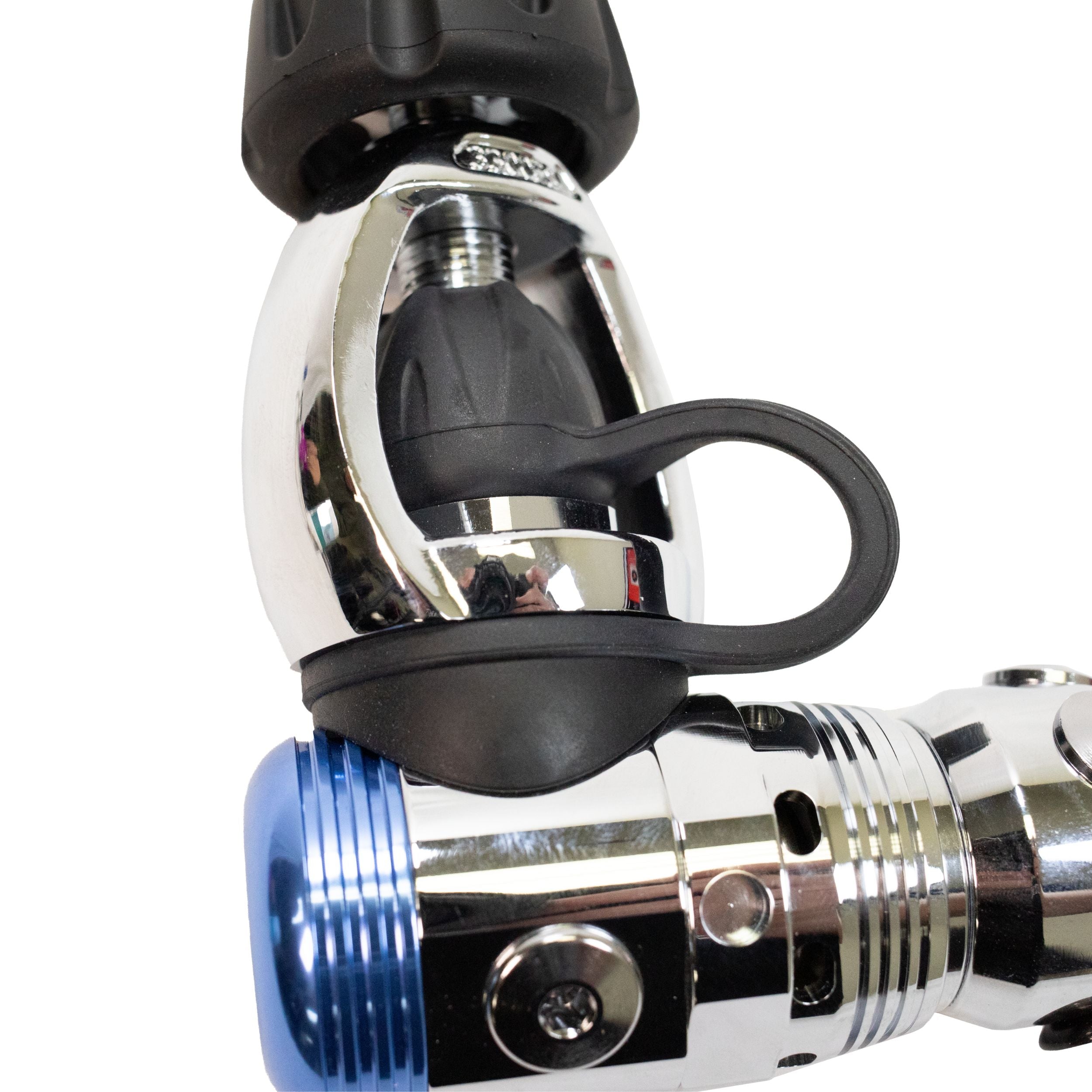
The Yoke regulator features a large metal stirrup that fits over the top of the tank valve. You align the regulator’s air inlet with the tank’s outlet and tighten a large screw knob on the back. This "clamps" the regulator onto the valve, creating a seal.
Pros:
- Universal Availability: You can walk into almost any rental shop in the world—from the Maldives to Florida—and find tanks compatible with Yoke regulators.
- Ease of Use: For beginners, the attachment process is intuitive. There is no risk of cross-threading, as the regulator simply sits over the valve.
- Robustness: The heavy metal clamp is difficult to damage through accidental drops or rough handling.
Cons:
- Bulkier Profile: The large clamp and adjustment knob add physical size and weight to your first stage.
- O-Ring Vulnerability: In a Yoke system, the O-ring (the rubber seal) is located on the face of the tank valve, not the regulator. This means you are reliant on the maintenance of the rental shop's tanks.
- Lower Pressure Limits: Yoke connections are generally rated only up to
232 bar(3364 psi).
Expert Tip: When using Yoke tanks, always carry a small kit of spare O-rings. As noted in our guide on Scuba Regulator First Stage Maintenance, identifying a worn or "nicked" external O-ring before you gear up can save a dive from a frustrating leak.
The DIN Valve: The Streamlined Choice
The DIN (Deutsches Institut für Normung) connection originated in Europe and has long been the preferred choice for technical, cave, and wreck divers. However, it is rapidly gaining popularity among recreational divers who value performance and portability.
How it Works
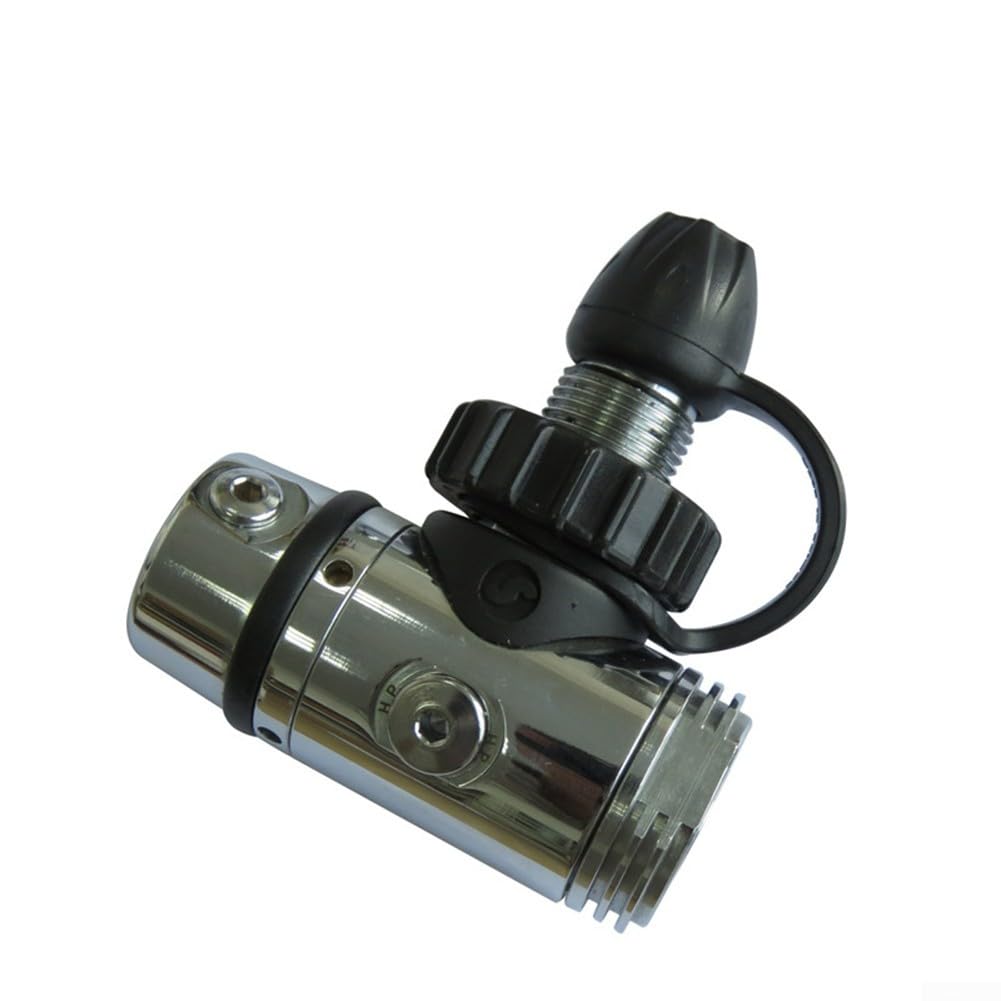
Unlike the Yoke system, which clamps over the valve, a DIN regulator features a threaded male end that screws directly into the tank valve. The O-ring is located on the end of the regulator itself, rather than on the tank.
Pros:
- Higher Pressure Ratings: DIN connections are safer for high-pressure cylinders, with standard ratings reaching up to
300 bar(4351 psi). - Streamlined and Lightweight: Without the heavy A-clamp, DIN first stages are significantly smaller and lighter—a major plus for the traveling diver.
- Superior O-Ring Safety: Because the O-ring is "trapped" inside the connection when screwed in, it is virtually impossible for it to blow out, even under high pressure or if the regulator is bumped.
Cons:
- Compatibility Issues: In many tropical destinations, rental fleets are 100% Yoke. You will need to carry an adapter to use your DIN regulator on these tanks.
- Cross-Threading Risk: Because it uses threads, you must be careful not to force the connection, which could damage the regulator or the valve.
Technical and cold-water divers prefer DIN because it offers a more secure, low-profile connection that is less likely to snag on overhead environments or fail in extreme conditions.
Pressure Ratings and Safety: Beyond the Surface
When comparing these two systems, the differences aren't just about how they look; they are about how they handle the immense pressure of a scuba cylinder.

| Feature | Yoke (A-Clamp) | DIN (Threaded) |
|---|---|---|
| Max Pressure | 232 bar |
300 bar |
| O-Ring Location | On the Tank Valve | On the Regulator |
| Seal Type | Compression | Captured/Threaded |
| Best For | Casual Travel | Tech, Cold Water, Travel |
| Weight | Heavier | Lighter |
The "Trapped O-Ring" Advantage
The most significant safety difference is the O-ring. In a Yoke setup, the O-ring is held in place by the physical pressure of the clamp. If the regulator is knocked or the clamp loosens slightly, the O-ring can "extrude" or pop out, causing a massive air leak.
In a DIN setup, the O-ring is seated at the end of the regulator's threads. Once screwed in, the O-ring is entirely enclosed by metal. Even if the regulator is bumped, the O-ring stays put. This is why DIN is the gold standard for any diving involving overhead environments or high-pressure tanks.
Impact on Hose Routing
Choosing a DIN regulator can also lead to a cleaner equipment profile. Because the connection is shorter and more compact, it sits closer to the tank. This allows for more natural hose routing, especially when integrating with your BCD. For a deeper look at how your regulator hoses interact with your buoyancy jacket, see our article on BCD Basics.
The Best of Both Worlds: Adapters and Conversion Kits
You might feel pressured to choose Yoke for convenience or DIN for performance. Fortunately, modern gear is incredibly flexible.
Using a DIN Regulator on a Yoke Tank
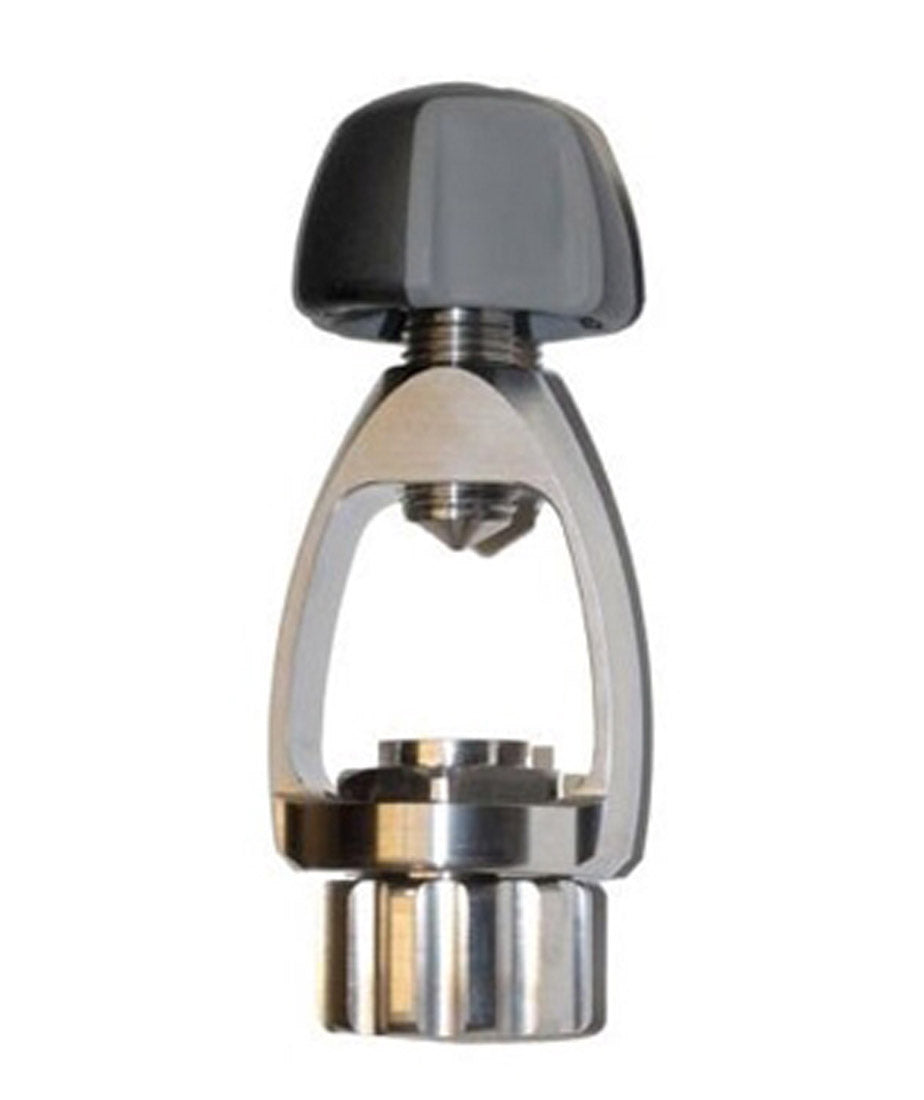
If you buy a DIN regulator, you can easily use it on a Yoke tank by using a DIN-to-Yoke adapter. This is a small, screw-on stirrup that converts your DIN threads back into an A-clamp.
- Pros: You get the safety of DIN at home and the compatibility of Yoke abroad.
- Cons: It adds the weight and bulk of a Yoke clamp back onto your system.
The "Pro Valve" Solution
Many modern cylinders now come with a Pro Valve (or Convertible Valve). These valves look like DIN valves but have a small threaded insert (a "slug") inside.
- If you have a Yoke regulator, leave the insert in.
- If you have a DIN regulator, use an Allen key to remove the insert, and you can screw your regulator directly into the tank.
You have to choose one and stick with it forever. Actually, most high-quality first stages can be permanently converted from Yoke to DIN (or vice versa) by a certified technician for a relatively low cost.
Which One Should You Buy?
To make the right choice, consider your most likely diving scenarios over the next two to three years.
Scenario 1: The Tropical Traveler
If you only dive once or twice a year on vacation in places like Mexico, the Bahamas, or Thailand, Yoke is the path of least resistance. You will never need an adapter, and you’ll match the rental gear used by everyone else on the boat.
Scenario 2: The Aspiring Tech or Cold-Water Diver
If you plan to dive locally in cold water, use high-pressure steel tanks, or eventually move into technical training, DIN is the future-proof investment. It is the superior engineering choice and offers better long-term growth.
Practical Pre-Purchase Checklist:
- Check your local shop: What tanks do they primarily rent or sell?
- Consider your luggage: Are you trying to stay under strict airline weight limits? (DIN is lighter).
- Future-proofing: Do you see yourself doing a Deep or Wreck specialty