Jacket vs. Back-Inflate BCD: Which is Best for Your First 50 Dives?
The transition from a student diver to a certified explorer is often marked by a single, significant milestone: your first 50 dives. This period is where the "muscle memory" of scuba diving is built. While your certification course likely introduced you to the basics of gear, it’s during these formative dives that you move from rental equipment to personal ownership.
Choosing your first Buoyancy Control Device (BCD) is perhaps the most consequential gear decision you will make. It isn't just about comfort; your BCD style dictates how you move through the water, how easily you can maintain horizontal trim, and how you manage task loading—like clearing a mask or checking a dive computer.
If you are still fuzzy on the core components like inflator hoses or dump valves, we recommend starting with our BCD Basics: Choosing the Right Buoyancy Compensator for Your First Dive before diving into the specific nuances of jacket versus back-inflate models.
The Jacket Style BCD: The Traditional Beginner Choice
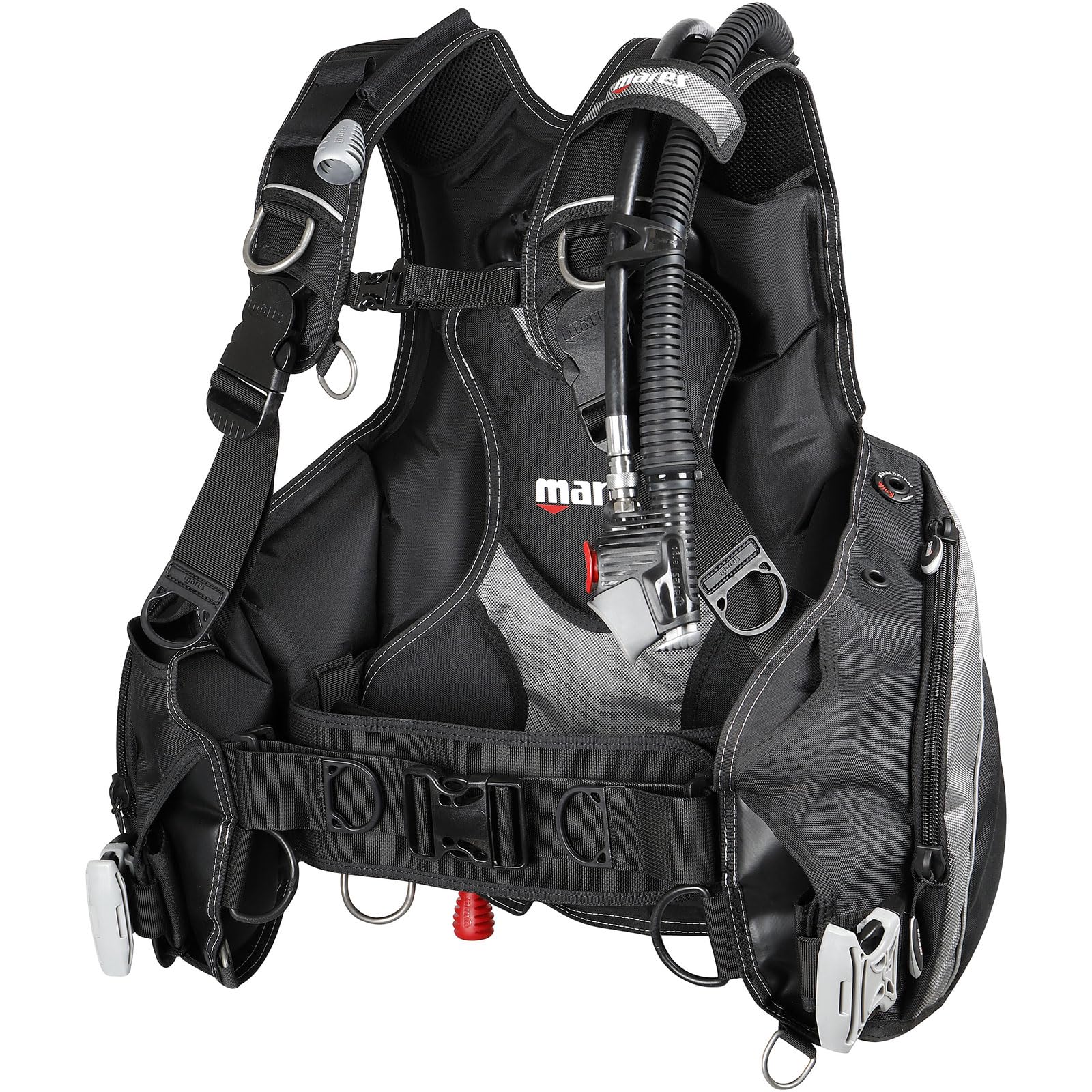
The jacket style BCD is the "standard" in the diving world. If you learned to dive in a resort or a local dive shop, you almost certainly used one. These BCDs feature air bladders that wrap around your torso, extending under your arms and across your chest.
Technical Design and Feel
When you inflate a jacket BCD, the air surrounds you. This creates a feeling of being "encased" in the gear, which many new divers find reassuring. It fits much like a heavy-duty life vest, providing a sense of security and familiarity.
Pros:
- Vertical Stability: On the surface, the air distribution naturally keeps your head high above the water without any effort.
- Familiarity: The transition from rental gear is seamless, as the operation is identical to what you used during training.
- Integrated Storage: Because the bladder wraps around the sides, there is plenty of real estate for large, zippered pockets.
Cons:
- The "Chest Squeeze": When fully inflated, the bladder expands inward, which can feel restrictive or make it harder to take a deep breath.
- Increased Drag: The wrap-around design creates a wider profile, meaning you have to push more water as you swim.
The Back-Inflate BCD: Streamlining Your Profile
Back-inflate BCDs were once considered the domain of "technical divers," but they have surged in popularity among recreational beginners. In this design, the air bladder (often called a "wing") is located entirely behind you, flanking the scuba tank.
Technical Design and Feel
With a back-inflate model, the front of your body is completely clear. There are no air cells under your arms or across your chest. Instead, the harness consists of simple straps, leaving your torso free to move.
Pros:
- Effortless Trim: Because the lift is behind your center of gravity, it naturally pushes your torso down into a horizontal position.
- Clutter-Free Chest: Without bulky side bladders, it is much easier to reach your
D-rings, accessory clips, or integrated weight pouches. - No Squeeze: You can fully inflate the BCD at the surface without feeling any pressure on your ribs or chest.
Cons:
- The "Face-Plant" Tendency: On the surface, the rear-mounted air wants to push you forward. New divers often feel like the BCD is trying to push their face into the water until they learn the proper technique.
Direct Comparison: Underwater Trim and Buoyancy Control
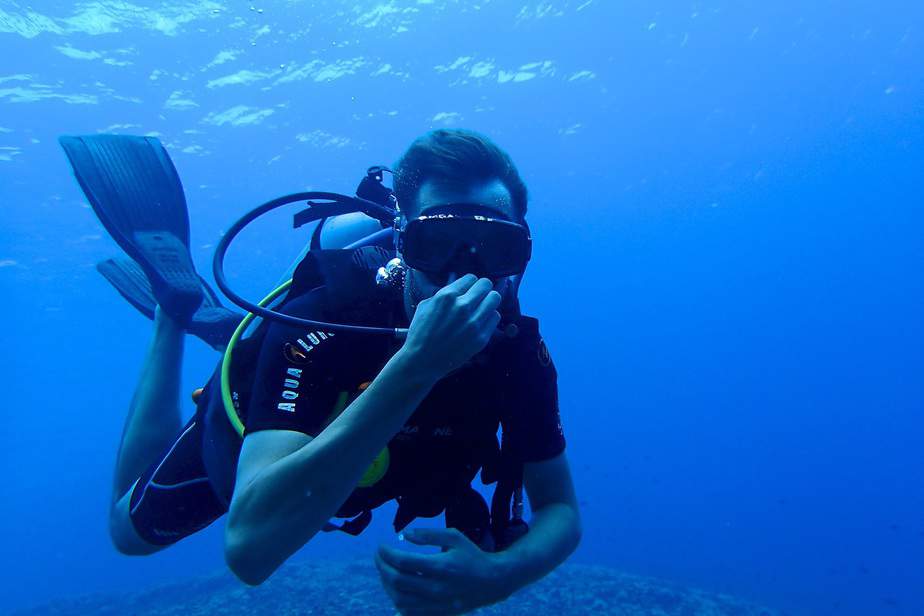
The primary difference between these two styles becomes apparent the moment you descend. Your "trim"—the physical orientation of your body in the water—is the foundation of efficient diving.
| Feature | Jacket Style BCD | Back-Inflate BCD |
|---|---|---|
| Underwater Trim | Tends toward diagonal/vertical | Naturally horizontal |
| Surface Position | Vertical and stable | Requires slight backward lean |
| Freedom of Movement | Restrictive when inflated | High; chest is clear |
| Pockets/Storage | Large and accessible | Small or non-existent |
| Dry Weight | Heavier/Bulky | Often lighter/Packable |
The "Cycling" Habit
Jacket BCDs are only for beginners — while they are common in rental fleets, they aren't "only" for beginners, but they do have a specific drawback. Because the air is distributed around your waist and chest, jacket BCDs often encourage a "cycling" position, where your legs hang lower than your head. This increases your surface area, leading to higher air consumption and potential damage to the reef if your fins kick the coral.
Back-inflate BCDs naturally promote the horizontal "flat" position. Mastering this early in your first 50 dives prevents the development of bad habits and makes moving into advanced specialties—like wreck diving or photography—much easier.
Surface Manners: Safety and Comfort Above the Waves
While back-inflate models win underwater, jacket BCDs are the undisputed kings of the surface. For a beginner who might be tired or dealing with choppy waves, the way a BCD behaves at the surface is a safety consideration.
- Jacket BCDs: These act like a life jacket. You can fully inflate, lean back, and float effortlessly while waiting for the dive boat.
- Back-Inflate BCDs: These require the "kick-back" technique. To stay comfortable, you must consciously lean back into the bladder, almost as if you are lying on a beanbag in the water.
Expert Tip: If you choose a back-inflate model, practice your surface float in a pool first. Learning to balance the rear lift will prevent the "face-plant" panic that some new divers experience during their first ocean boat dive.
Practical Considerations: Travel, Weight, and Pockets
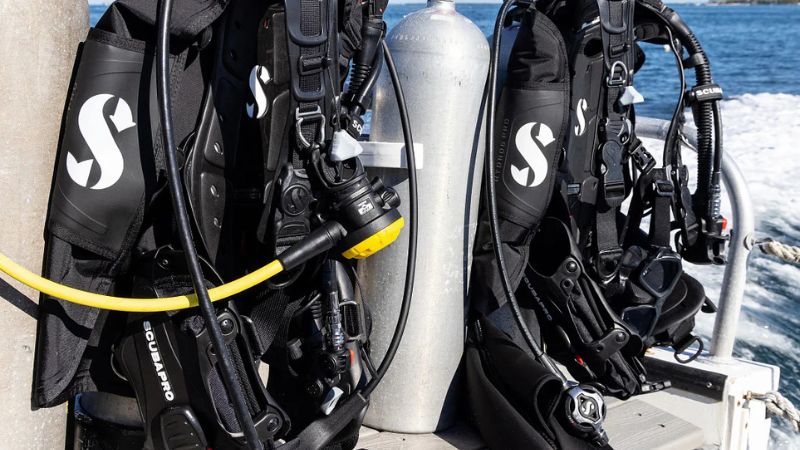
Beyond the physics of the dive, you need to consider the logistics of your first 50 dives. Are you diving locally, or are you flying to tropical destinations?
- Storage: If you like to carry a backup light, a signaling mirror, and a slate, the jacket BCD's large pockets are a massive advantage. Back-inflate models usually require you to clip accessories to
D-ringsor add aftermarket "thigh pockets." - Travel: Back-inflate BCDs are generally lighter and can be folded flatter because they lack the rigid side foam found in many jackets. If you’re trying to stay under airline weight limits, this is a major factor.
- Price: Generally, entry-level jacket BCDs are more affordable. However, as noted in our Budget-Friendly Buoyancy guide, the price gap is closing as back-inflate models become more mainstream.
The Verdict: Which Should You Buy for Your First 50 Dives?
There is no "wrong" choice, but there is a "better" choice based on your goals.
Choose a Jacket BCD if:
- You feel anxious at the surface and want maximum stability.
- You prefer the "snug" feel of a vest.
- You want large pockets for easy access to accessories.
- You mostly do recreational "vacation" diving and don't plan on technical training.
Choose a Back-Inflate BCD if:
- You want to master perfect horizontal trim as quickly as possible.
- You plan on diving frequently (more than 20 dives a year).
- You want a lightweight gear setup for international travel.
- You find the "chest squeeze" of rental gear uncomfortable.
Conclusion: Testing Before Investing
Before you swipe your card, we highly recommend a pool demo. Most local dive shops will allow you to rent or "test drive" both styles in a controlled environment. Pay attention to how the BCD affects your position in the water and how easy it is to reach your valves and weight releases.
Your first 50 dives are about building confidence. The "best" BCD is the one that makes you forget you’re wearing it, allowing you to focus on the marine life and the magic of the underwater world. Whether you choose the stability of a jacket or the freedom of a back-inflate, the right fit will turn a good dive into a great one.
Ready to complete your gear bag? Check out our guide on 5 Must-Have Dive Gear Upgrades for Beginners to see what else should be on your list.