Cutis Marmorata Decoded: Why Skin Bends Are a Neurological Red Flag

In the early days of diving medicine, skin manifestations were often dismissed as minor "Type I" decompression sickness (DCS). If a diver surfaced with an itchy rash or a strange mottled pattern on their chest, the standard response was often a shrug, some surface oxygen, and a recommendation to "take it easy" the next day. However, our understanding of decompression physiology has evolved significantly. We now know that Cutis Marmorata (CM)—the distinct, marbled skin pattern that appears after a dive—is far more than a localized skin irritation.
Modern diving medicine has shifted the paradigm: CM is now widely recognized as a neurological red flag. While it appears on the surface, it is frequently a secondary symptom of a systemic crisis involving the central nervous system (CNS) and the heart. To treat it as a simple "skin bend" is to ignore a flashing alarm from the body's internal circuitry. For the intermediate and advanced diver, recognizing the difference between a simple itch and CM is a critical safety skill.
The Clinical Presentation: Identifying the Marbled Pattern
Recognizing Cutis Marmorata requires a keen eye. It is fundamentally different from the transient itching (pruritus) that many divers experience after a cold or deep dive. While simple itching is generally transient and does not require recompression, CM is a progressive and serious condition 1.
Visual Characteristics
CM presents as a distinct erythematous (red) and cyanotic (blue/purple) marbling of the skin 1. Unlike a uniform rash, it looks like a map of broken blood vessels or a lace-like pattern. It often starts as intense itching or a burning sensation, quickly progressing to redness, and finally settling into a patchy, dark-bluish discoloration 1. The skin in these areas may feel thickened or even raised to the touch.
Common Locations
CM typically targets areas with high adipose tissue (body fat). This is because nitrogen is highly soluble in fat, leading to higher bubble loads in these regions during ascent. You are most likely to find CM on:
- The torso (abdomen and chest)
- The thighs
- The shoulders and upper arms
Differentiating CM from Other Conditions
It is easy to misdiagnose CM if you aren't looking for it. Divers often mistake it for "wetsuit squeeze" or an allergic reaction to neoprene or "drysuit zip" marks.
| Condition | Visual Pattern | Sensation | Risk Factor |
|---|---|---|---|
| Cutis Marmorata | Marbled, blue/purple lace | Itching then dull ache | Decompression stress |
| Simple Pruritus | Faint redness | Intense itching | Rapid off-gassing |
| Wetsuit Squeeze | Linear bruising/welts | Pinched or sore | Poor suit fit/suit squeeze |
| Contact Dermatitis | Uniform red patches | Itching/Burning | Sensitivity to soap/neoprene |
Expert Tip: If you see a skin pattern after a dive, press on it with your finger. If the color doesn't "blanch" (turn white) and return immediately, or if it has a distinct blue-violet hue, treat it as CM until proven otherwise.
The Mechanism of Mottling: Bubbles, Blood, and Reflexes
Why does the skin marble? The traditional view was that bubbles simply got stuck in the skin's capillaries. While Venous Gas Emboli (VGE) in the cutaneous microvasculature play a role, the current leading theory is far more complex and involves the brain.
The Autonomic Hypothesis
Many researchers believe CM is a result of the Autonomic Hypothesis. This theory suggests that micro-bubbles localized in the brainstem or spinal cord—specifically the areas controlling the vasomotor center—trigger a reflex in the autonomic nervous system. This reflex causes the peripheral blood vessels to constrict and dilate erratically, creating the marbled appearance. In this sense, the skin isn't the site of the primary injury; it is the "display screen" showing that the CNS is under attack.
The Inflammatory Cascade
As bubbles form, the body doesn't just see them as gas; it sees them as foreign invaders. This triggers The Martyrdom of the Immune System, where the body’s inflammatory response actually worsens the situation. The blood-bubble interface triggers the release of histamines and other markers, causing vessels to become "leaky" 2. This leads to the swelling and thickening of the skin often associated with serious CM cases.

The PFO Connection: The 'Smoking Gun' of Cutis Marmorata
Perhaps the most startling discovery in modern diving medicine is the statistical link between CM and a Patent Foramen Ovale (PFO). Research indicates that an estimated 75-90% of divers who exhibit Cutis Marmorata also have a PFO.
A PFO is a hole between the right and left atria of the heart that failed to close after birth. In normal conditions, the lungs act as a filter, removing VGE from the blood. However, a PFO allows a Right-to-Left Shunt, where bubbles bypass the lungs and move directly into the arterial circulation 2. These "paradoxical emboli" can then travel to the brain or the skin.
This is why CM is the primary indicator of "undeserved" DCS hits—cases where the diver followed their computer and dive tables perfectly but still ended up symptomatic. If you'd like to dive deeper into this heart-lung bypass, check out our guide on PFO and Scuba Diving.
The Neurological Link: Why the Skin and Brain are Tethered
CM is no longer classified as Type I DCS by most modern diving medical officers; it is treated as Type II DCS because of its high correlation with neurological involvement 1.
The Batson Plexus Connection
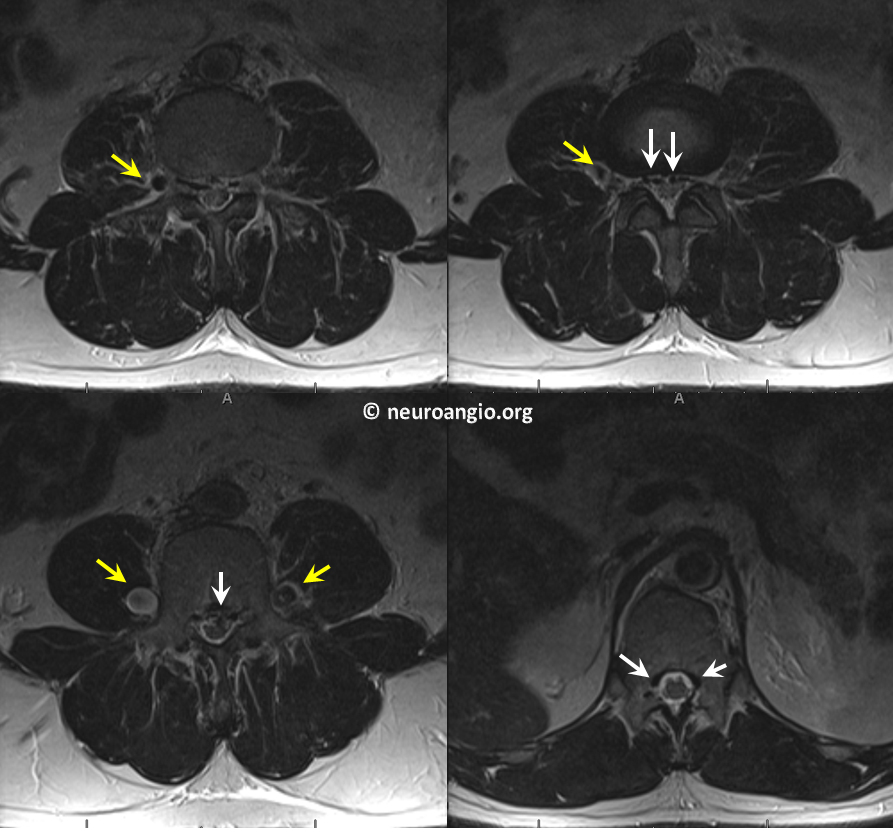
The Spinal Cord Pathophysiology of DCS involves a complex network of veins called the Batson Plexus. This valveless venous system connects the veins of the torso directly to the internal vertebral venous plexus. Pressure shifts during diving can move bubbles from the torso—where CM is most visible—directly into the central nervous system.
Because of this anatomical "highway," the presence of CM on the chest or abdomen is often a precursor to, or evidence of, spinal cord involvement. A diver might have the rash now, but without treatment, they may develop:
- Numbness or paresthesia (tingling) 3
- Muscle weakness or paralysis 3
- Difficulty urinating (a classic sign of lower spinal cord DCS) 3
Hematological Fallout: Platelets and Micro-Clotting
The damage caused by CM isn't just about the gas itself. When bubbles enter the bloodstream, they act as a "foreign body," much like a splinter 2. This triggers Blood Platelet Aggregation, where platelets gather at the site of the bubble, forming micro-clots 2.
These clots cause localized ischemia (lack of blood flow), which is why the "marbling" often persists even after a diver has been recompressed in a hyperbaric chamber. While the pressure shrinks the gas bubble, the biochemical "sludge" and micro-clots remain, requiring time and medical intervention to resolve 2. This is also why CM is often accompanied by a "leaky" vascular system, where plasma escapes the vessels, making the blood thicker and even harder to pump 2.
Diagnostic Challenges: The Silent Neurological Deficits
One of the greatest dangers of Cutis Marmorata is the "asymptomatic" diver. A diver may feel "fine" other than the rash, leading them to refuse treatment. However, subtle neurological exams often reveal hidden deficits that the diver hasn't noticed yet.
Subtle Proprioceptive Shifts
CM is frequently accompanied by Proprioceptive Distortion. A diver might pass a basic strength test but fail a Romberg test (standing with eyes closed) or show a lack of coordination in fine motor tasks. These are signs that the bubbles have already reached the cerebellum or vestibular system 3.
Genetic Predisposition
Why do some divers get CM while their buddies don't? Emerging research into Genetic Susceptibility to DCS suggests that some individuals are "bubble-prone" due to their DNA. Certain genetic markers influence how the vascular endothelium reacts to bubble-induced stress, making some divers more likely to manifest skin-based symptoms than others.
Management and Treatment: The Gold Standard
If you or your buddy suspect Cutis Marmorata, the time for "wait and see" is over. Because CM is a systemic warning sign, the management must be aggressive.
Immediate Field Care
- 100% Normobaric Oxygen (NBO): This is the single most important step. Oxygen creates a pressure gradient that helps accelerate the wash-out of inert nitrogen 2.
- Hydration: Since CM involves "leaky" vessels and thickened blood, oral fluids (if the diver is conscious and not vomiting) are helpful.
- Neurological Assessment: Perform a field neuro exam. Check for strength, sensation, and balance 4.
The Necessity of Hyperbaric Evaluation
Even if the skin symptoms resolve with surface oxygen, a hyperbaric evaluation is mandatory. CM is treated as Type II DCS, which typically requires a US Navy Treatment Table 6—a multi-hour recompression profile 3.
Post-Recovery Checklist
- Complete the full hyperbaric treatment course.
- Wait for medical clearance before returning to diving (often 4-6 weeks minimum).
- PFO Screening: This is critical. Given the 75-90% correlation, any diver who experiences CM should undergo a bubble-contrast echocardiogram to check for a shunt.
Conclusion: Respecting the Warning Sign
Cutis Marmorata is the skin’s way of shouting that the brain and heart are in jeopardy. It is a systemic pathology that happens to have a cutaneous manifestation. As divers, we must move past the "skin bend" misnomer and treat every case of marbling with the clinical gravity it deserves.
The skin is the "window" into your neurological health. If that window shows marbling, it’s time to stop diving, get on oxygen, and seek professional medical help. Reporting these symptoms to dive professionals and medical staff isn't just about your safety—it’s about respecting the physiological limits of the human body underwater.
Have you ever seen a "skin bend" on a dive boat? Understanding these signs today could save a life tomorrow. Stay safe, stay informed, and always dive within your limits.
Further Reading
- Cutis Marmorata skin decompression sickness is a manifestation of brainstem bubble embolization, not of local skin bubbles - PubMed
- Livedo Racemosa – The Pathophysiology of Decompression-Associated Cutis Marmorata and Right/Left Shunt - PMC
- Cutis Marmorata Telangiectatica Congenita - StatPearls - NCBI Bookshelf
- The Cause of Skin Mottling After Diving - Divers Alert Network