Ascent Rates and Kinetic Energy: Why 9 Meters Per Minute Is the Golden Rule

The Evolution of the 9m/min Standard
For decades, the "speed limit" of the underwater world was dictated not by human physiology, but by the mechanical capabilities of early diving tenders. The original US Navy standard of 18 meters per minute (60 feet per minute) was essentially the speed at which a surface-supplied diver could be winched up comfortably by a tender 1. It wasn't until the late 20th century that researchers realized this rate was far too aggressive for the delicate dance of dissolved gases in the human bloodstream.
The modern "Golden Rule" of 9 meters per minute (30 feet per minute) represents a paradigm shift from mechanical convenience to physiological necessity 3. This standard isn't merely a conservative safety margin; it is a calculated velocity designed to manage the behavior of inert gas as it transitions from a dissolved state back into a gas state. When we talk about ascent rates, we are discussing the management of energy. A faster ascent doesn't just change pressure—it changes the kinetic environment of every micro-bubble in your body. Understanding why we move slowly is the first step toward mastering decompression safety and ensuring long-term diver health 2.
The Physics of Pressure: Why the Last 10 Meters are the Most Dangerous
To understand the 9m/min rule, we must look at Boyle’s Law. While pressure changes linearly with depth, the relative change in volume is exponential as we approach the surface. This is the single most critical concept in ascent physics.
Consider the difference in pressure and volume change during two different segments of an ascent:
| Depth Range | Pressure Change (ATA) | Relative Volume Change |
|---|---|---|
| 30m to 20m | 4.0 to 3.0 ATA | 25% Increase |
| 20m to 10m | 3.0 to 2.0 ATA | 33% Increase |
| 10m to 0m | 2.0 to 1.0 ATA | 100% Increase |
As the table illustrates, the final 10 meters of your ascent involve a doubling of gas volume. If you maintain a linear ascent rate of 9m/min throughout the entire dive, the physical stress on your tissues actually increases as you get shallower. This is why many technical diving protocols suggest slowing down even further—to perhaps 3 or 6 meters per minute—once you pass the 6-meter mark. A rapid ascent through this "critical zone" doesn't just expand gas; it does so with enough velocity to overcome the body's natural ability to keep that gas in solution 4.
Kinetic Energy and Bubble Nucleation
When we ascend, we are essentially "boiling" on a microscopic level. The inert gas (nitrogen or helium) dissolved in our tissues wants to return to a gaseous state as ambient pressure drops. The speed of this pressure drop dictates whether that gas leaves the body via the lungs or forms problematic bubbles in the tissues.
The Critical Radius
Every micro-bubble has a "Critical Radius." If a bubble is smaller than this radius, surface tension will crush it back into solution. However, if the pressure drops rapidly, the bubble expands faster than surface tension can collapse it. By maintaining a slow 9m/min ascent, we keep the internal pressure of these micro-bubbles high enough that they remain below the critical threshold.
Tribonucleation and Turbulence
Kinetic energy plays a massive role in bubble formation through a phenomenon called tribonucleation. This occurs when surfaces in the body (like joint tissues) move against one another, creating tiny pockets of low pressure that "seed" bubble growth. A fast ascent adds more kinetic energy to the bloodstream, creating turbulence that allows these seeds to flourish into full-blown bubbles. This is why "undeserved" DCS hits often occur in the joints of divers who moved too quickly or exerted themselves during the ascent.
Connecting Ascent Speed to M-Values and Tissue Compartments
Your dive computer is constantly tracking "Tissue Compartments"—mathematical models of different body parts (blood, brain, fat, bone) and how they absorb gas. Each compartment has an M-Value, which is the maximum amount of overpressure it can tolerate before the risk of bubble formation becomes unacceptable.
As explored in The Mystery of M-Values: How Your Dive Computer Calculates Your Invisible Ceiling, your ascent rate directly impacts how close you get to these limits.
- Fast Tissues: (e.g., blood and neurological tissues) respond quickly to pressure changes. If you ascend faster than 9m/min, these "leading tissues" can instantly exceed their M-values, triggering immediate bubble formation.
- Slow Tissues: (e.g., joints and fat) take longer to off-gas. A fast ascent "traps" gas in these tissues because the blood (the transport mechanism) is already saturated with bubbles from the fast tissues, creating a systemic bottleneck 4.
Exceeding the 9m/min limit forces your computer to recalculate safety margins in real-time, often resulting in "mandatory" stops or significantly reduced No-Decompression Limits (NDL) for subsequent dives.
Kinetic Asymmetry: The Lag in Off-Gassing
One of the most dangerous myths in diving is that nitrogen leaves the body as fast as it enters. This is false. Due to Kinetic Asymmetry, the process of off-gassing is significantly less efficient than on-gassing.
When you descend, the pressure gradient forces nitrogen into your tissues. When you ascend, that nitrogen must be carried by the blood to the lungs to be exhaled. However, if you ascend too quickly, you create a "logjam" at the pulmonary filter. The venous system becomes "over-pressurized" with gas before the lungs can clear it. This creates a back-pressure effect that can cause bubbles to grow within the venous blood, leading to Venous Gas Emboli (VGE).
The PFO Risk: When Bubbles Bypass the Lungs
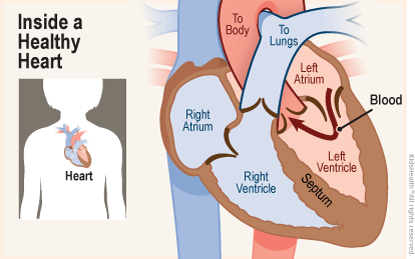
For most divers, VGE are filtered out by the lungs without issue 4. However, for the estimated 25-30% of the population with a Patent Foramen Ovale (PFO)—a small hole between the atria of the heart—rapid ascents are a major threat.
In a normal ascent, the lungs act as a sieve. But a fast ascent increases the volume and size of VGE. If a diver with a PFO experiences a spike in chest pressure (like a cough or even the strain of a fast ascent), these bubbles can "shunt" from the right side of the heart to the left, bypassing the lungs entirely. As detailed in PFO and Scuba Diving: The Science Behind 'Undeserved' Decompression Sickness, these bubbles then travel to the brain or spine, causing arterial gas embolisms (AGE). Sticking to 9m/min is the primary defense for divers who may have an undiagnosed PFO, as it keeps the "bubble load" low enough that shunting is less likely to cause injury.
Gradient Factors and Controlled Ascents
Modern dive computers use Gradient Factors (GF) to adjust the conservatism of the Buhlmann ZHL-16C algorithm. These factors essentially tell the computer how close you are willing to get to the M-value.
- GF Low: Determines the depth of your first stop.
- GF High: Determines how close you get to the M-value upon surfacing.
Even with a conservative GF (like 30/70), the algorithm assumes you are ascending at a controlled, slow rate 2. If you "rocket" between stops, you are effectively overriding the safety margins you programmed into the computer. Slowing your ascent to 9m/min allows the Gradient Factors to work as intended, ensuring that the "invisible ceiling" moves upward at a rate your body can handle.
Practical Mastery: Maintaining 9 Meters Per Minute
Maintaining a slow ascent is a skill that requires active buoyancy management and constant monitoring. It is arguably the hardest part of a dive to master.
1. Monitor the Ascent Bar
Most modern computers have an ascent rate indicator. Do not wait for the alarm to beep. If the bar is more than half-full, you are likely approaching the limit.
2. The Final 6-Meter Purge
In the last 6 meters, your BCD's air expands most rapidly. You must be proactive:
- Vent a small amount of air from your BCD before you start the final move from 6m to the surface.
- Keep your hand on the inflator hose or dump valve.
- Maintain a horizontal trim to maximize drag and slow your upward momentum.
3. Continuous vs. Erratic Ascents
While "Deep Stops" were once popular, modern research suggests that a slow, continuous ascent is generally safer for recreational profiles 1. Avoid the "Deep Stop trap" by focusing on a steady 9m/min rate rather than stopping deep and then rushing to the safety stop. For more on this, see The Deep Stop Debate.
Pro Tip: Use your computer's "Average Depth" or "Time to Surface" (TTS) features to gauge your progress. If your TTS is decreasing faster than the actual time passing, you are ascending too quickly.
| Ascent Rate | Impact on Tissues | Risk Level |
|---|---|---|
| > 18m/min | Massive bubble nucleation; M-values exceeded | High (DCS/AGE) |
| 12-15m/min | High VGE levels; pulmonary filter stress | Moderate |
| 9m/min | Optimal off-gassing; manageable VGE | Low (Standard) |
| 3-6m/min | Maximum safety for the final 10 meters | Ultra-Low |
Conclusion: Respecting the Speed Limit
The 9 meters per minute rule isn't an arbitrary number—it is the foundation of modern decompression safety. It accounts for the exponential pressure changes of the shallowest depths, the kinetic energy required to trigger bubble growth, and the physiological lag in our ability to off-gas nitrogen 24.
By mastering your buoyancy and respecting this "speed limit," you aren't just following a rule; you are actively managing the physics of your own blood and tissues. Next time you find yourself tempted to "pop up" to the surface at the end of a dive, remember that the most critical decompression happens in those final few meters. Slow down, breathe, and give your body the time it needs to return to the surface safely.