The Haldanean Revolution: How 1908 Goat Experiments Shape Modern Dive Computers
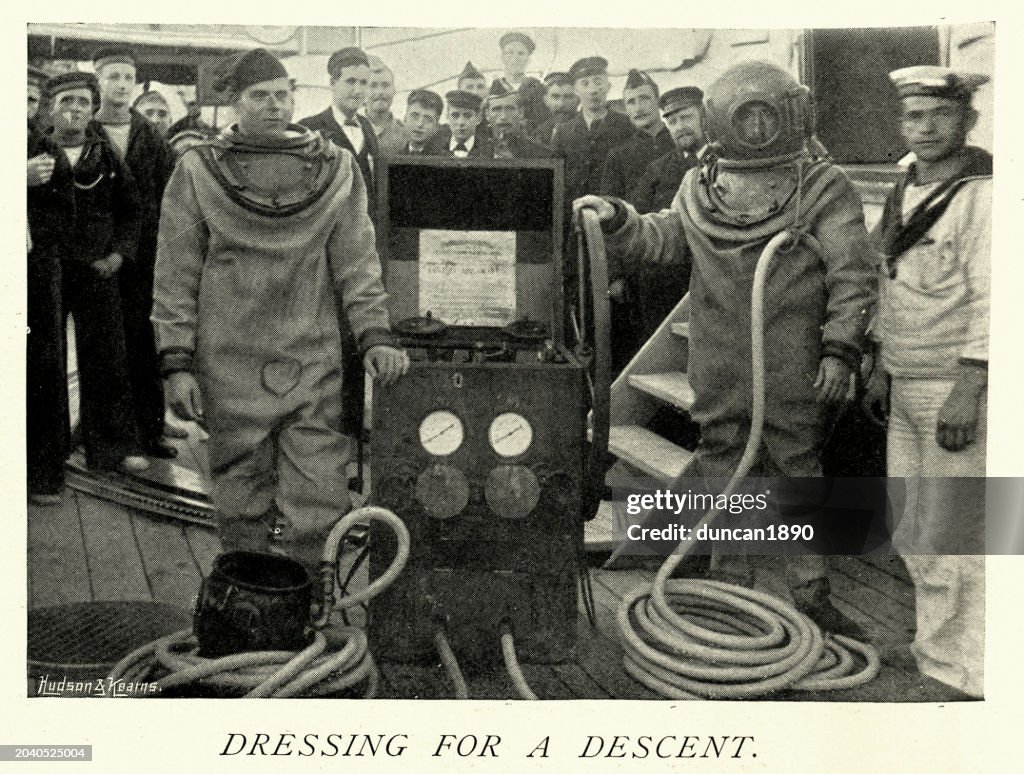
In the late 19th and early 20th centuries, diving was less of a science and more of a high-stakes gamble. For the divers of the Royal Navy, every descent was shadowed by the specter of "the bends"—a mysterious, agonizing, and often fatal condition that struck without rhyme or reason. At the time, the prevailing wisdom suggested that a slow, uniform ascent was the key to safety, yet divers were still suffering from decompression sickness (DCS) even when following these rules 4. The situation was so dire that the British Admiralty faced a crisis: their divers were effectively capped at depths of 120 feet because anything deeper resulted in unacceptable rates of injury or "diver inefficiency" due to unexplained loss of consciousness 4.
The breakthrough didn't come from a master diver, but from a laboratory. John Scott Haldane, an eccentric and brilliant Scottish physiologist, was commissioned by the Royal Navy to solve the decompression puzzle. Haldane was already famous for his work on respiratory physiology and his penchant for using himself as a test subject in gas-filled chambers. However, to map the limits of human endurance under pressure, he needed more than just his own lungs. He needed a physiological proxy, leading to one of the most famous—and peculiar—chapters in maritime history: the 1908 goat experiments.
The Admiralty Crisis: Why the Royal Navy Needed a Physiologist
Before Haldane, the "slow and steady" method of ascent was the gold standard, championed by the French scientist Paul Bert. Bert had correctly identified that nitrogen bubbles were the cause of DCS, but his solution—a continuous, linear ascent—was fundamentally flawed 4. In practice, divers returning from the depths at a uniform rate were often still absorbing nitrogen in their "slower" tissues while ascending from the bottom, leading to bubble formation near the surface.
The Royal Navy’s 120-foot limit wasn't just a safety margin; it was a wall built of frustration 4. Beyond this depth, divers frequently experienced what we now know as nitrogen narcosis—the "rapture of the deep"—which the Navy couldn't explain at the time 4. Furthermore, the hand-cranked pumps used to provide air were reaching their mechanical limits, and the accumulation of carbon dioxide in the heavy copper helmets was making divers sluggish and prone to fainting 4.
Haldane approached the problem with empirical rigor. He realized that the human body wasn't a single, uniform mass of flesh, but a complex system of different tissues that absorbed and released gas at varying rates. To prove this, he needed a large-scale trial that no human ethics board of the time would have sanctioned for sailors.
The Unlikely Pioneers: Why Goats Became the Gold Standard
Why goats? To the modern diver, the choice seems bizarre, but in 1906, it was a stroke of scientific genius. Haldane required an animal with a physiological profile similar to humans in terms of cardiac output and respiratory volume relative to body mass.
| Feature | Human Suitability | Goat Suitability |
|---|---|---|
| Body Mass | High | Medium-High |
| Fat-to-Muscle Ratio | Variable | Similar to Humans |
| Circulation Rate | Standard | Comparable Scaling |
| DCS Symptom Visibility | Subjective | Objective (Limping/Pain) |
Goats were chosen because they are roughly the same size as a small man and, crucially, their susceptibility to the bends manifests in a visible way: they limp (a "bend" in the limb). Haldane and his team, including C.G. Douglas and A.E. Boycott, subjected dozens of goats to high-pressure environments in steel chambers, simulating dives to various depths and for various durations.
The 1908 trials produced a staggering volume of data. By observing which goats suffered "the bends" after specific pressure drops, Haldane began to see a pattern. He noticed that it wasn't the absolute pressure that caused the problem, but the ratio of the pressure change. This was the "Eureka" moment that would define diving for the next century.
The 2:1 Ratio: The Grandfather of the M-Value
Haldane’s most significant discovery was that a diver (or a goat) could apparently withstand a 50% drop in ambient pressure without developing symptoms. For example, a diver could spend an indefinite amount of time at 2 atmospheres of pressure (approx. 10 meters/33 feet) and ascend directly to 1 atmosphere (sea level) without issue.
This 2:1 ratio became known as the "Critical Supersaturation" limit. Haldane reasoned that as long as the internal tension of the dissolved nitrogen in the tissues did not exceed the ambient pressure by more than double, bubbles would not form—or at least, they wouldn't grow large enough to cause symptoms.
In modern diving, we have refined this concept significantly. We no longer use a blunt 2:1 ratio for every tissue. Instead, we use "M-Values," which are the maximum allowable nitrogen pressures each tissue compartment can tolerate at a specific depth. To understand how your computer calculates that "invisible ceiling" you see during a deco stop, you can explore The Mystery of M-Values.

The Birth of the Compartment: Modeling the Human Body as a Machine
Haldane knew that blood, muscle, and fat all processed nitrogen differently. To account for this, he modeled the human body as a series of mathematical "compartments." These weren't literal anatomical organs, but theoretical constructs designed to simulate gas exchange.
Haldane originally proposed five compartments with "half-times" of 5, 10, 20, 40, and 75 minutes. A half-time is the period it takes for a tissue to become 50% saturated with a gas.
- Fast Tissues (5-10 mins): Represented highly vascularized organs like the heart and lungs.
- Slow Tissues (40-75 mins): Represented poorly vascularized areas like fat and bone joints.
While Haldane’s five compartments were a revolutionary start, modern algorithms like the Bühlmann ZHL-16 have expanded this to 16 or more compartments to better reflect the complexity of the human body. However, as we discuss in Beyond the 16, even 16 compartments are a mathematical convenience that sometimes falls short of biological reality.
Stage Decompression: The End of Uniform Ascents
The most practical application of Haldane’s work was the invention of stage decompression. Haldane realized that slow, uniform ascents were actually dangerous because the diver spent too much time at deeper depths where they continued to "on-gas" into their slower tissues 4.
His solution was radical:
- Rapid Ascent: Bring the diver quickly to the first "stage" (usually half the ambient pressure of the bottom).
- Staged Pauses: Hold the diver at specific depths to allow the fast tissues to "off-gas" while keeping the slow tissues from exceeding their 2:1 ratio.
This method utilized what we now call the Oxygen Window, where the metabolic consumption of oxygen creates a "pressure vacancy" that helps pull nitrogen out of the tissues more efficiently. This transformed diving from a 120-foot limit to a world where 200-foot dives were suddenly routine 4.
Pro Tip for Advanced Divers: While Haldane’s stage decompression was a massive leap forward, remember that his models assumed nitrogen leaves the body as fast as it enters. We now know this isn't true. Always pad your safety stops, especially after repetitive dives.
The Haldane Legacy in Your Dive Computer
Every time you strap on a Shearwater, Suunto, or Garmin, you are wearing a digital descendant of Haldane’s 1908 goat trials. Most modern recreational and technical dive computers use "Neo-Haldanean" models.
- DSAT (PADI): A model optimized for recreational, multi-level diving, emphasizing the "faster" compartments.
- ZHL-16 (Bühlmann): The industry standard for technical diving, which applies Haldanean compartment logic with more conservative M-values for deeper, longer exposures.
The core assumption remains the same: we track dissolved gas in theoretical compartments. However, one of the biggest flaws in these "Haldanean" models is the assumption of symmetry—that gas enters and leaves at the same rate. In reality, physiological factors often cause a lag in off-gassing, a phenomenon known as Kinetic Asymmetry.
Where the Goats Were Wrong: The Limits of 1908 Science
Haldane was a genius, but he lacked the tools of the 21st century. He couldn't see what was happening inside the goats; he could only observe the results.
The Silent Bubble Problem
Haldane believed that if you followed his ratios, bubbles simply wouldn't form. We now have Doppler ultrasound technology that proves "silent bubbles" exist in the bloodstream after almost every dive, even those within no-decompression limits. This led to the Micronuclei Theory, which suggests that bubbles grow from pre-existing gas seeds rather than just popping into existence from dissolved gas.
Critical Volume vs. Critical Pressure
Haldane focused on Critical Pressure (the 2:1 ratio). Modern research has shifted toward Critical Volume, which looks at the total volume of bubbles the body can tolerate before symptoms occur. This debate is at the heart of how different algorithms handle safety margins. You can read more about this in Critical Volume vs. Critical Pressure.
The Deep Stop Debate
Haldane’s logic indirectly inspired the "Deep Stop" movement (and Pyle Stops), under the assumption that stopping deep would prevent bubble growth. However, recent studies, including those by the Navy Experimental Diving Unit (NEDU), have shown that deep stops can actually increase the nitrogen load in slow tissues, leading to a higher risk of DCS. This has caused a major shift in technical diving protocols, as detailed in The Deep Stop Debate.

Conclusion: Diving in the Shadow of Giants
The 1908 goat experiments might seem like a relic of a bygone era, but they are the foundation upon which every safe dive is built. Haldane took the "lottery" of the bends and turned it into a mathematical discipline.
As a modern diver, your responsibility is to understand that while your computer is a powerful tool, it is still based on a model—a mathematical approximation of a goat in a steel chamber. To ensure your safety:
- Always check your computer's conservatism settings.
- Account for your own physiology; as we age, our bodies process gas less efficiently Beyond the Table.
- Never treat the "No Deco" limit as a hard wall, but rather a soft boundary.
We dive deeper and stay longer than the Royal Navy ever dreamed possible in 1905, all thanks to a physiologist and a herd of goats that showed us the way home.