Critical Volume vs. Critical Pressure: The Competing Theories of Bubble Formation

Every time you glance at your dive computer during an ascent, you are witnessing a silent, mathematical war. Beneath the sleek interface and the "No-Deco" countdown lies a complex battle between two competing scientific philosophies: Critical Pressure and Critical Volume. These aren't just academic abstractions; they are the blueprints that dictate how long you stay at depth, how fast you can surface, and ultimately, how you manage the risk of Decompression Sickness (DCS).
For decades, the goal of decompression was simple: avoid bubbles. Today, modern science recognizes that avoiding bubbles entirely is likely impossible. Instead, the focus has shifted to managing bubble growth. Understanding the "why" behind your computer’s algorithm—whether it is based on the traditional Haldanean M-values or the more modern bubble models—transforms you from a diver who simply follows a screen into a safer, more informed explorer 12.
The Haldanean Legacy: The Critical Pressure Hypothesis
The foundation of everything we know about decompression began with John Scott Haldane in the early 20th century. Haldane’s breakthrough was the concept of supersaturation. He realized that the body could tolerate a certain amount of excess inert gas in its tissues without immediate ill effects, provided the pressure change wasn't too drastic 3.
Defining Critical Pressure
The Critical Pressure Hypothesis suggests that DCS is triggered when the ratio of internal gas pressure to ambient pressure exceeds a specific, "critical" threshold 1. Haldane originally proposed a 2:1 ratio, suggesting that a diver could surface from 10 meters (2 atmospheres absolute) to the surface (1 atmosphere absolute) without issue because the internal pressure did not exceed twice the ambient pressure.
The Birth of the M-Value
Later researchers, most notably Robert Workman and Albert Bühlmann, refined Haldane’s work by quantifying these thresholds into what we now call M-values (Maximum values).
- M-values represent the maximum allowable overpressure for different "tissue compartments" (theoretical models of body tissues with varying gas absorption rates) 2.
- If your tissue pressure stays below the M-value line, the model assumes you are safe.
- If you cross the M-value, the model predicts that the pressure gradient is too high, and symptomatic bubbles will form.
Limitations of the Pressure-Only Model
While M-value models (like the Bühlmann ZH-L16) are the backbone of modern dive computers, they have a significant blind spot: silent bubbles. Research has shown that microscopic bubbles often exist in a diver’s bloodstream even when they stay well within their "no-stop" limits. The Critical Pressure model assumes a "gas-phase-free" environment until the threshold is crossed, which we now know is a perfect representation of human physiology—actually, it is a simplified mathematical convenience 1.
The Paradigm Shift: The Critical Volume Hypothesis
As Doppler technology allowed scientists to "hear" bubbles in divers who showed no symptoms of DCS, a new theory emerged: the Critical Volume Hypothesis. This model suggests that the mere presence of a bubble isn't the problem; rather, it is the total volume of gas that has transitioned from a dissolved state into a gas phase that triggers DCS.
Beyond Ratios: The Role of Gas Micronuclei
The Critical Volume model starts with a different premise: microscopic "bubble seeds" or gas micronuclei exist in our bodies even before we jump into the water 1. These nuclei are so small they remain in solution, but during ascent, they provide the surface area for dissolved gas to collect and expand.
Managing Growth with VPM and RGBM
Models like the Varying Permeability Model (VPM) and the Reduced Gradient Bubble Model (RGBM) are designed to keep these nuclei from expanding into symptomatic bubbles. Instead of just looking at the "glass ceiling" of an M-value, these models calculate the physical behavior of bubble populations.
- They prioritize keeping bubbles small early in the ascent.
- They use complex math to track how bubble surface tension and internal pressure change as the diver moves through the water column 4.
| Feature | Critical Pressure (Haldanean/Bühlmann) | Critical Volume (VPM/RGBM) |
|---|---|---|
| Primary Goal | Stay below max overpressure ratio | Limit total gas phase volume |
| Bubble View | Avoid bubble formation entirely | Manage growth of existing nuclei |
| Ascent Profile | Shallower initial stops | Deeper initial stops |
| Complexity | Linear mathematical gradients | Non-linear bubble physics |
Pressure vs. Volume: A Comparative Analysis
The fundamental difference between these two theories lies in the "trigger." For Critical Pressure, the trigger is the moment of formation (crossing the M-value). For Critical Volume, the trigger is the cumulative growth of the gas phase.
The Ascent Ceiling
Because Critical Pressure models focus on the maximum gradient, they often allow a diver to come relatively close to the surface before requiring a stop. The logic is that the higher the gradient (the difference between tissue pressure and ambient pressure), the faster the gas will leave the body 2.
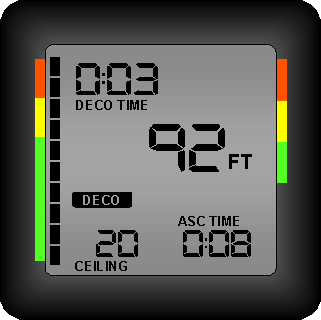
In contrast, Critical Volume models require deeper stops to "crush" or suppress the expansion of micronuclei before they gain momentum. However, this introduces a complication known as Kinetic Asymmetry: Why Nitrogen Leaves Your Body Slower Than It Enters. While you are stopping deep to manage bubble volume, your "slow" tissues (like fat and bone) may still be absorbing nitrogen because the ambient pressure at the deep stop is still higher than the gas tension in those tissues 13.
The Deep Stop Connection: Where Theory Meets the Water
The Critical Volume hypothesis was the driving force behind the "Deep Stop" movement. The idea was simple: if we can stop the bubbles from growing while we are still deep, the rest of the decompression will be safer. This led to the widespread use of "Pyle Stops"—short, deep pauses halfway between the bottom and the first required decompression stop.
The Modern Shift
However, the diving community has recently seen a significant shift. Data from the U.S. Navy Experimental Diving Unit (NEDU) suggested that for many profiles, excessive deep stops actually increased the risk of DCS. By staying deeper for longer, divers were loading more gas into their slow tissues than they were "clearing" from their fast tissues.
To understand why the industry is moving back toward modified Haldanean profiles, it is essential to read about The Deep Stop Debate: Why Modern Decompression Theory Is Moving Away from Pyle Stops. This debate highlights the tension between managing bubble volume and managing total gas load.
The Role of the Oxygen Window in Bubble Mitigation
Regardless of which theory your computer uses, both rely on a biological phenomenon known as the Oxygen Window (or inherent unsaturation).
Because our bodies metabolize oxygen and replace it with carbon dioxide (which is much more soluble), the total pressure of gases in our tissues is always slightly less than the ambient pressure 3. This "pressure vacancy" acts as a safety buffer.
- In Pressure models, the Oxygen Window increases the gradient, allowing for faster off-gassing without crossing the M-value.
- In Volume models, the Oxygen Window provides a "sink" that helps shrink existing bubbles.
Divers can maximize this effect by using high-PO2 decompression mixes (like Nitrox 50 or 100% Oxygen). For a deep dive into this mechanic, check out The Oxygen Window: Mastering Inherent Unsaturation for Efficient Decompression.
Expert Tip: Using a high-PO2 deco gas is the single most effective way to satisfy both theories simultaneously. It increases the off-gassing gradient (Critical Pressure) while actively shrinking the gas phase (Critical Volume) 3.
Bridging the Gap: Gradient Factors and Modern Algorithms
Most modern technical divers no longer choose between "pure" Pressure or "pure" Volume models. Instead, we use Gradient Factors (GF).
Gradient Factors allow us to apply Critical Volume-style caution to a standard Bühlmann (Critical Pressure) model. By setting a GF Low, we can force the computer to require deeper stops, mimicking bubble-model behavior. By setting a GF High, we determine how close we are willing to get to the theoretical M-value at the surface 2.
- GF Low (e.g., 30): Starts the deco deeper to suppress bubble growth.
- GF High (e.g., 70): Ensures a 30% safety margin below the M-value at the surface.
This customization is the secret to modern safety. You can learn to tune these settings in our guide: Master Your Ascent: Why Gradient Factors Are the Secret to a Safer Dive.
The Importance of Ascent Rates
Finally, neither theory works if you ignore the speed of your ascent. A rapid ascent adds kinetic energy to the gas molecules, encouraging them to break out of solution and expand rapidly 4. Maintaining a rate of 9 meters per minute (30 feet per minute) is considered the "golden rule" for balancing these competing forces. Read more on why this specific speed matters: Ascent Rates and Kinetic Energy: Why 9 Meters Per Minute Is the Golden Rule.
Conclusion: The Future of Decompression Science
Decompression science is moving toward a synthesis of these two great theories. Most modern dive computers use a modified Haldanean approach (like Bühlmann ZH-L16C) because of its reliability and predictability, but they incorporate "bubble-logic" through Gradient Factors or proprietary safety margins 2.
As an advanced diver, your takeaway is this: Conservative settings are a choice. Are you more concerned about the ratio of pressure in your fast tissues (Critical Pressure), or are you worried about the total volume of gas accumulating over a long, multi-level dive (Critical Volume)?
By understanding these theories, you aren't just a passenger on your dive; you are the pilot. Use this knowledge to customize your computer, plan your gas switches, and ensure that every ascent is as controlled as it is calculated.
Pre-Dive Theory Checklist:
- Identify if your computer uses a Bühlmann (Pressure) or RGBM/VPM (Volume) base.
- Review your Gradient Factors to ensure they match your dive's risk profile.
- Plan your Oxygen Window advantage by selecting the optimal deco gas.
- Commit to a 9m/min ascent rate regardless of what the "clear" screen says 4.
Theoretical knowledge is the best backup to your dive computer. Stay deep in the science, and stay safe in the water.