Beyond the 16: Why Standard Tissue Half-Times Fall Short of Physiological Reality
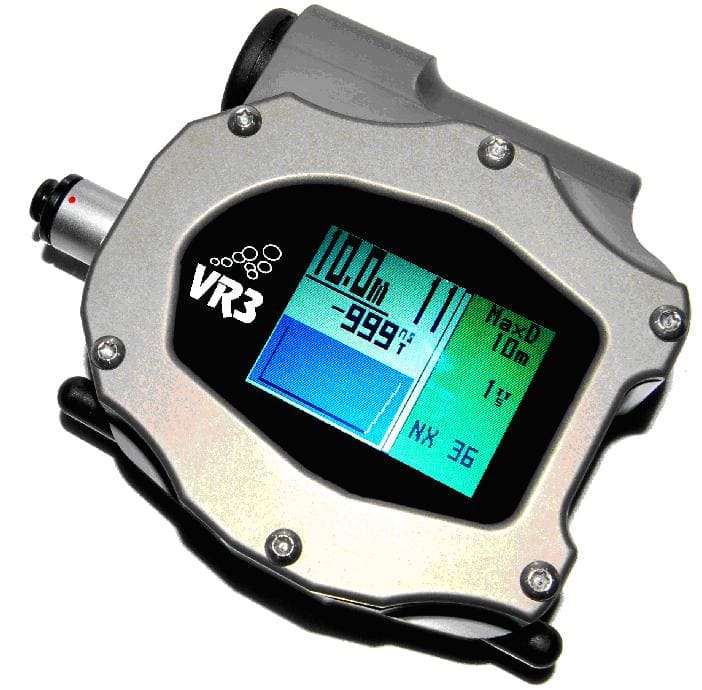
Every time you strap a dive computer to your wrist, you are trusting a mathematical architect named Albert Bühlmann. Most modern computers rely on the ZHL-16C algorithm—a model that envisions your body as 16 distinct "compartments," each absorbing and releasing nitrogen at a specific rate. For decades, this has been the gold standard, the "magic number" that keeps us on the right side of the decompression line.
However, as we push the boundaries of technical diving and multi-day expeditions, a realization is settling in among the scientific community: the human body is far more chaotic than 16 linear equations can describe. While the 16-compartment model is a triumph of engineering, it is a mathematical abstraction of physiological reality, not a literal map of your anatomy. To dive safer and deeper, we must look beyond the 16.
The Legacy of the 16-Compartment Model
The journey to your dive computer's screen began over a century ago with John Scott Haldane. In 1908, Haldane revolutionized diving by proposing that the body doesn't saturate all at once. He used five "compartments" to represent the body’s varying rates of gas absorption. Fast forward to the 1960s and 80s, and Dr. Albert Bühlmann expanded this to 16 compartments (the "16" in ZHL-16) to better account for the complexities of nitrogen and helium exchange in diverse tissues. 3
It is a common misconception that these 16 compartments correspond to specific organs—one for the liver, one for the brain, one for the left bicep. In reality, a compartment is a mathematical construct. It represents a theoretical tissue that absorbs gas at a specific speed. 1
Why did 16 become the industry standard? It wasn't because the body has exactly 16 types of tissue. Rather, it was a compromise. In the early days of dive computers, processing power was a precious resource. Sixteen compartments provided enough granularity to model safe decompression profiles without requiring a supercomputer on your wrist. It was the "Goldilocks" zone of computational safety.
The Math of Half-Times: Exponential Curves vs. Biological Chaos
At the heart of every compartment is the concept of the half-time. This is the time required for a specific tissue to reach 50% saturation (or desaturation) following a change in ambient pressure. 2
If you descend to 30 meters, your "5-minute" compartment will be 50% saturated in five minutes. In another five minutes, it reaches 75%, and after roughly six half-times (30 minutes), it is considered fully saturated. 24
| Tissue Category | Half-Time Range | Typical Physiological Proxy |
|---|---|---|
| Fast | 5 – 20 minutes | Blood, Lungs, Heart |
| Medium | 40 – 120 minutes | Muscles, Skin, Some Organs |
| Slow | 150 – 635 minutes | Fat, Bone, Cartilage, Scar Tissue |
These half-times dictate your M-values, creating the "invisible ceiling" that limits your ascent. However, the math assumes a perfect exponential curve. In the human body, gas exchange rarely follows a clean, predictable line. Factors like local inflammation, temperature, and even your posture can turn that smooth curve into a jagged mess.
The Perfusion vs. Diffusion Dilemma
Standard models like ZHL-16C are primarily perfusion-limited. This means they assume the only bottleneck for nitrogen entering or leaving a tissue is blood flow. If blood reaches the tissue, the model assumes the gas is instantly and evenly distributed. 2
However, reality introduces the diffusion-limited problem. In poorly vascularized tissues—like the dense cartilage in your joints or the center of large fat deposits—nitrogen cannot rely on blood vessels for the "last mile" of its journey. It must move molecule-by-molecule through the tissue itself. 1
This takes time. A single half-time value fails to account for the physical distance gas must travel within a cell or across a membrane. This is why joint pain is such a common symptom of DCS; the models often underestimate the time it takes for gas to migrate out of these "deep" areas where blood doesn't flow freely.
The Biological Continuum: Why 16 Isn't Enough
The human body is not a collection of 16 bins; it is a biological continuum. We possess millions of varying tissue types with an infinite spectrum of gas exchange rates. By forcing the body into 16 discrete compartments, we are using a low-resolution filter to view a high-definition reality.
The Rise of "Ultra-Slow" Tissues
Bühlmann’s slowest compartment has a half-time of 635 minutes. While this is sufficient for a single day of recreational diving, it may fall short for multi-day, repetitive diving on liveaboards. Research suggests that "ultra-slow" tissues exist with half-times exceeding 1,000 minutes. 2
These tissues take days to fully saturate and, more importantly, days to clear. If you are doing four dives a day for a week, your 635-minute compartment (and those even slower) is steadily climbing. This is the "long-tail" of off-gassing. Nitrogen lingers far longer than a standard 24-hour "No Fly" time might suggest for heavy multi-day profiles.
Expert Tip: On liveaboard trips, pay close attention to your "slow tissue" loading. If your computer shows your slowest compartments are nearing their limits, it’s time to skip a night dive, even if your "No Deco" time for the next dive looks generous.

Kinetic Asymmetry: The Flaw in Symmetrical Models
Most 16-compartment models operate on a "symmetrical" assumption: nitrogen enters the body at the same speed it leaves. This is the In Equals Out fallacy.
Physiology tells a different story. As we have explored in our guide on Kinetic Asymmetry, nitrogen often leaves the body slower than it enters. Several factors cause this lag:
- Vasoconstriction: As we get cold toward the end of a dive, our peripheral blood vessels constrict, reducing the "washout" rate of nitrogen. 4
- Micro-bubbles: Even sub-clinical bubbles can act as physical barriers in the bloodstream, slowing down the diffusion of dissolved gas from the tissues back to the lungs. 1
Standard 16-compartment models generally ignore these changes, assuming your physiology at the end of a 60-minute dive is identical to your physiology at the start.
The Individual Variable: Factors the 16 Compartments Ignore
Mathematics is indifferent to your lifestyle, but your tissues are not. The 16-compartment model treats a 22-year-old Olympic athlete and a 60-year-old occasional smoker exactly the same if they are at the same depth.
1. Hydration and Blood Viscosity
Dehydration makes your blood "thicker" (more viscous). This reduces the efficiency of perfusion, effectively lengthening the half-times of your compartments. A "10-minute" tissue might behave like a "15-minute" tissue when you are dehydrated, but your computer has no way of knowing.
2. Body Fat Percentage
Nitrogen is approximately five times more soluble in fat than it is in watery tissues like muscle. 2 Because fat has a poor blood supply, it saturates and desaturates incredibly slowly. 2 A diver with a higher body fat percentage will carry a significantly larger total nitrogen load after a week of diving than a leaner diver, even if their computers show identical profiles.
3. Aging and Fitness
As we age, our cardiovascular efficiency naturally declines. This alters the very foundations of the half-time math. We’ve discussed this in detail in our article on Aging and Fitness, noting that older divers may need to add manual conservatism to compensate for these physiological shifts.
The Future of Modeling: Moving Beyond Static Compartments
We are entering a new era of decompression science where the "16 bins" are being replaced by more dynamic approaches.
- Probabilistic Models: Instead of a hard "M-value" (stop or go), these models calculate the likelihood of DCS. They acknowledge that there is no such thing as a "safe" dive, only "lower risk" dives.
- Real-Time Integration: Future computers may integrate Heart Rate Variability (HRV) and skin temperature sensors to adjust compartment half-times on the fly. If you are working hard and getting cold, the computer could automatically slow down its predicted off-gassing rate.
- Bubble-Volume Models: Rather than just tracking dissolved gas tension, models like VPM (Varying Permeability Model) or RGBM (Reduced Gradient Bubble Model) attempt to manage the physical gas phase—the actual bubbles—within the body. This is a shift from Critical Pressure to Critical Volume theory.
| Model Type | Primary Focus | Best Use Case |
|---|---|---|
| Bühlmann (ZHL-16) | Dissolved gas tension | General recreational & tech diving |
| VPM / RGBM | Bubble size & volume | Deep technical diving |
| Probabilistic | Statistical risk | Research & high-risk saturation diving |
Practical Implications for the Advanced Diver
Understanding that your computer is an estimate, not an absolute truth, is the hallmark of an advanced diver. Here is how to apply this knowledge:
- Pad your conservatism: Use Gradient Factors (GF) to add a safety buffer. A setting like GF 80/80 is less "risky" than pushing the model to its theoretical 100% limit.
- Extend your safety stops: The "long-tail" of slow tissues benefits from extra time at shallow depths. A 5-minute stop is always better than a 3-minute stop.
- Stay hydrated and warm: Since the model assumes perfect perfusion, do everything you can to help your blood flow (drink water, wear a thicker suit).
- Respect the "Slow Tissue" loading: On multi-day trips, increase your surface intervals as the week progresses.
-
"My computer says I'm clear, so I'm safe"— Understand that DCS can happen even within "decorum" limits due to individual physiological factors.
Conclusion: The Tool vs. The Truth
The 16-compartment model is one of the most successful mathematical frameworks in the history of life sciences. It has allowed millions of people to explore the underwater world with an incredible safety record. But as we have seen, it is a simplified map of a complex territory.
By recognizing the limitations of half-time math—the perfusion-diffusion gap, the reality of kinetic asymmetry, and the impact of our own unique physiology—we can use our dive computers more effectively. Don't just follow the "magic number." Understand the science behind it, respect the "slow tissues," and always leave yourself a margin of safety that no mathematical model can provide.
Ready to dive deeper into the science? Check out our exploration of Tribonucleation to learn why even a simple joint movement can change the way bubbles form in your body.
Further Reading
- Lessons from (patho)physiological tissue stiffness and their implications for drug screening, drug delivery and regenerative medicine - Scie
- Humans can’t live beyond 150 years: Scientists expose the harsh reality | - The Times of India
- Is Virtual Reality Bad for Our Health? Studies Point to Physical and Mental Impacts of VR Usage | Research Communities by Springer Nature
- Decompression theory - Wikipedia