The Science of the Shimmer: Light Refraction and Density Dynamics in Cenote Haloclines
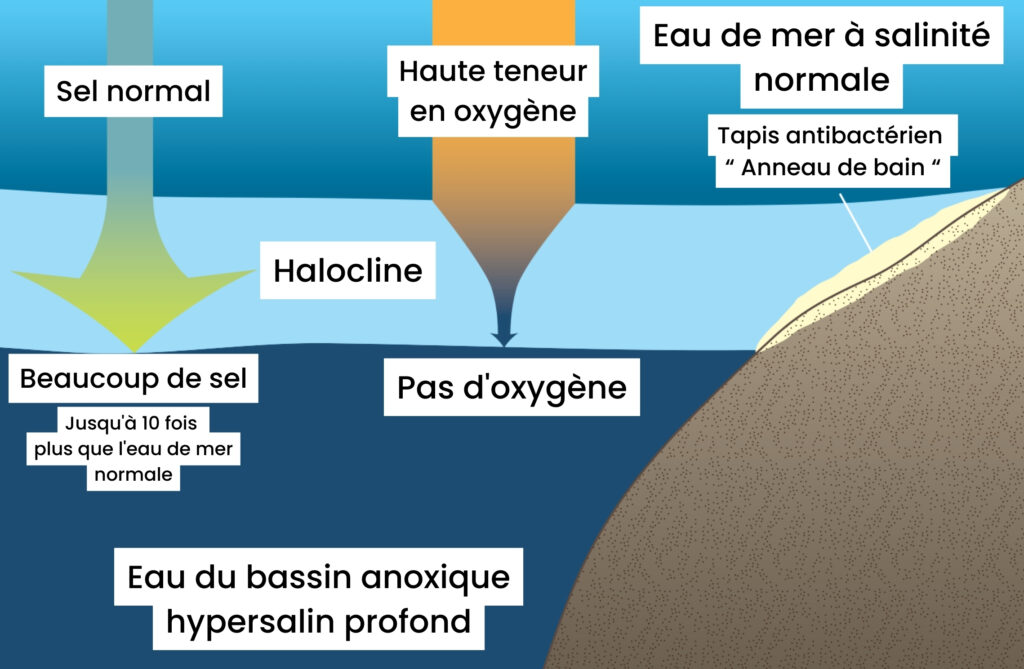
For many recreational divers, a first encounter with a halocline feels like swimming through a vat of oil or a liquid lens. One moment the water is crystalline, and the next, the world dissolves into a swirling, psychedelic blur. In the cavern and cave systems of Mexico’s Yucatan Peninsula, this phenomenon is a staple of the experience. However, to the advanced diver, the halocline is more than a visual curiosity; it is a complex boundary of fluid dynamics, optics, and hydrostatic pressure.
Understanding the "science of the shimmer" requires moving beyond the aesthetic and into the physics of matter and energy 2. The subterranean hydrology of the Yucatan is a unique laboratory where a thin lens of fresh meteoric water sits atop a massive intrusion of saline groundwater from the Caribbean Sea. This stratification creates a sharp interface that challenges our visual perception, buoyancy control, and even our understanding of underwater light.
The Fluid Dynamics of Stratification
The existence of the halocline is governed by the Ghyben-Herzberg principle, which describes the hydrostatic equilibrium between fresh and salt water. Because fresh water has a lower molecular density than the NaCl-saturated solutions of the sea, it effectively "floats" on top of the heavier saltwater layer 2.
Molecular Density Differences
Matter is anything that occupies space and has mass 2. In the context of a cenote, we are dealing with two distinct types of aqueous solutions:
- Fresh Water: Primarily $H_2O$ with minimal dissolved minerals.
- Salt Water: Water containing approximately 35 parts per thousand (ppt) of dissolved salts, primarily sodium chloride.
The addition of salt increases the mass of the solution without a proportional increase in volume, leading to a higher density. When these two bodies of water meet in the porous limestone of the Yucatan, they do not immediately mix. Instead, they form a pycnocline—a layer where water density increases rapidly with depth. The halocline is the specific type of pycnocline where that density change is driven by salinity.
Why Layers Don't Mix
In an open ocean environment, mechanical turbulence from waves and currents ensures that salt and fresh water mix rapidly. However, within the sheltered conduits of a cave system, the water is often nearly stagnant. Without mechanical energy to drive mixing, the only process at play is molecular diffusion—the slow movement of molecules from an area of high concentration to low concentration 2. This process is so slow that the distinct layers can remain stratified for centuries, separated by a mixing zone only a few centimeters thick.
The Physics of the 'Blur': Understanding Refractive Indices
The "shimmering" effect that defines the halocline is an optical illusion caused by the bending of light as it passes between media of different densities. This is known as refraction 1.
Refractive Index (n) and Snell’s Law
Every medium has a Refractive Index (n), which represents the ratio of the speed of light in a vacuum to the speed of light in that medium. Light travels slower in denser media 1.
- Fresh Water (n): ~1.333
- Salt Water (n): ~1.339 (depending on salinity and temperature)
As light rays pass from the fresh water into the denser salt water, they change velocity. According to Snell’s Law, this change in velocity causes the light to bend at the interface. When a diver moves through the mixing zone, their kicking or even their exhaust bubbles create "swirls" of varying densities. Each swirl acts like a tiny, moving lens, bending light in different directions simultaneously.
Visual Distortion vs. Actual Turbidity
It is important to note that the water in a halocline is often perfectly clear. The "blur" is not caused by turbidity (suspended particles) or diffusion (scattering of light by molecules) 3. Instead, it is pure optical distortion. While turbidity reduces contrast and visibility by blocking light, the halocline distorts the geometry of the objects you see, making them appear to "wobble" or shift.
| Optical Property | Fresh Water Layer | Halocline (Mixing Zone) | Salt Water Layer |
|---|---|---|---|
| Density | Low | Gradient | High |
| Refraction | Consistent | Chaotic/Variable | Consistent |
| Visibility | High (Clear) | Low (Distorted) | High (Clear) |
| Light Speed | Faster | Variable | Slower |
Total Internal Reflection: The Underwater Mirror
One of the most stunning phenomena in cenote diving occurs when looking at the halocline from below. Under certain conditions, the interface stops being transparent and begins to act like a mirror. This is known as Total Internal Reflection.
This occurs when light traveling through the denser saltwater layer hits the boundary of the less-dense freshwater layer at a specific angle, known as the critical angle. Instead of passing through into the fresh water, the light is reflected back down into the salt water.
In sites like Diving Dos Ojos Cenote, this creates the "silver ceiling" effect. Divers looking up from the saltwater layer see a perfect reflection of the cave floor and themselves, as if a sheet of liquid mercury were suspended in mid-air.

The Chemocline and the Cloud: A Distinct Phenomenon
It is a common misconception among intermediate divers that the "cloud" seen in deep pits is part of the halocline. In reality, these are two distinct chemical and physical layers.
When diving The Pit Cenote in Tulum, you encounter a thick, white, or sulfurous-smelling cloud. This is a chemocline—specifically a hydrogen sulfide ($H_2S$) layer.
- The Halocline: A refractive boundary caused by salinity.
- The Chemocline: A chemical boundary caused by the decomposition of organic matter (leaves, trees, animals) in an anaerobic environment.
The $H_2S$ cloud actually absorbs light rather than refracting it, creating a "darkness" that is fundamentally different from the "shimmer" of the halocline 3. While the halocline is an optical lens, the chemocline is an optical filter.
Hydrostatic Implications for the Diver
Transitioning through a halocline isn't just a visual experience; it’s a physical one. Because salt water is denser than fresh water, it exerts a greater buoyant force on the diver.
Buoyancy and Trim Shifts
When you descend through the halocline into the salt water, you will suddenly feel "lighter" or more buoyant. This is because you are displacing a denser fluid. Conversely, when ascending back into the fresh water, you will feel "heavy" and may need to add air to your BCD or drysuit to maintain neutral buoyancy.
This change in density also affects your Center of Buoyancy. If you are transitioning through the layer at an angle, the density of the water surrounding your upper body may differ from the water surrounding your lower body. This can temporarily disrupt your stability, a concept explored in depth in our guide on Center of Gravity vs. Center of Buoyancy.
Pro Tip: When diving a cenote with a known halocline, anticipate the buoyancy shift. Be ready to vent air the moment you rise above the salt water to prevent an uncontrolled ascent.
Optical Challenges for Underwater Photography
The halocline is the nemesis of the underwater photographer. The very physics that make it beautiful also make it nearly impossible to document without the right technique.
- Autofocus Failure: Most modern cameras use phase-detection or contrast-detection autofocus. Because the halocline eliminates sharp edges and contrast, the camera's "brain" cannot find a focal point.
- Strobe Positioning: Using strobes inside the mixing zone often results in massive "ghosting" or backscatter-like artifacts, even in clear water, because the light is refracted unevenly before it hits the sensor 3.
- The "Oil and Water" Shot: To capture the interface, you must remain perfectly still. Any movement creates turbulence that mixes the layers, turning the sharp line into a muddy blur.
- Use manual focus (MF) locked to a set distance.
- Position strobes far out to the sides to minimize refraction artifacts.
- Use a high shutter speed to "freeze" the shimmer.
- Achieve perfect horizontal trim before the shot.

Safety and Situational Awareness in the Layer
The visual disorientation of the halocline can lead to vertigo or a loss of depth perception. In a cave or cavern environment, this is a significant safety risk.
Maintaining Contact
In the "shimmer," your buddy may appear as a distorted, unrecognizable shape just three feet away. It is vital to maintain close proximity and use high-intensity lights to signal through the distortion. If you lose visual contact, do not ascend or descend rapidly; the water is likely clear just a few inches above or below you.
Preventing Percolation and Silting
Maintaining horizontal trim is not just about The Geometrical Calculus of Perfect Trim; it’s about environmental preservation. In a halocline, your wake can pull salt water up into the fresh layer or vice versa. This mechanical turbulence can also dislodge "percolation" (bubbles hitting the ceiling and dropping silt), further reducing visibility 3.
Mixing the layers is harmless — actually, artificial mixing can disturb delicate cave life and ruin the visibility for everyone behind you for hours.
Conclusion: Respecting the Delicate Balance
The halocline is a reminder that the underwater world is governed by strict physical laws. It is a geological boundary that marks the meeting of two worlds: the sky-fed fresh water and the ancient, sea-fed salt water. By understanding the refractive indices, density dynamics, and hydrostatic shifts at play, we transform from mere observers into informed participants in this subterranean landscape.
The next time you descend into the shimmer of a cenote, remember that you aren't just seeing "blurry water." You are witnessing Snell’s Law in action and feeling the tangible effects of molecular density on your own buoyancy. Respect the balance, master your trim, and enjoy the most spectacular light show in the natural world.
Ready to test your buoyancy in the layers? Check out our guide on Diving The Pit Cenote to prepare for your next deep adventure.