Proprioceptive Distortion: The Neuroscience of Spatial Disorientation in Diving
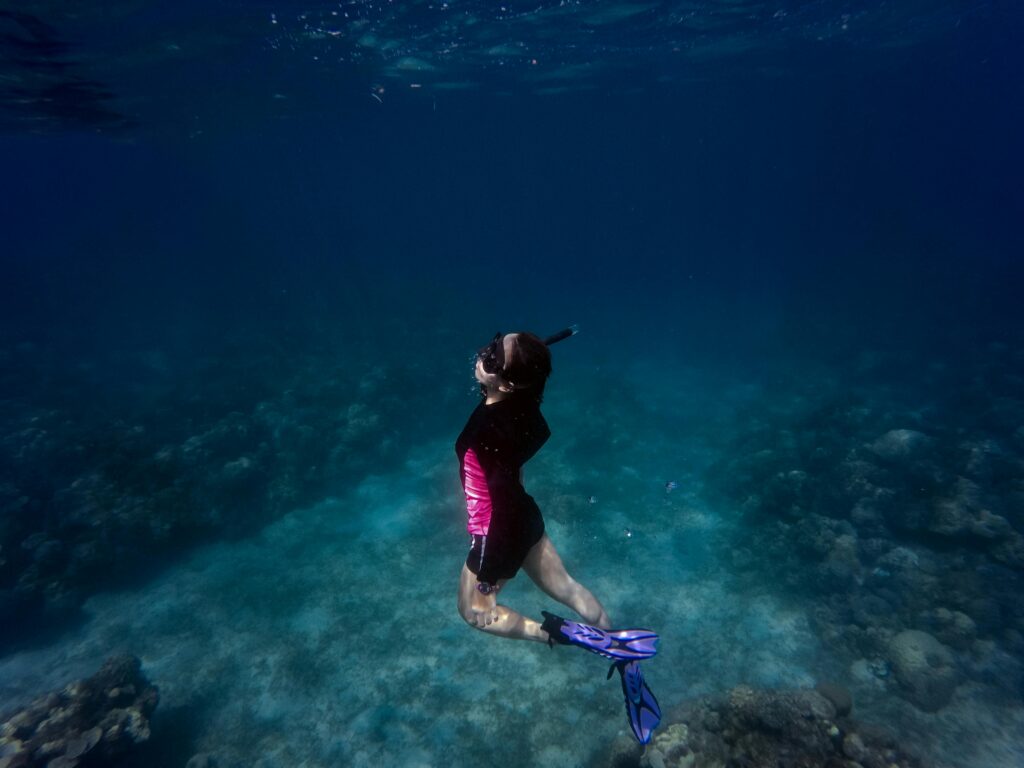
Introduction: The 'Upward' Illusion and the Mystery of Spatial Awareness
For the terrestrial human, "up" is an objective truth dictated by the relentless pull of gravity. Our brains are hardwired to interpret the world through a constant stream of data from our feet pressing against the ground. However, when we cross the air-water interface, we enter a realm where physics challenges our biological hardwiring. This is the world of proprioceptive distortion.
Proprioception is often described as our "sixth sense." It is the internal mechanism that allows you to touch your nose with your eyes closed or know the position of your fins without looking at them. It relies on a sophisticated network of mechanoreceptors in your muscles, joints, and skin that signal limb position and movement to the brain 1.
In the water, especially during technical maneuvers or blue-water ascents, this sense can fail. Spatial disorientation—the inability to correctly perceive one’s body position, motion, or altitude relative to the earth—is a significant risk for intermediate and advanced divers. While a novice might struggle with basic buoyancy, the advanced diver often faces more insidious neurological illusions when visual references vanish, leading to a phenomenon where the brain "invents" a sense of gravity that doesn't exist.
The Sensory Triad: How the Brain Maps Your Position
To maintain equilibrium, the human brain integrates data from three primary systems, collectively known as the sensory triad 1:
- The Visual System: This is our primary anchor. On land, the horizon and vertical structures provide a constant frame of reference.
- The Vestibular System: Located in the inner ear, this system uses semicircular canals to detect angular acceleration (rotation) and otolith organs to detect linear acceleration and the pull of gravity 1.
- The Proprioceptive System: This involves sensors in the musculoskeletal system that detect tension and pressure, telling the brain where the body parts are in relation to each other.
These inputs are processed in the parietal cortex, where the brain constructs a "body schema"—a real-time map of where you are in 3D space. Underwater, this integration process is under constant assault. When the three systems provide conflicting data, the brain must decide which one to trust. If it chooses incorrectly, the result is spatial disorientation.
| Sensory System | Terrestrial Function | Underwater Challenge |
|---|---|---|
| Visual | Fixed horizon/objects | Refraction, turbidity, "Blue Room" |
| Vestibular | Gravity detection | Neutral buoyancy masks gravity |
| Proprioceptive | Weight-bearing feedback | "Unweighting" of joints/muscles |
Neutral Buoyancy and the Proprioceptive Void
The very goal of scuba diving—achieving perfect neutral buoyancy—is the primary cause of proprioceptive failure. On land, your mechanoreceptors are constantly stimulated by the weight of your own body. In the water, the buoyant force of the displaced fluid opposes gravity, creating an "unweighting" effect.
This state creates a proprioceptive void. Without the pressure of body weight on the joints, the brain receives significantly less data regarding "down." For the advanced diver, maintaining a flat, horizontal trim is not an instinct; it is a learned neurological adaptation. We must train our brains to interpret the subtle "pull" of a heavy tank or the slight resistance of water against our exposure suit as proxies for traditional spatial cues.
Visual Dominance and 'Blue Room' Syndrome
The brain is naturally biased toward visual data, a phenomenon called visual capture. In clear, shallow water with a visible seabed, this serves us well. However, in the "Blue Room"—the vast, featureless expanse of open water—visual anchors disappear.
Without a reef or a surface to reference, the brain can fall victim to illusions caused by light refraction and turbidity 2. As explored in The Science of the Shimmer, light behaves differently in water, often creating "false horizons" where light rays are diffused or scattered by particulate matter 2.
In highly turbid water, objects may appear further away than they are, while in exceptionally clear water, the opposite is true 2. If a diver relies solely on these distorted visual cues while their vestibular system is already compromised by neutral buoyancy, they may find themselves swimming at a 45-degree angle while believing they are perfectly level.
Neural Sensory Re-weighting: The Brain Under Pressure
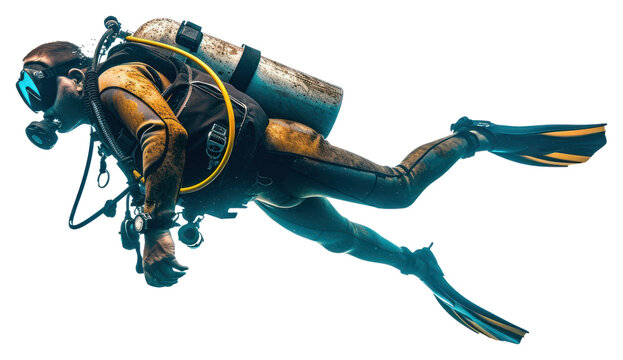
When one sensory input becomes unreliable, the brain performs Sensory Re-weighting. It shifts its reliance to the remaining functional systems. On a night dive, for instance, the brain de-emphasizes visual input and leans more heavily on the vestibular system.
The challenge for divers is that the vestibular system is poorly calibrated for the "weightless" environment. The otolith organs in the ear, which detect gravity, are less effective when the body is not upright. Furthermore, the cerebellum—the part of the brain responsible for motor control—struggles to coordinate movement when the proprioceptive feedback from the limbs is "muffled" by the surrounding water.
Compounding Factors: Narcosis and Cognitive Load
The neurobiology of disorientation is further complicated by the depth at which we dive. Nitrogen Narcosis acts as a powerful disruptor of synaptic transmission. As discussed in Beyond the Martini Effect, high partial pressures of nitrogen impair the central nervous system, leading to a loss of judgment and a false sense of well-being 3.
Narcosis interferes with the parietal cortex’s ability to integrate sensory data. A narcose diver may experience:
- Delayed reaction times to positional changes.
- Tingling or numbness in the extremities, further dulling proprioceptive feedback 3.
- Cognitive Narrowing, where the diver becomes so focused on a single task (like reading a computer) that they fail to notice they have drifted into a vertical or inverted position.
This "tunnel vision" is a hallmark of high task loading. To understand how stress compounds these errors, see our guide on Cognitive Narrowing and Task Loading.
Expert Note: Cold water can also trigger sudden disorientation. If cold water enters one ear faster than the other (perhaps due to a poorly fitting hood), it can cause caloric stimulation of the vestibular system, leading to violent, temporary vertigo.
The Auditory Component: Why Sound Fails to Ground You
On land, we use sound to help orient ourselves. If you hear a car to your left, your brain reinforces your spatial map. Underwater, this system is nearly useless. Due to the density of water, sound travels four times faster than in air, reaching both ears almost simultaneously. This eliminates the brain's ability to use interaural time differences for localization 2.
As we’ve detailed in Acoustic Shadowing, the lack of directional hearing creates a "silent" disorientation. You may hear your buddy's tank banger, but the sound seems to come from inside your own head, providing no spatial anchor to help you determine your position in the water column.
Vertigo and the 'Leans': Common Manifestations of Distortion
When proprioceptive and vestibular systems fail, divers often report two specific phenomena:
- Alternobaric Vertigo: This occurs when pressure changes (during ascent or descent) are not equalized at the same rate in both middle ears. The brain interprets the pressure differential as a spinning sensation.
- The Leans: This is a common vestibular illusion where a diver feels as though they are tilted to one side, even though their instruments show they are level. It often occurs after a prolonged turn or when visual cues are absent.
- Nystagmus: In severe cases of disorientation, the eyes may begin to jerk uncontrollably as the brain tries to "find" a horizon that isn't there.
Mitigation Strategies for the Advanced Diver
Mastering spatial awareness requires moving beyond "gut feeling" and trusting in objective data and specific neurological stabilization techniques.
1. Instrumental Reliance
The most important rule in low-visibility or blue-water environments is to trust your gauges over your senses. Your brain may tell you that you are ascending, but if your depth gauge is static, you are likely experiencing a vestibular illusion.
2. Visual Anchors and Recalibration
If you feel the onset of disorientation:
- Find a physical reference: A descent line, a bubble trail, or even your dive buddy.
- Focus on your bubbles: They always go up. This is the only visual "truth" in a featureless environment.
- Use a compass: It provides a horizontal reference that your brain can use to recalibrate its internal map.
3. The 'Freeze and Breathe' Protocol
If you experience sudden vertigo:
- Stop moving: Cease all finning and arm movements to reduce conflicting proprioceptive noise.
- Exhale slowly: Focus on the rhythm of your breathing to lower CO2 levels, which can exacerbate narcosis 3.
- Grab a reference: If a line or rock is available, hold onto it. The tactile pressure provides the brain with the "weight-bearing" data it is craving.
- Close your eyes (Briefly): Sometimes, shutting out distorted visual data for 2-3 seconds allows the vestibular system to reset.
4. Proprioceptive Training
Advanced divers should practice hovering drills in low-visibility or during night dives. By intentionally reducing visual input in a controlled environment, you force the brain to become more sensitive to the subtle proprioceptive cues of trim and buoyancy.

Conclusion: Mastering the Mental Map
Underwater orientation is not a matter of instinct; it is a complex neurological feat. By understanding how the sensory triad of visual, vestibular, and proprioceptive inputs can be distorted by the physics of the ocean, we can better prepare for the moments when our "sixth sense" fails us.
The feeling of being upright is always accurate—in reality, your brain is easily fooled by the "Blue Room" and the unweighting effect of neutral buoyancy. True mastery of the underwater environment comes from a combination of technical skill and a deep understanding of the biological limits of the human machine. Continue to challenge your understanding of diving theory, and always trust your instruments when the world starts to tilt.
- Review your buoyancy and trim on your next shallow dive.
- Practice "eyes-closed" hovering (with a buddy) to sharpen proprioception.
- Stay informed on the latest diving theory to keep your mental map sharp.