The Physics of Entanglement: Force Vectors and Mechanical Trap Dynamics in Diving
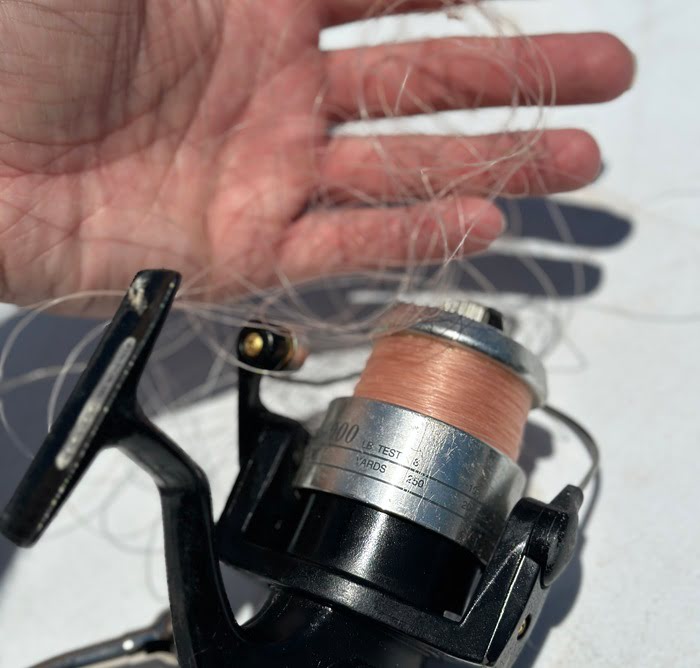
In the high-stakes environment of underwater exploration, entanglement is often categorized as a "freak accident" or a stroke of bad luck. However, for the technical diver, viewing entanglement through the lens of a mechanical system failure provides a much more effective framework for survival. Entanglement is not merely getting stuck; it is a physical constraint on a diver’s six degrees of freedom—the ability to move linearly (surge, sway, heave) and rotationally (roll, pitch, yaw) through the water column. 1
The transition from a panicked victim to an analytical problem-solver begins with understanding that every snag is governed by the laws of physics. Whether it is a monofilament fishing line or a heavy-duty mooring rope, the dynamics of tension, friction, and leverage dictate the severity of the trap. By decomposing the snare into its constituent force vectors, we can move away from reactive struggling and toward a calculated, mechanical resolution. 2
The Geometry of the Snare: Loop Dynamics and Surface Area
The most common form of entanglement is the loop snare, which operates on the principle of the "Cinch Effect." When a line creates a loop around a piece of equipment—such as a manifold, a bolt snap, or a fin buckle—linear tension applied by the diver’s movement is converted into radial compression. As the diver pulls forward, the loop tightens inward, increasing the contact pressure on the gear and making manual removal nearly impossible.
The probability of this occurring is directly proportional to the "catchable" surface area of the diver's configuration. This creates a paradox in gear selection:
| Gear Setup | Catch Probability | Mechanical Risk Factors |
|---|---|---|
| Recreational (Jacket BCD) | Moderate | Dangling consoles, loose straps |
| Technical (Backplate/Wing) | High (if unmanaged) | Exposed D-rings, bolt snaps, manifold |
| Sidemount | Low | Tucked regulators, streamlined profile |
Modern technical gear, while robust, often features high-profile "catch points." A standard D-ring acts as a perfect hook for braided lines. Furthermore, the physics of Pressure (P = F/A) plays a critical role here. 5 A thin monofilament line exerts significantly higher pressure on a neoprene suit or a rubber hose than a thick rope because the force is concentrated over a microscopic surface area. This is why "ghost nets" and monofilament are far more likely to "bite" into gear than thicker, more visible lines.
Force Vectors and the 'Pull Paradox'
When a diver feels the first tug of an entanglement, the instinctive reaction is often to swim away or "power through" the resistance. In physics terms, this is the Pull Paradox. By increasing thrust, the diver is essentially performing vector decomposition on the line, where their forward momentum is redirected into the entanglement point.
If a diver is snagged at the tank valve and swims forward, the resultant force vector tightens the knot and increases the friction between the line and the gear. If the line is wrapped at an angle, the diver’s thrust is split into two components:
- Tensile Force: Which pulls the line tighter.
- Shear Force: Which may cause the line to slide deeper into a crevice (such as between the cylinder and the wing).
The primary tool for force reduction is slack management. 4 By reversing the direction of travel and moving toward the entanglement point, the diver reduces the tension to zero, effectively collapsing the "Cinch Effect" and allowing the loop to be unwrapped.
Coefficient of Friction: Material Science of Diving Lines
The "stickiness" of an entanglement is determined by the Coefficient of Friction ($\mu$) between the line material and the diver’s equipment. Not all lines are created equal, and the material science of the snare dictates how easily a diver can "slip" out of a trap.
- Monofilament (Nylon): High elasticity but low friction against trilaminate suits. However, it easily cuts into softer materials like neoprene or silicone hoses.
- Braided Nylon/Dacron: These have a high "Braid Bite." The textured surface creates a mechanical interlock with the weave of nylon webbing (like your harness straps).
- Spectra/Dyneema: These modern high-tensile lines have an incredibly low coefficient of friction, making them "slippery," but their extreme tensile strength means they cannot be broken by human force alone.
- Kelp/Organic Matter: These often have high surface friction and can "bind" when wet, creating a complex mechanical trap that behaves differently than synthetic lines.
Environmental variables further complicate these values. Silt and salt crystallization can act as abrasives, increasing the friction coefficient and "locking" a line that might otherwise have been easy to slide off. 1
The Lever Arm: Diver Movement and Center of Gravity
One of the most dangerous aspects of entanglement is how it weaponizes the diver’s own body as a lever arm. In a free-swimming state, a diver manages stability by aligning their Center of Gravity (CoG) with their Center of Buoyancy (CoB). You can read more about this delicate balance in our deep dive on Center of Gravity vs. Center of Buoyancy: The Geometrical Calculus of Perfect Trim.
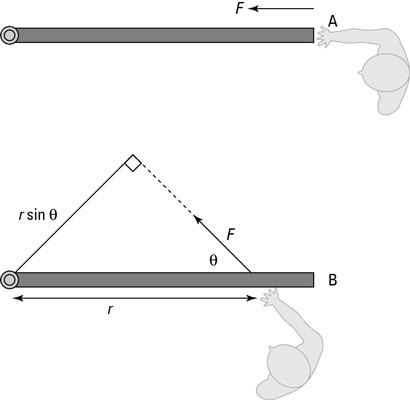
When an entanglement occurs, the snag point becomes a fulcrum. If a line catches a diver’s fin, the distance from the fin to the diver’s core creates a massive amount of torque. This torque can force the diver into an "Entanglement-Induced Inversion," where the feet are pulled upward or downward, shifting the CoB relative to the CoG and causing a total loss of trim and buoyancy control. 5
Mechanical Advantage: The Pulley Effect of Entrapped Gear
In certain scenarios, an entanglement can create a mechanical advantage for the environment over the diver. If a line passes through a D-ring or around a manifold and back to a fixed point (like a wreck or a cave wall), it creates a 2:1 pulley system.
In this configuration, every pound of force the diver uses to pull away is met with double the resistance at the snag point. This "Snag-and-Lock" mechanism is particularly prevalent in overhead environments. Because synthetic fibers like Dyneema have tensile strengths exceeding 2,000 lbs, manual strength is utterly insufficient. Attempting to pull free in a 2:1 system only serves to exhaust the diver and increase the risk of gear failure, such as a regulator being pulled out of the mouth or a hose being crimped. 24
Physiological Feedback Loops: The Energy Cost of Resistance
The physics of the trap inevitably leads to a physiological crisis. Struggling against mechanical resistance has a massive metabolic cost. As the diver fights the line, their CO2 production spikes, which has a direct impact on their Work of Breathing (WOB).
We have previously explored how gas density affects respiratory mechanics in Work of Breathing (WOB): Navigating the Mechanical Limits of the Deep. In an entanglement scenario, the increased CO2 creates a "Panic-Physics Loop":
- Entrapment creates physical resistance.
- Struggling increases CO2 and respiratory rate 3.
- High CO2 triggers a panic response and reduces the ability to think analytically.
- Panic leads to more erratic movement, which further tightens the entanglement.
Breaking this loop requires an immediate cessation of movement. The U.S. Navy protocol of "Stop, Think, and then Act" is rooted in the need to lower the WOB and restore CO2 balance before attempting a mechanical solution. 23
The Physics of the Solution: Shear Force vs. Blade Geometry
When a line cannot be unwrapped, it must be severed. The efficiency of this process is governed by shear force mechanics.
- Straight Blades: These rely on a slicing motion to create high pressure at a single point. They are often ineffective against high-tensile polymers that can "roll" under the blade.
- Serrated Edges: These create multiple points of high-pressure contact and use a "sawing" action to tear the fibers of the line. They are superior for thick ropes and braided lines.
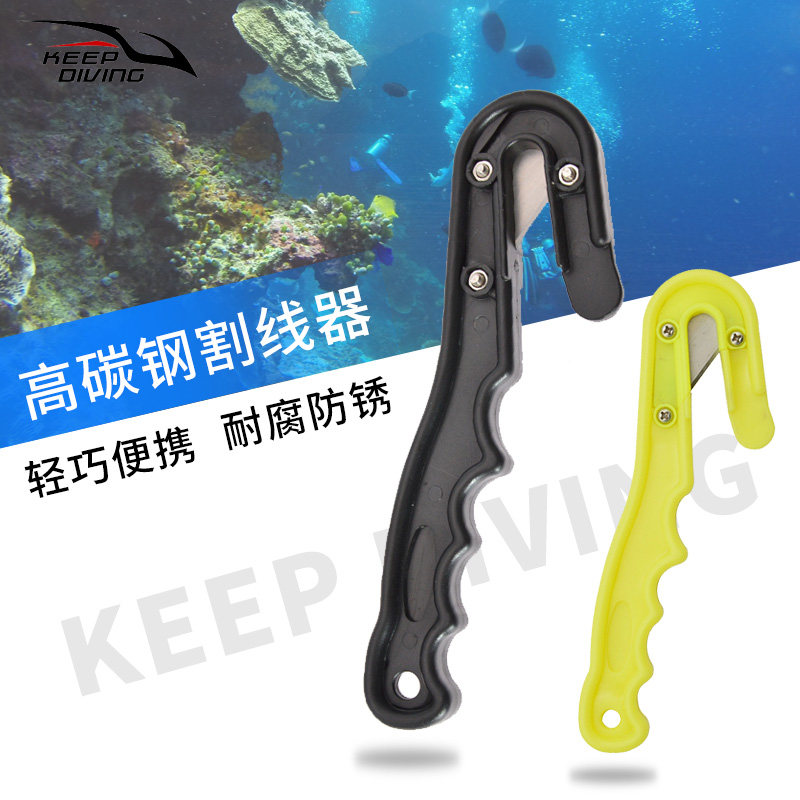
- Line Cutters (Z-Knives): These use a protected blade to apply a pure shear force. By trapping the line in a small notch, they ensure the force is applied perpendicular to the fibers, which is the most efficient way to break a polymer's molecular bonds.
The 'Zero-Tension Cut'
A critical, yet often overlooked, safety procedure is the Zero-Tension Cut. Divers should never cut a line under extreme tension if they can avoid it. Cutting a high-tension line can result in a "snap-back" energy release, where the line recoils with enough force to damage equipment or the diver. Whenever possible, create slack before making the cut to ensure a controlled release of the mechanical energy stored in the line.
Conclusion: Developing a Scientific Mindset for Entrapment
Surviving an entanglement is less about physical strength and more about mechanical analysis. By understanding that you are part of a physical system governed by vectors and friction, you can bypass the instinctual panic that leads to disaster. 3
To minimize your risk, focus on streamlining your profile to reduce your "catchable" surface area. Use the following checklist before every dive to ensure your "mechanical footprint" is as small as possible:
- Stow all long hoses using bungees or tucking them into the harness.
- Tape over or remove unnecessary D-rings or "suicide clips" (non-locking bolt snaps).
- Ensure cutting tools are reachable by both hands (redundancy is key).
- Practice "S.S.S.T": Stop, Stay calm, Study the physics of the snag, and then Take action. 2
By treating entanglement as a physics problem to be solved rather than a life-threatening emergency, the advanced diver maintains the mental clarity needed to navigate the mechanical limits of the deep. Keep your configuration clean, your mind sharp, and your movements calculated. Safe diving.