Metabolic Debt: The Physiological Cost of Involuntary Shivering on Gas Consumption

The Thermal Battlefield: Why Water Always Wins
In the terrestrial world, air is a forgiving medium. It is a poor conductor of heat, allowing us to maintain a stable core temperature with minimal effort. Underwater, the physics change dramatically. Water conducts heat away from the human body approximately 25 times faster than air 4. This isn't merely an inconvenience; it is a relentless extraction of energy that the body must compensate for every second of the dive.
The concept of the Thermoneutral Zone—the temperature range where a human can maintain body temperature without expending extra energy—is virtually non-existent for divers. For an unprotected, resting human, this zone starts at approximately 91°F (33°C) 1. Since the vast majority of dive sites, even in the tropics, fall below this threshold, every diver is essentially operating in a state of constant thermal deficit.
The transition from "feeling a bit nippy" to clinical shivering is a physiological red flag. It marks the point where passive insulation (your wetsuit or drysuit) has failed to match the rate of heat loss, forcing the body to switch from conservation to active thermogenesis.
The Mechanism of Shivering: Involuntary Thermogenesis
When the hypothalamus, the brain's internal thermostat, detects a drop in core temperature or a rapid decline in skin temperature, it initiates a survival protocol 2. Shivering is an involuntary response designed to generate heat through rapid, asynchronous muscle contractions.
Unlike voluntary exercise, where muscles work in a coordinated fashion to produce movement, shivering involves antagonistic muscle groups firing simultaneously. This creates friction at the cellular level and triggers ATP hydrolysis, releasing heat as a byproduct of the chemical energy being spent.
Physiologically, shivering progresses through three distinct stages:
- Micro-shivers: Increased muscle tension and sporadic tremors, often suppressed by voluntary movement 2.
- Gross Shivering: Rhythmic, uncontrollable bouts of shaking that begin in the torso and spread to the extremities.
- Violent Tremors: Uncontrollable, continuous muscle spasms that significantly impair motor function and signal a critical drop in core temperature 2.
The Metabolic Price Tag: Quantifying Oxygen Consumption (VO2)
Every muscle contraction requires fuel and oxygen. When your body begins to shiver, your metabolic rate doesn't just tick upward—it spikes. There is a direct, linear correlation between shivering intensity and oxygen consumption ($VO_2$).
Research indicates that intense shivering can increase a diver’s $VO_2$ by 300% to 500% compared to resting levels 2. For a diver, this is the equivalent of switching from a relaxed drift dive to a high-intensity swim against a current, all while remaining stationary.
The Gas Consumption Spiral
This metabolic spike creates what we call the Gas Consumption Spiral. Most divers calculate their Surface Air Consumption (SAC) or Respiratory Minute Volume (RMV) based on average conditions. However, involuntary shivering completely invalidates these pre-dive calculations.
| Shivering Intensity | Metabolic Increase | Impact on RMV |
|---|---|---|
| None (Comfort) | Baseline (1.0x) | Normal |
| Mild (Sporadic) | 1.5x - 2.0x | Noticeable |
| Moderate (Gross) | 2.5x - 3.5x | Significant |
| Severe (Violent) | 4.0x - 5.0x+ | Critical |
If you are shivering, you are no longer the "efficient" diver you were at the start of the trip. You are burning through your gas reserves at a rate that can lead to an "out of air" emergency far sooner than your computer or pressure gauge might have initially suggested.
CO2 Production and the Work of Breathing (WOB)
The metabolic cost of shivering isn't just about oxygen going in; it’s about the waste product coming out: Carbon Dioxide ($CO_2$). As ATP is hydrolyzed to create heat, $CO_2$ production increases proportionally.
In the deep environment, this becomes a compounding crisis. As we explored in our guide on Work of Breathing (WOB), gas density increases with depth, making it mechanically harder to move gas through the lungs and the regulator.
When shivering-induced $CO_2$ production meets high gas density, the diver often experiences hypercapnia (CO2 retention). The brain detects this rise in $CO_2$ and triggers a powerful respiratory drive, leading to:
- Gas Hunger: The feeling that you cannot get enough air, regardless of how deep you breathe.
- Panic Trigger: $CO_2$ is a potent "anxiety gas" that can turn a manageable situation into a full-blown panic.
- Increased Narcosis: High levels of $CO_2$ are known to potentiate the effects of nitrogen narcosis.
Vasoconstriction and the Decompression Conflict
One of the most dangerous aspects of shivering is its effect on the "Decompression Budget." To protect the core, the body initiates peripheral vasoconstriction, shutting down blood flow to the skin and extremities 1.
This creates a phenomenon known as the Cold Kinetic problem. While you are on the bottom, you are "warm" enough to absorb inert gas (nitrogen or helium) into your tissues. However, if you become cold and begin to shiver during the ascent or decompression phase, your peripheral circulation is restricted.
As we discussed in Kinetic Asymmetry, nitrogen leaves the body slower than it enters. If your limbs are cold and vasoconstricted, the blood cannot effectively transport the inert gas from the tissues back to the lungs for off-gassing. Shivering during decompression is more than just uncomfortable—it is a significant risk factor for Decompression Sickness (DCS) because it creates a massive mismatch between gas uptake and elimination 1.
Furthermore, if you are using helium-based mixes, the problem is accelerated. Helium's high thermal conductivity means it strips heat from your lungs even faster than air or Nitrox, as detailed in Thermodynamics of the Deep 4.
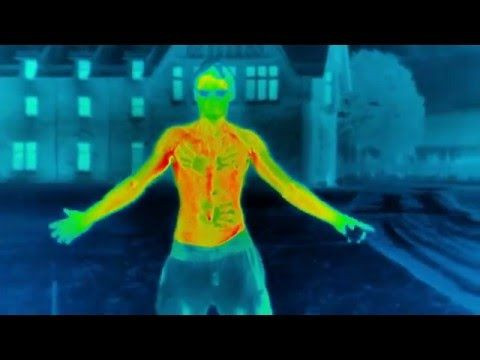
Cognitive Erosion: Shivering as a Task Loading Factor
Shivering is a massive "neural tax." The brain’s bandwidth is finite, and involuntary tremors compete for that space. This leads to Cognitive Narrowing, a psychological state where a diver loses situational awareness and focuses entirely on their internal discomfort.
In our analysis of Cognitive Narrowing and Task Loading, we highlighted how stress impairs decision-making. Shivering acts as a continuous, high-intensity stressor.
Expert Tip: If you find yourself unable to perform simple tasks—like clipping a bolt snap or reading your computer—because your hands are shaking, you have already crossed the threshold of a safe dive.
Impact on fine motor skills:
- Difficulty managing reels and lift bags.
- Struggling with valve drills or manifold isolation.
- Poor buoyancy control due to erratic breathing and muscle spasms.
Immersion Diuresis and Thermal Fluid Loss
There is a direct link between cold-induced vasoconstriction and the need to urinate, often called the "Pee Phenomenon." When blood is shunted from the extremities to the core, the body perceives an over-abundance of fluid in the central arterial system. The kidneys respond by filtering out "excess" water, leading to immersion diuresis 3.
As explored in Beyond the Pee Phenomenon, this process significantly dehydrates the diver. Dehydration increases blood viscosity, making the heart work harder and further complicating the off-gassing of inert gases. Shivering accelerates this process by increasing metabolic waste and further driving the need for fluid regulation.

Strategic Mitigation: Beyond Thicker Neoprene
"Just toughen up" is not a valid thermal strategy. Professional diving requires a proactive approach to heat management to ensure the metabolic budget remains intact.
1. Active Heating Systems
For technical or long-duration dives, passive insulation (neoprene/undersuits) is often insufficient. Heated vests or full suits provide an external heat source that can suppress the shivering reflex before it starts. This stabilizes the RMV and ensures peripheral circulation remains open for decompression.
2. Nutritional Thermogenesis
Your body needs fuel to create heat. High-calorie, easily digestible meals before a dive provide the glycogen stores necessary for thermogenesis. If you are "diving hungry," you are essentially entering the water with an empty fuel tank for your internal heater.
3. Gas Density Management
To lower the Work of Breathing (WOB) during metabolic spikes, use high-performance, environmentally sealed regulators. These reduce the mechanical effort required to breathe, which helps manage $CO_2$ levels even when shivering 4.
4. The 'Abort' Threshold
Every diver should have a clear thermal abort threshold.
Pre-Dive Thermal Checklist:
- Is the water temperature within the comfort range of my exposure suit?
- Have I consumed adequate calories and fluids in the last 4 hours?
- If using active heat, is the battery fully charged and tested?
- Do I have a "Plan B" if I start shivering during the bottom phase?
Warning: If involuntary shivering begins before you have completed your bottom time, the dive is statistically unsafe. The increased gas consumption and DCS risk outweigh the objectives of the dive.
Conclusion: Respecting the Metabolic Budget
Cold is not just a feeling; it is a physiological drain on your most critical resources: your gas, your blood chemistry, and your brain. Involuntary shivering represents the body’s "emergency mode," a last-ditch effort to maintain core temperature at the expense of your dive safety.
By understanding the metabolic debt incurred by shivering, advanced divers can better plan their thermal protection and recognize the subtle signs of thermal failure. Diving is a game of margins; don't let a "chilly" dive turn into a metabolic crisis.
The next time you feel that first rhythmic tremor in your chest, remember: your body is already spending gas you haven't even breathed yet. Respect the budget, manage the heat, and dive another day.